
Australia Luxury Watch Market Gains Momentum as Premium Timepieces Become Investment Assets
Growing wealth, rising interest in collectible watches, and expanding digital luxury retail are reshaping Australia’s luxury watch industry.

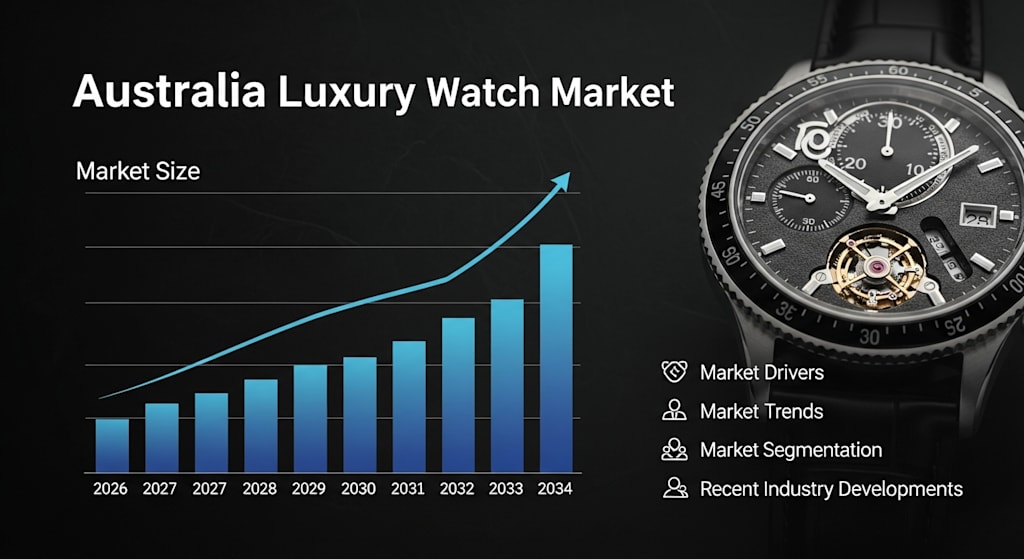
Australia’s luxury watch market is evolving into a sophisticated ecosystem driven by affluent consumers, collectors, investors, and younger buyers who increasingly view premium timepieces as both status symbols and long-term assets. According to IMARC Group, the Australia luxury watch market reached USD 597.7 million in 2025 and is projected to grow to USD 750.7 million by 2034, expanding at a CAGR of 2.49% during 2026–2034.
Luxury watches have moved far beyond their traditional role as accessories. Across Australia, consumers are embracing high-end watches as expressions of identity, craftsmanship, heritage, and exclusivity. Demand is especially strong in metropolitan luxury hubs such as Sydney and Melbourne, where rising disposable income and expanding high-net-worth populations continue to support premium retail spending.
IMARC notes that the market is segmented by type into analog watches and digital watches, by end user into women, men, and unisex categories, and by distribution channel into online stores and offline stores. Regional demand spans Australia Capital Territory & New South Wales, Victoria & Tasmania, Queensland, Northern Territory & Southern Australia, and Western Australia.
The market is also witnessing major shifts in consumer behavior. Pre-owned luxury watches are becoming increasingly mainstream, younger consumers are entering the collector ecosystem, and luxury brands are redesigning retail experiences to emphasize exclusivity, lifestyle, and personalized engagement. Combined with digital retail transformation, these trends are creating new momentum for Australia’s luxury watch industry.
Request a Business Sample Report for Procurement & Investment Evaluation:
Why the Market Is Growing So Rapidly
One of the primary drivers of growth is Australia’s rising affluent population. Wealth creation across finance, mining, technology, and property sectors has significantly increased the number of consumers capable of purchasing premium Swiss watches and heritage luxury brands. In Australia, luxury watches are increasingly viewed as investment-grade assets that can retain or appreciate in value over time, especially limited-edition or vintage models.
Another major trend fueling demand is the rapid rise of the pre-owned luxury watch segment. Consumers are showing stronger interest in certified second-hand watches because they offer greater affordability, rarity, and sustainability. Platforms such as Chrono24 and WatchBox have expanded the accessibility of authenticated pre-owned watches, allowing collectors and first-time buyers to participate more confidently in the luxury watch ecosystem.
The market is also benefiting from changing consumer demographics. Younger Australians are entering the luxury watch category with deeper appreciation for craftsmanship, horology, heritage, and mechanical engineering. Rather than focusing purely on status, younger buyers are increasingly drawn toward individuality, storytelling, and collectible value. This shift is encouraging brands to introduce more contemporary designs, limited collections, and digitally connected retail experiences.
Digital transformation is further reshaping the industry. Luxury watch retailers and brands are investing heavily in online storefronts, virtual consultations, concierge services, and immersive digital experiences. High-resolution product visualization, online authentication systems, and omnichannel customer engagement strategies are helping luxury watch brands connect with consumers beyond traditional boutique environments.
Experiential retail is another critical growth driver. Luxury brands are redesigning stores into lifestyle-oriented environments that emphasize exclusivity and emotional engagement rather than simple transactions. Boutique concepts such as private lounges, art experiences, and personalized services are becoming increasingly important in attracting affluent Australian consumers seeking premium shopping experiences.
What the Opportunities Are
1. Growth in Pre-Owned Luxury Watches
The certified pre-owned segment offers major commercial opportunities as consumers increasingly seek affordable entry points into luxury watch ownership while prioritizing sustainability and collectible value.
2. Expansion of Digital Luxury Commerce
Online luxury retail continues to expand rapidly, creating opportunities for brands to deliver personalized digital experiences, virtual try-ons, and premium concierge services.
3. Rising Demand Among Younger Consumers
Millennials and Gen Z buyers are reshaping luxury consumption patterns. Brands that align heritage craftsmanship with modern storytelling and digital engagement can strengthen long-term market positioning.
4. Investment-Oriented Watch Collecting
Luxury watches are increasingly treated as alternative investment assets. Limited editions, rare models, and vintage collections continue to attract collectors seeking long-term appreciation potential.
5. Luxury Tourism and Duty-Free Sales
Australia’s major cities remain attractive destinations for luxury tourism, creating opportunities for retailers to expand premium shopping experiences targeting international travelers.
6. Customization and Limited Editions
Consumers increasingly value exclusivity and personalization. Bespoke designs, engraving services, and exclusive regional collections can drive premium pricing and brand loyalty.
7. Sustainable Luxury Positioning
Sustainability is becoming a key purchase factor. Brands emphasizing ethical sourcing, long-lasting craftsmanship, and environmentally responsible production methods can strengthen consumer trust and market relevance.
• January 2025: Australian regulatory agencies introduced updated compliance guidelines aimed at strengthening transparency in the luxury resale and authentication market. The new framework encouraged stronger verification standards for pre-owned luxury watches sold through digital marketplaces and retail channels. Industry participants welcomed the move as a way to improve consumer confidence and reduce counterfeit risks in the growing secondary luxury market. Analysts expect the regulation to accelerate certified pre-owned luxury watch sales across Australia.
• May 2025: Several international luxury watch brands expanded their presence in Sydney and Melbourne through boutique upgrades, premium experiential retail concepts, and exclusive customer engagement initiatives. Retailers introduced private viewing lounges, invitation-only product launches, and personalized concierge services targeting affluent consumers and collectors. The investments reflected increasing confidence in Australia’s long-term luxury retail growth potential. Market observers noted stronger demand for heritage Swiss watch brands among younger buyers.
• September 2025: Australia’s luxury watch industry recorded stronger online sales growth as consumers increasingly embraced digital luxury purchasing channels. Retailers reported rising engagement with virtual consultations, online authentication services, and AI-powered recommendation systems for collectors and enthusiasts. Market adoption milestones were particularly strong in metropolitan regions where high-net-worth consumers continued increasing spending on collectible luxury goods. Industry analysts projected continued momentum for omnichannel luxury retail strategies moving into 2026.
Why Should You Know About Australia Luxury Watch Market?
Australia’s luxury watch market reflects larger changes in consumer behavior, wealth creation, and premium retail innovation. The industry combines craftsmanship, exclusivity, technology, and investment appeal in ways that continue attracting both experienced collectors and new buyers.
For investors and luxury brands, the market offers long-term opportunities driven by affluent demographics, expanding digital retail infrastructure, and rising interest in collectible assets. For retailers, evolving consumer preferences around personalization, sustainability, and experiential shopping are opening new pathways for growth and customer engagement.
As Australia’s luxury economy continues evolving, luxury watches are becoming more than prestige products — they are increasingly viewed as cultural symbols, financial assets, and expressions of identity in a digitally connected premium marketplace.
About the Creator
Rashi Sharma
I am a market researcher.
Enjoyed the story? Support the Creator.
Subscribe for free to receive all their stories in your feed.
Comments
There are no comments for this story
Be the first to respond and start the conversation.