
Australia Low Voltage Electric Motor Market Driven by Automation and Energy Efficiency Demand
Rising adoption in HVAC, EVs, and renewable energy systems is powering steady market expansion

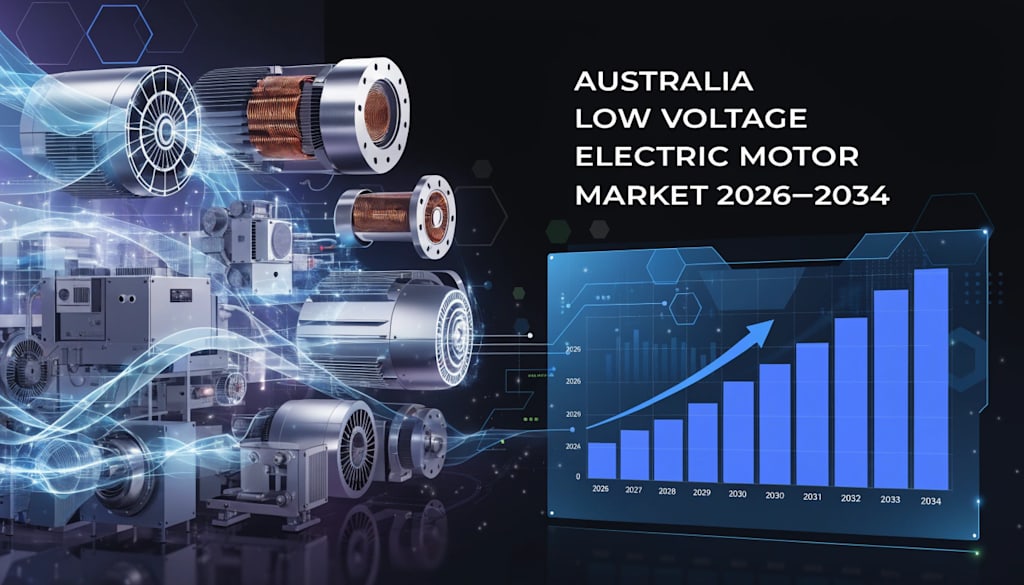
The Australia low voltage electric motor market is experiencing consistent growth, supported by industrial automation, infrastructure development, and energy efficiency initiatives. According to IMARC Group, the market was valued at USD 319.16 Million in 2025 and is projected to reach USD 459.32 Million by 2034, growing at a CAGR of 4.13% during 2026–2034
Low voltage electric motors, typically operating below 1,000 volts, are widely used across industries for applications such as pumps, fans, compressors, and automated machinery. Their efficiency, reliability, and adaptability make them essential in sectors like manufacturing, HVAC, mining, and renewable energy.
The market is segmented into:
By Efficiency:
• Standard Efficiency
• High Efficiency
• Premium Efficiency
• Super Premium Efficiency
By Application:
• Pumps and Fans
• Compressors
• Others
By End-Use Industry:
• Commercial HVAC Industry
• Food, Beverage and Tobacco Industry
• Mining Industry
• Utilities
• Others
Pumps and fans dominate the market with around 50% share, reflecting their critical role in fluid handling, ventilation, and industrial processes
Request a Business Sample Report for Procurement & Investment Evaluation:
Why the Market Is Growing So Rapidly
A major growth driver is the rising adoption of automation and robotics across industries. As manufacturing and logistics sectors modernize, the need for efficient and precise motor-driven systems is increasing. Low voltage motors play a vital role in powering conveyor systems, robotic arms, and automated production lines, enabling faster and more reliable operations.
The shift toward renewable energy is another key factor. Australia’s strong push toward wind and solar energy is creating demand for motors used in energy generation and conversion systems. These motors are critical in applications such as solar tracking systems and wind turbine components, supporting efficient energy production.
Electric vehicle (EV) adoption is also accelerating market growth. Low voltage motors are essential in EV systems, particularly for auxiliary functions and smaller vehicle applications. With EV sales rising significantly, demand for efficient motor solutions is increasing across the automotive sector.
The construction and building sector further contributes to growth. Modern buildings rely heavily on motor-driven systems such as HVAC, elevators, and water management systems. As infrastructure projects expand and smart buildings become more common, the demand for reliable low voltage motors continues to grow.
Additionally, government regulations promoting energy efficiency and carbon reduction are encouraging industries to adopt advanced motor technologies. These policies are driving the replacement of older systems with more efficient alternatives, boosting market expansion.
What the Opportunities Are
1. Smart Building Expansion: Increasing adoption of automated HVAC and building systems creates strong demand.
2. Renewable Energy Projects: Wind and solar installations require efficient motor-driven systems.
3. Electric Vehicle Growth: Rising EV adoption boosts demand for auxiliary motor applications.
4. Industrial Automation: Growth in robotics and smart factories opens new opportunities.
5. Energy Efficiency Upgrades: Replacement of legacy motors with high-efficiency models drives demand.
6. Mining Sector Applications: Harsh environments create demand for durable and reliable motors.
7. Smart Grid Development: Integration with energy storage and grid systems expands use cases.
Recent News & Developments in Australia Low Voltage Electric Motor Market
• March 2025: The Australian government accelerated initiatives supporting energy-efficient industrial equipment, encouraging businesses to adopt advanced motor technologies. The policy focuses on reducing energy consumption across manufacturing and commercial sectors. This move is expected to increase demand for high-efficiency low voltage motors.
• June 2025: A major energy company deployed a 100 MW / 223 MWh battery energy storage system in Victoria, enhancing grid stability and supporting renewable integration. The project relies on motor-driven systems for cooling and energy management. This development highlights the growing role of low voltage motors in modern energy infrastructure.
• September 2025: Market data showed a 38% increase in electric vehicle sales in Australia, driving higher demand for motor technologies across automotive applications. This growth reflects strong consumer adoption and government support for clean mobility. The trend is expected to sustain long-term demand for efficient motor systems.
Why Should You Know About Australia Low Voltage Electric Motor Market?
The Australia low voltage electric motor market is a foundational pillar of industrial and technological progress. For investors, it offers stable and predictable growth backed by infrastructure development, automation, and sustainability trends.
For businesses, the market presents opportunities to adopt advanced motor technologies that improve efficiency, reduce operational costs, and enhance productivity. Companies investing in smart and energy-efficient systems can gain a strong competitive advantage.
For policymakers, promoting energy-efficient motors aligns with national sustainability goals and helps reduce overall energy consumption.
As industries move toward automation, electrification, and clean energy, low voltage electric motors will remain essential—making this market a critical component of Australia’s future industrial ecosystem.
About the Creator
Rashi Sharma
I am a market researcher.
Enjoyed the story? Support the Creator.
Subscribe for free to receive all their stories in your feed.
Comments
There are no comments for this story
Be the first to respond and start the conversation.