
Australia Jewellery Market 2026: Sustainability, Personalization & Digital Retail Growth
How evolving consumer preferences, ethical sourcing, and e-commerce expansion are shaping the Australia jewellery industry

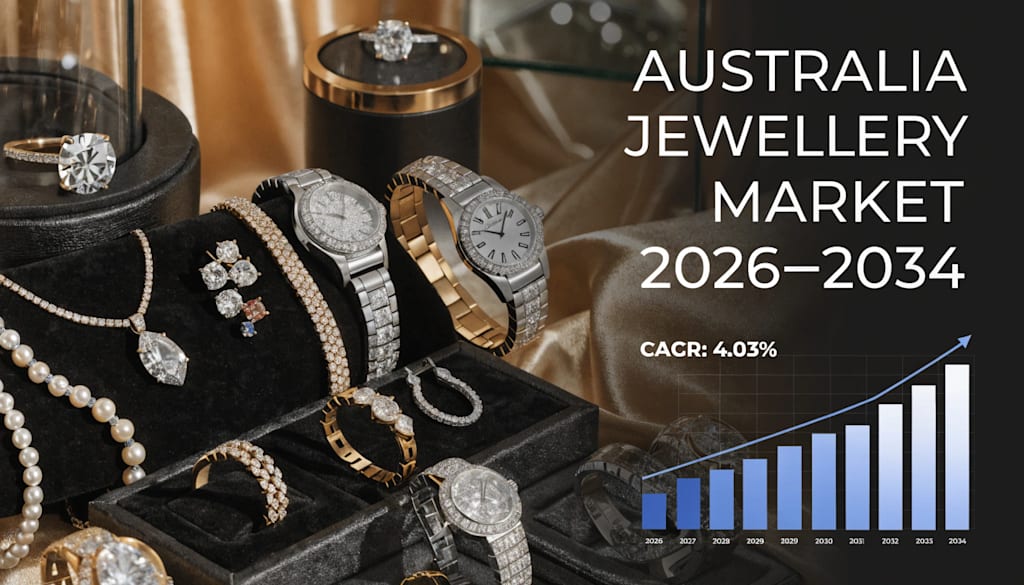
Australia Jewellery Market Overview
The Australia jewellery market is a well-established segment of the country’s consumer goods and luxury retail industry, encompassing fine jewellery, fashion jewellery, and customized accessories. The market reflects a combination of traditional demand drivers such as gifting and weddings, alongside modern influences like personalization and digital retail.
According to IMARC Group, the Australia jewellery market size reached USD 3.3 Billion in 2025 and is projected to reach USD 4.7 Billion by 2034, exhibiting a compound annual growth rate (CAGR) of 4.03% during 2026–2034.
The market is primarily driven by innovation in jewellery design, increasing demand for unique and premium products, and the growing adoption of online retail platforms.
Key Market Drivers
Rising Disposable Income and Luxury Spending
Increasing disposable income, particularly among younger consumers, is boosting spending on luxury and designer jewellery products.
Growing Demand for Personalization
Consumers are increasingly seeking customized jewellery pieces that reflect personal identity, including bespoke designs and engraved items.
Expansion of E-commerce Platforms
The growth of online retail and digital platforms is enhancing accessibility and convenience, allowing consumers to explore a wide variety of jewellery products.
Cultural and Occasion-Based Demand
Jewellery continues to play a key role in weddings, anniversaries, and milestone celebrations, supporting consistent market demand.
Technological Advancements
Innovations such as 3D printing and virtual try-on technologies are enabling new product designs and enhancing customer experience.
Request a Sample Report with the Latest 2026 Data & Forecasts
What the Opportunities Are
Sustainability and Ethical Sourcing
Consumers are increasingly demanding responsibly sourced materials, including recycled gold and conflict-free diamonds, driving brands to adopt transparent supply chains.
Growth of Lab-Grown Diamonds
Lab-grown diamonds are gaining traction as cost-effective and environmentally friendly alternatives to natural diamonds.
Omni-channel Retail Expansion
Retailers integrating offline stores with online platforms are improving customer engagement and boosting sales conversion.
Rising Demand for Custom Jewellery
Technology is making it easier for consumers to design personalized jewellery, creating strong growth opportunities in bespoke segments.
Increasing Influence of Younger Consumers
Millennials and Gen Z consumers are driving demand for modern, minimalist, and ethically produced jewellery.
Recent News and Developments
April 2026: The Australian jewellery sector continues to experience changing consumer behaviour driven by economic pressure and shifting lifestyle spending. Demand is increasingly split between affordable everyday jewellery and high-end investment pieces, as consumers prioritise value and flexibility in discretionary spending. Discussions across the industry also highlight rising material costs and evolving preferences toward minimalist, versatile designs, reflecting broader cost-of-living pressures in Australia.
March 2026: Sustainability and ethical sourcing remain central themes in the Australian jewellery market, with growing demand for recycled metals, conflict-free diamonds, and transparent supply chains. Consumers are increasingly prioritising brands that demonstrate environmental responsibility, pushing retailers to adopt greener manufacturing practices and strengthen corporate social responsibility strategies. This trend continues to shape brand positioning and customer loyalty across both mass and premium segments.
February 2026: Precious metal price volatility has significantly influenced the jewellery market, particularly silver and gold. Silver prices surged sharply during 2025, rising dramatically and creating pressure on production costs and retail pricing strategies for jewellers heading into 2026. This has forced many businesses to reassess sourcing, pricing models, and product mix to maintain margins while remaining competitive.
January 2026: Market analysis shows that while jewellery demand in Australia remains structurally strong, gold jewellery volumes declined in 2025 even as overall value increased, reflecting a shift toward higher-value but lower-volume purchases. Consumers are increasingly favouring fewer, more premium items rather than frequent low-cost purchases, signalling a continued move toward premiumisation and investment-style jewellery consumption.
December 2025: The broader jewellery industry in Australia continues to evolve under the influence of technology and retail innovation. Brands are increasingly adopting digital tools such as virtual try-ons, 3D design customisation, and e-commerce-driven retail models. At the same time, personalization and bespoke jewellery demand is rising, with consumers seeking unique pieces that reflect identity and lifestyle rather than mass-produced designs.
November 2025: Industry forecasts indicate continued long-term growth for the Australian jewellery market, supported by innovation in design, rising disposable income, and strong cultural demand for jewellery in life events such as engagements and weddings. However, the market also faces challenges from rising competition, import pressures, and fluctuating raw material costs, which continue to affect profitability and pricing stability for local jewellers.
Why You Should Know About the Australia Jewellery Market
The Australia jewellery market represents a stable yet evolving sector within the luxury retail industry.
With projected growth from USD 3.3 Billion in 2025 to USD 4.7 Billion by 2034, the market demonstrates consistent expansion driven by innovation, sustainability trends, and digital transformation.
As consumer preferences shift toward personalized, ethical, and digitally accessible products, the Australia jewellery market is expected to remain a key contributor to the country’s retail and luxury ecosystem.
About the Creator
Amyra Singh
Market research analyst who loves spotting patterns, digging into data, and turning insights into strategies that help brands grow and stay ahead of the curve.
Enjoyed the story? Support the Creator.
Subscribe for free to receive all their stories in your feed.
Comments
There are no comments for this story
Be the first to respond and start the conversation.