
Australia In Vitro Fertilization Market Set for Strong Growth as Advanced Fertility Care Expands Nationwide
Driven by delayed parenthood, technological innovation, and supportive healthcare policies, Australia’s IVF industry is entering a new phase of sustained growth and accessibility.

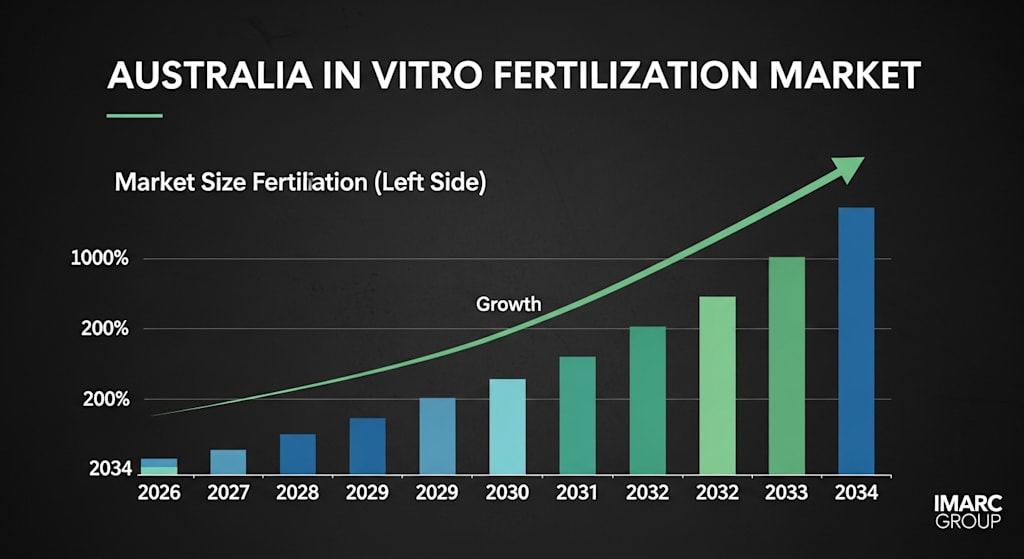
Australia’s in vitro fertilization (IVF) industry is experiencing remarkable growth as changing demographics, evolving family structures, and rapid advances in reproductive medicine reshape the fertility landscape. According to IMARC Group, the Australia in vitro fertilization market reached USD 796.0 Million in 2025 and is projected to grow to USD 1,682.2 Million by 2034, expanding at a CAGR of 8.41% during 2026–2034.
The market has evolved from being a specialized fertility service into an essential component of modern healthcare. Increasing infertility rates, delayed parenthood, and broader social acceptance of assisted reproductive technologies are encouraging more Australians to seek fertility treatments. At the same time, government support programs, technological breakthroughs, and improved clinical outcomes are making IVF more accessible and effective than ever before.
Request a Business Sample Report for Procurement & Investment Evaluation:
Market segmentation includes:
Product:
• Reagent
• Instrument
• Accessories
Procedure Type:
• Fresh Donor
• Frozen Donor
• Fresh Non-donor
• Frozen Non-donor
Cycle Type:
• Conventional IVF
• IVF with ICSI
• IVF with Donor Eggs
End User:
• Fertility Clinics
• Hospitals
• Others
Region:
• Australia Capital Territory & New South Wales
• Victoria & Tasmania
• Queensland
• Northern Territory & Southern Australia
• Western Australia
Why the Market Is Growing So Rapidly
One of the strongest drivers of market growth is the increasing trend of delayed parenthood. Many Australians are postponing family planning due to career development, financial priorities, higher education, and lifestyle choices. As fertility naturally declines with age, a growing number of individuals and couples are turning to IVF and related fertility treatments to achieve parenthood.
Government support is also playing a transformative role. Medicare rebates for fertility treatments and additional state-level subsidies have helped reduce out-of-pocket expenses for patients. Publicly funded IVF initiatives and financial assistance programs are improving access to fertility care for a broader section of the population, particularly lower-income households. These measures continue to stimulate demand across the country.
Technological innovation is another major catalyst. Australian fertility clinics are increasingly adopting advanced embryo imaging systems, artificial intelligence-assisted embryo assessment tools, and improved culture media. These technologies help clinicians identify viable embryos more accurately, improve implantation success rates, and reduce the number of treatment cycles required for successful pregnancies.
The growing acceptance of diverse family structures is expanding the addressable market. Single parents, same-sex couples, and individuals utilizing donor-assisted reproduction are increasingly seeking fertility services. This shift reflects broader societal changes and has significantly widened the customer base for IVF providers.
Demand for fertility preservation is also accelerating. Individuals facing cancer treatments and other medical conditions that may affect fertility are increasingly choosing egg, sperm, or embryo freezing. Additionally, many people are proactively preserving fertility for future family planning, creating a strong complementary market alongside conventional IVF treatments.
What the Opportunities Are
1. Expansion into Regional and Rural Australia
Many regional communities still face limited access to fertility services. Providers that establish satellite clinics, telehealth platforms, and mobile consultation programs can unlock significant untapped demand while improving healthcare equity across Australia.
2. Growth of Fertility Preservation Services
Egg freezing, sperm banking, embryo preservation, and oncofertility services represent high-growth opportunities. Increasing awareness about reproductive planning is creating a long-term customer base beyond traditional infertility treatment.
3. AI-Powered Fertility Solutions
Artificial intelligence is rapidly transforming embryo assessment and treatment optimization. Companies developing AI-driven fertility technologies can benefit from growing adoption among clinics seeking higher success rates and operational efficiency.
4. Genetic Testing and Personalized Reproductive Care
The integration of preimplantation genetic testing and personalized fertility treatment plans creates opportunities for premium healthcare services that improve patient confidence and clinical outcomes.
5. Medical Tourism Potential
Australia’s reputation for high-quality healthcare positions it as an attractive destination for international fertility patients. Clinics offering comprehensive treatment packages can capitalize on growing cross-border reproductive care demand.
6. Digital Patient Engagement Platforms
Online fertility consultations, treatment tracking applications, and virtual support services can improve patient experience while creating scalable business models for providers.
7. Strategic Investment and Industry Consolidation
Increasing private equity and multinational participation are creating opportunities for mergers, acquisitions, clinic expansion, and technology upgrades. Consolidation can strengthen service quality and market reach across the country.
Recent News & Developments in Australia In Vitro Fertilization Market
• March 2025: The Australian Government announced new pharmaceutical support measures that expanded access to IVF-related treatments and reproductive healthcare services. The initiative included earlier access to IVF medications and additional support for women seeking fertility care. The policy is expected to reduce treatment costs for many patients and improve nationwide accessibility.
• June 2025: Several leading fertility providers announced investments in advanced embryo assessment technologies and digital patient management systems. These upgrades are designed to improve treatment efficiency, enhance success rates, and support growing patient volumes across metropolitan and regional clinics. The investments reflect strong confidence in the long-term outlook of Australia’s fertility sector.
• September 2025: Industry data highlighted continued growth in fertility treatment adoption, supported by increasing awareness, expanding eligibility, and wider acceptance of assisted reproductive technologies. Clinics reported rising inquiries from both traditional fertility patients and individuals seeking fertility preservation services. The trend reinforced expectations of sustained market expansion through the coming decade.
Why Should You Know About Australia In Vitro Fertilization Market?
The Australia in vitro fertilization market represents far more than a healthcare growth story. It reflects profound demographic, social, and technological shifts that are transforming how families are formed in the modern world. As fertility challenges become more prevalent and reproductive technologies continue to advance, IVF will remain an increasingly important healthcare service.
For investors, the market offers exposure to a high-growth healthcare segment supported by strong demand fundamentals, innovation, and policy backing. For businesses, opportunities exist across fertility services, medical devices, digital health platforms, genetic testing, and biotechnology. For policymakers, expanding access to fertility treatment can help address demographic challenges while promoting healthcare equity.
With market value projected to more than double from USD 796.0 Million in 2025 to USD 1,682.2 Million by 2034, Australia’s IVF industry is positioned to play a central role in the future of reproductive healthcare and family planning.
About the Creator
Rashi Sharma
I am a market researcher.
Enjoyed the story? Support the Creator.
Subscribe for free to receive all their stories in your feed.
Comments
There are no comments for this story
Be the first to respond and start the conversation.