
Australia Implantable Medical Devices Market Advances with Innovation and Aging Population
Rising chronic diseases, cutting-edge implants, and healthcare investments are fueling Australia's next MedTech growth wave.

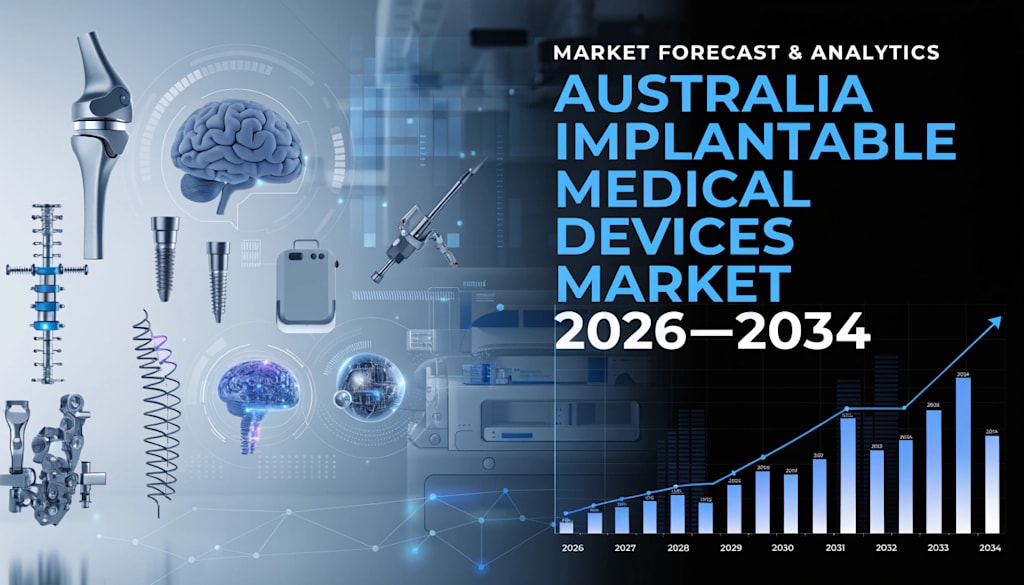
Australia's healthcare sector is rapidly embracing advanced implantable technologies as demand for precision medicine and long-term treatment solutions continues to grow. According to IMARC Group, the Australia implantable medical devices market reached USD 4.2 Billion in 2025 and is projected to reach USD 6.5 Billion by 2034, expanding at a CAGR of 4.79% during 2026-2034.
Implantable medical devices have become indispensable in modern healthcare. From orthopedic replacements and cardiac implants to dental restorations and neurostimulation devices, these technologies are improving patient outcomes, extending lifespans, and enhancing quality of life across Australia.
The market is benefiting from a unique combination of demographic shifts, rising disease prevalence, technological breakthroughs, and supportive healthcare policies. As Australia's population ages and demand for minimally invasive procedures rises, implantable devices are moving from specialized treatments to mainstream clinical practice.
Market Segmentation
By Product Type
• Orthopedic Implants
• Dental Implants
• Facial Implants
• Breast Implants
• Cardiovascular Implants
• Others
By Material
• Polymers
• Metals
• Ceramics
• Biologics
By End-User
• Hospitals
• Ambulatory Surgery Centers (ASCs)
• Clinics
By Region
• Australia Capital Territory & New South Wales
• Victoria & Tasmania
• Queensland
• Northern Territory & Southern Australia
• Western Australia
Request a Business Sample Report for Procurement & Investment Evaluation:
Why the Market Is Growing So Rapidly
Australia's aging population remains the single largest growth catalyst. As life expectancy rises, age-related conditions such as osteoarthritis, cardiovascular disease, hearing loss, and dental degeneration are becoming increasingly common. Implantable devices provide highly effective, long-term treatment solutions for these conditions, driving sustained demand across multiple specialties.
The rising prevalence of chronic diseases is further accelerating market expansion. Cardiovascular disorders, diabetes, and musculoskeletal conditions are creating strong demand for pacemakers, insulin pumps, artificial joints, and other advanced implantable solutions. With millions of Australians managing chronic illnesses, the clinical need continues to grow steadily.
Technological innovation is transforming the competitive landscape. AI-integrated implants, wireless monitoring systems, biocompatible materials, and miniaturized designs are dramatically improving safety, performance, and patient comfort. Smart implants can now provide real-time data, enabling proactive care and better long-term outcomes. These advancements are encouraging wider adoption among clinicians and patients alike.
Minimally invasive surgical techniques are also boosting adoption. Patients increasingly prefer procedures that offer shorter hospital stays, faster recovery, and lower complication risks. Modern implant designs are specifically engineered for robotic-assisted and minimally invasive implantation, making them more attractive to both providers and recipients.
Australia's robust healthcare system provides a strong foundation for growth. Medicare coverage, private health insurance, world-class hospitals, and a well-regulated approval framework through the Therapeutic Goods Administration (TGA) are supporting broad access to advanced implant technologies. Government-backed research funding is further strengthening domestic innovation.
What the Opportunities Are
1. Smart Implant Development
Connected implants with remote monitoring capabilities represent a major next-generation growth area.
2. Orthopedic Innovation
Aging demographics will continue driving demand for advanced joint and spinal implants.
3. Personalized Implants via 3D Printing
Patient-specific implant manufacturing offers superior outcomes and premium pricing.
4. Cardiovascular Implant Expansion
Rising heart disease prevalence creates substantial long-term demand.
5. Biocompatible Material Advancements
New materials can improve durability, reduce rejection, and enhance patient recovery.
6. Outpatient Surgical Adoption
Growth in ambulatory surgery centers expands procedural volumes and accessibility.
7. AI-Enabled Predictive Care
Intelligent implants can unlock entirely new clinical monitoring and treatment models.
Recent News & Developments in Australia Implantable Medical Devices Market
• January 2025: Australia achieved a global milestone when a patient implanted with the BiVACOR Total Artificial Heart was successfully discharged from St Vincent's Hospital in Sydney. The procedure marked a significant advancement in artificial heart technology and demonstrated Australia's leadership in complex implantable cardiac devices. The breakthrough is expected to accelerate investment in next-generation cardiovascular implants.
• May 2025: Researchers from the University of Melbourne and RMIT University partnered with Signature Orthopaedics to develop advanced orthopedic implant technologies. The collaboration focuses on improving implant materials, durability, and patient outcomes through joint research and commercialization efforts. This initiative strengthens Australia's domestic MedTech manufacturing capabilities.
• September 2025: Australian hospitals reported rising adoption of minimally invasive implant procedures across orthopedic, dental, and cardiovascular specialties. Increasing use of robotic-assisted surgery and image-guided implantation is improving precision while reducing recovery times, further expanding patient acceptance and procedural volumes.
Why Should You Know About Australia Implantable Medical Devices Market?
The Australia implantable medical devices market sits at the intersection of healthcare, engineering, and innovation. For investors, it offers stable, long-term growth supported by demographic tailwinds and rising healthcare expenditure.
For manufacturers, the opportunities are vast—from smart implants and AI integration to advanced materials and personalized medicine. Companies that innovate around patient outcomes and clinician efficiency will be exceptionally well-positioned.
For healthcare providers and policymakers, implantable devices are essential to improving quality of care, reducing long-term treatment costs, and addressing Australia's growing chronic disease burden.
As medicine becomes more personalized, connected, and technology-driven, implantable medical devices will remain one of Australia's most important and fastest-evolving healthcare sectors.
About the Creator
Rashi Sharma
I am a market researcher.
Enjoyed the story? Support the Creator.
Subscribe for free to receive all their stories in your feed.
Comments
There are no comments for this story
Be the first to respond and start the conversation.