
Australia Home Textile Market Expected to Reach USD 6.7 Billion by 2034 as Consumers Embrace Comfort, Sustainability, and Premium Living
Rising home renovation activity, growing demand for eco-friendly fabrics, and evolving interior design preferences are fueling strong growth in Australia's home textile industry.

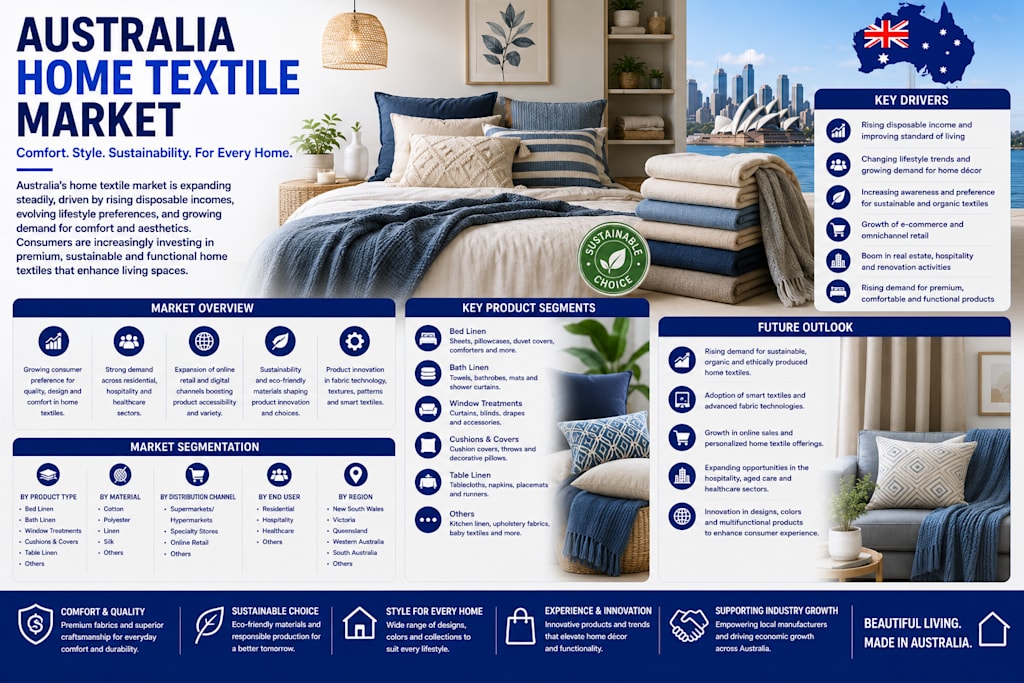
Australia's home textile industry is experiencing a period of steady expansion as consumers increasingly invest in comfort, aesthetics, and sustainable living solutions. From bedding and bath linens to curtains, carpets, upholstery, and decorative fabrics, home textiles have become an essential component of modern interior design and lifestyle preferences. As homeowners focus on creating functional and visually appealing living spaces, demand for premium and innovative textile products continues to rise.
According to IMARC Group, the Australia home textile market reached USD 3.9 Billion in 2025. Looking ahead, the market is expected to reach USD 6.7 Billion by 2034, exhibiting a CAGR of 5.85% during 2026–2034. The market's growth is being supported by rising disposable incomes, increasing urbanization, expanding residential construction activities, and growing consumer awareness regarding sustainable and high-quality home furnishing products.
The market includes several product categories such as bed linen, bath linen, kitchen linen, upholstery fabrics, curtains, carpets, rugs, blankets, and decorative textiles. Demand spans both residential and commercial applications, including hotels, resorts, serviced apartments, healthcare facilities, and corporate establishments.
Request a Business Sample Report for Procurement & Investment Evaluation:
Why the Market Is Growing So Rapidly
One of the key factors driving market growth is the increasing focus on home improvement and interior decoration. Australian consumers are investing more in enhancing the appearance and comfort of their homes, particularly as flexible work arrangements encourage people to spend more time in residential spaces. This trend has boosted demand for premium bedding, stylish curtains, decorative cushions, and luxury textile products.
The growing popularity of sustainable and environmentally responsible products is another major driver. Consumers are increasingly seeking home textiles made from organic cotton, recycled fibers, bamboo fabrics, and other eco-friendly materials. Manufacturers are responding by expanding sustainable product lines that align with evolving consumer values and environmental priorities.
Rising disposable incomes and changing lifestyle preferences are also contributing to market expansion. As households gain greater purchasing power, consumers are becoming more willing to invest in higher-quality products that offer durability, comfort, and aesthetic appeal. Premiumization is becoming an important trend across multiple home textile categories.
The growth of e-commerce platforms has further accelerated market development. Online retail channels provide consumers with access to a wide range of home textile products, competitive pricing, and convenient shopping experiences. Digital platforms have also enabled brands to reach broader customer segments across urban and regional markets.
In addition, Australia's hospitality and tourism sectors continue to generate demand for home textile products. Hotels, resorts, and accommodation providers regularly invest in high-quality linens, towels, curtains, and furnishings to enhance guest experiences. As tourism activity expands, commercial demand for home textiles is expected to remain strong.
What the Opportunities Are
1. Sustainable Textile Innovation
Manufacturers that develop environmentally friendly products using organic, recycled, and biodegradable materials can capitalize on growing consumer demand for sustainable home furnishings.
2. Premium and Luxury Product Segments
Demand for high-thread-count bedding, designer collections, luxury bath linens, and premium upholstery fabrics presents attractive growth opportunities for brands targeting affluent consumers.
3. Expansion of Online Retail Channels
The continued growth of e-commerce allows companies to reach customers nationwide while reducing dependence on traditional brick-and-mortar retail networks.
4. Smart and Functional Textiles
Innovative products featuring moisture management, antimicrobial properties, temperature regulation, and enhanced durability can attract consumers seeking greater functionality.
5. Hospitality Sector Growth
Hotels, resorts, serviced apartments, and vacation rentals require continuous replenishment of linens and furnishings, creating a stable commercial customer base.
6. Home Renovation and Remodeling Trends
Increasing renovation activity across Australia supports demand for curtains, upholstery fabrics, rugs, carpets, and decorative textile products.
7. Customized and Personalized Products
Consumers increasingly seek personalized home décor solutions, creating opportunities for bespoke textile designs and customized furnishing collections.
• February 2025: Australian authorities and industry organizations expanded initiatives supporting sustainable manufacturing practices within the textile sector. The measures encouraged the adoption of environmentally responsible materials and production processes while promoting circular economy principles. Industry stakeholders viewed the initiative as an important step toward enhancing long-term sustainability across the home furnishing industry.
• June 2025: Several home textile manufacturers and retailers launched new product collections featuring organic cotton, recycled fibers, and premium comfort-focused materials. The launches were designed to address growing consumer demand for environmentally conscious and high-quality home furnishing products. Companies reported strong interest from consumers seeking both sustainability and design excellence.
• September 2025: Australia's home improvement and interior decoration segments continued to demonstrate healthy momentum, supporting increased demand for bedding, bath textiles, and decorative furnishings. Retailers reported strong consumer engagement across both physical stores and online channels. Industry participants highlighted the growing importance of premium products and digital commerce in driving market expansion.
Why Should You Know About Australia Home Textile Market?
The Australia home textile market reflects broader shifts in consumer lifestyles, housing trends, and sustainability priorities. As individuals place greater emphasis on comfort, wellness, and personalized living spaces, home textile products are becoming increasingly important elements of residential and commercial environments.
For investors, the market offers exposure to growing consumer spending, premiumization trends, sustainable manufacturing, and expanding digital retail channels. For manufacturers and retailers, evolving consumer preferences create opportunities to develop innovative products that combine comfort, aesthetics, and environmental responsibility. Policymakers also recognize the importance of supporting sustainable production practices and fostering growth within the broader home furnishing ecosystem.
With market value projected to increase from USD 3.9 Billion in 2025 to USD 6.7 Billion by 2034, Australia's home textile industry is positioned for sustained growth. Businesses that focus on product innovation, sustainability, quality, and customer experience are likely to benefit from the opportunities emerging in this dynamic and evolving market.
About the Creator
Rashi Sharma
I am a market researcher.
Enjoyed the story? Support the Creator.
Subscribe for free to receive all their stories in your feed.
Comments
There are no comments for this story
Be the first to respond and start the conversation.