
Australia Grain Production Market: Feeding Global Demand with Innovation and Sustainability
Export strength, agri-tech adoption, and climate-resilient farming are shaping the future of Australia’s grain industry

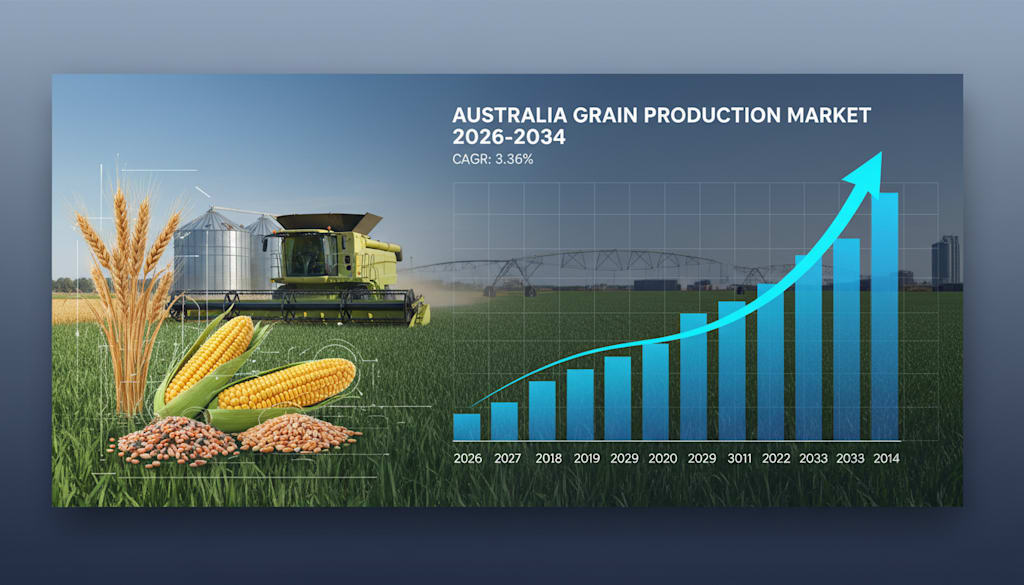
The Australia grain production market plays a vital role in both the national economy and global food supply chains. According to IMARC Group, the market reached a production volume of 69.4 million tons in 2025 and is projected to grow to 94.3 million tons by 2034, expanding at a CAGR of 3.36% during 2026–2034.
This steady growth reflects Australia’s position as one of the world’s leading grain exporters. With key crops such as wheat, barley, and canola in high demand globally, the country has built a reputation for producing high-quality, reliable agricultural outputs. Its proximity to fast-growing Asian markets further strengthens its global competitiveness.
What makes this market particularly compelling is its balance between tradition and innovation. While farming remains rooted in natural cycles, the integration of advanced technologies, sustainable practices, and infrastructure development is transforming grain production into a highly efficient and future-ready sector.
Request a Business Sample Report for Procurement & Investment Evaluation:
Segmentation Categories
• Grain Type: Wheat, Barley, Canola, Pulses, Others
• End Use: Food, Feed, Industrial Use
• Region: Australia Capital Territory & New South Wales, Victoria & Tasmania, Queensland, Northern Territory & Southern Australia, Western Australia
Why the Market Is Growing So Rapidly
A major driver of growth in Australia’s grain production market is strong global demand, particularly from Asia. Countries such as Indonesia, Vietnam, and Japan rely heavily on imported grains for food processing and animal feed. Australia’s geographic proximity reduces shipping time and costs, making it a preferred supplier in international markets.
Technological advancement is another critical growth factor. Farmers across major grain-producing regions are adopting precision agriculture tools such as drones, satellite imaging, GPS-enabled machinery, and soil sensors. These innovations improve yield consistency, optimize resource use, and reduce risks associated with climate variability.
Sustainability is also reshaping the industry. Practices such as conservation tillage, crop rotation, and integrated pest management are helping maintain soil fertility and reduce environmental impact. At the same time, research institutions are developing climate-resilient crop varieties that can withstand drought, heat, and salinity—key challenges in Australia’s agricultural landscape.
Infrastructure investment is further supporting growth. Improvements in transport networks, storage facilities, and port infrastructure are enhancing supply chain efficiency. These developments reduce logistical bottlenecks, lower costs, and ensure timely delivery of grain to both domestic and international markets.
Additionally, government policies and trade agreements are playing a supportive role. By facilitating exports and protecting agricultural land, policymakers are ensuring long-term stability and encouraging investment in the sector.
What the Opportunities Are
The Australia grain production market offers several high-value opportunities for businesses, investors, and stakeholders:
• Expansion into Specialty Grains: Growing demand for health-focused products is creating opportunities in niche grains such as quinoa, spelt, and sorghum, which offer higher margins and resilience to climate variability.
• Agri-Tech and Data-Driven Farming: Adoption of AI, automation, and predictive analytics enables farmers to optimize yields, reduce costs, and improve decision-making in real time.
• Value-Added Processing: Moving beyond raw grain exports to processed products such as flour, cereals, and plant-based proteins can significantly increase profitability and create new revenue streams.
• Export Market Diversification: Expanding trade relationships with emerging economies in Southeast Asia and the Middle East can reduce dependency on traditional markets.
• Sustainable Agriculture Solutions: Investment in eco-friendly farming practices and carbon-neutral production methods aligns with global sustainability goals and enhances market appeal.
• Supply Chain Optimization: Advanced storage systems, real-time monitoring, and logistics improvements can reduce waste and improve overall efficiency.
• Regional Development: Growth in rural infrastructure and processing hubs can create employment opportunities and strengthen local economies.
Recent News & Developments in Australia Grain Production Market
• February 2025: The Australian government expanded support for agricultural innovation by increasing funding for climate-resilient crop research and sustainable farming practices. These initiatives aim to improve productivity while addressing environmental challenges such as drought and soil degradation. The policy framework is expected to strengthen long-term resilience in the grain sector.
• June 2025: A leading agribusiness consortium announced a major investment in grain storage and logistics infrastructure across key production regions. The project includes advanced silo systems and upgraded transport networks to improve supply chain efficiency. This expansion reflects growing export demand and the need for scalable infrastructure.
• September 2025: Market data indicated rising global demand for Australian grain, particularly for use in animal feed and food processing industries. Export volumes continued to increase, supported by strong demand from Asian economies. This trend reinforces Australia’s position as a reliable global grain supplier and highlights ongoing market expansion.
Why Should You Know About Australia Grain Production Market?
The Australia grain production market is more than just an agricultural sector—it is a critical component of global food security and economic stability. With steady growth, strong export demand, and continuous innovation, it offers long-term opportunities for investors, policymakers, and agribusinesses.
As the world faces increasing challenges related to climate change, population growth, and food supply, Australia’s ability to produce high-quality, sustainable grain will become even more valuable. Understanding this market means understanding how the future of food is being shaped—efficiently, sustainably, and at a global scale.
About the Creator
Rashi Sharma
I am a market researcher.
Enjoyed the story? Support the Creator.
Subscribe for free to receive all their stories in your feed.
Comments
There are no comments for this story
Be the first to respond and start the conversation.