
Australia Forklift Market Accelerates as Warehousing and Automation Transform Material Handling
E-commerce expansion, electric forklifts, and smart warehouse investments are driving Australia's forklift industry forward.

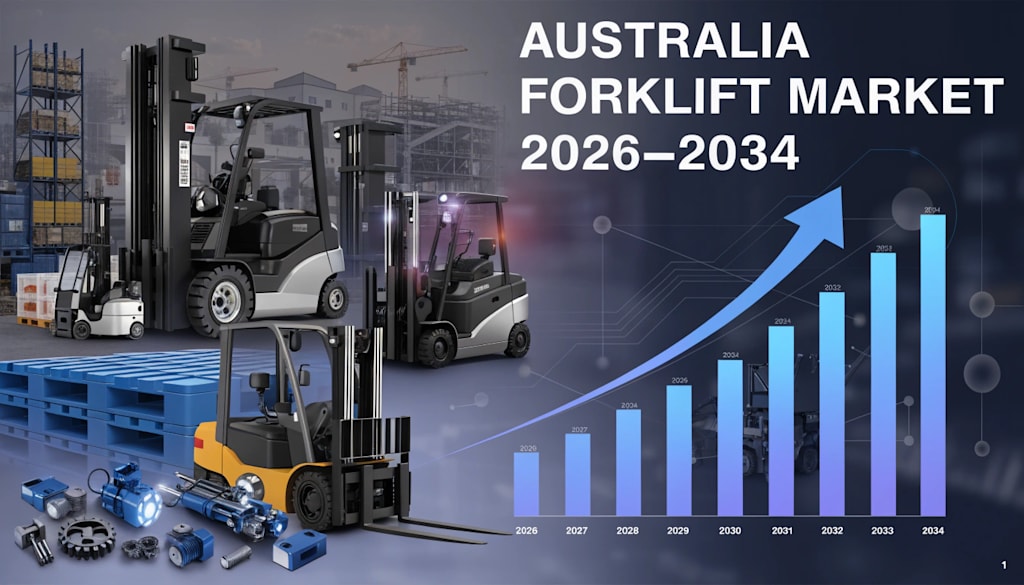
Australia's material handling sector is entering a period of exceptional growth. Driven by booming e-commerce, industrial automation, and infrastructure development, forklifts have become indispensable across warehousing, logistics, manufacturing, and construction. According to IMARC Group, the Australia forklift market reached USD 2.3 Billion in 2025 and is projected to soar to USD 8.3 Billion by 2034, exhibiting a remarkable CAGR of 14.44% during 2026-2034.
Forklifts are no longer merely warehouse workhorses. They have evolved into intelligent, energy-efficient, and highly specialized machines that sit at the heart of modern supply chains. As Australian businesses pursue higher productivity, faster fulfillment, and safer operations, demand for advanced material handling solutions continues to rise.
The market is benefiting from strong momentum across multiple industries, including retail, logistics, food and beverage, manufacturing, and construction. Electrification, automation, and fleet digitization are further reshaping the competitive landscape.
Market Segmentation
By Class
• Class 1
• Class 2
• Class 3
• Class 4/5
By Power Source
• ICE
• Electric
By Load Capacity
• Below 5 Ton
• 5-15 Ton
• Above 16 Ton
By Electric Battery
• Li-ion
• Lead Acid
By End User
• Industrial
• Logistics
• Chemical
• Food and Beverage
• Retail and E-Commerce
• Others
Request a Business Sample Report for Procurement & Investment Evaluation:
Why the Market Is Growing So Rapidly
Australia's e-commerce boom is one of the most powerful demand drivers. Distribution centers and fulfillment hubs require fast, reliable, and efficient material movement to handle rising order volumes. Forklifts play a central role in inventory management, loading, unloading, and warehouse optimization. As online retail continues to expand, forklift demand is climbing in parallel.
The shift toward electric forklifts is transforming the industry. Businesses are increasingly replacing diesel and LPG fleets with battery-powered alternatives to reduce emissions, lower maintenance costs, and improve indoor operating conditions. Lithium-ion technology, in particular, is gaining traction due to faster charging, longer lifespan, and superior performance.
Warehouse automation is another key growth catalyst. Modern forklifts now integrate telematics, collision-avoidance systems, fleet management software, and semi-autonomous capabilities. These features improve operational efficiency, enhance safety, and provide real-time data for smarter decision-making.
Australia's large-scale infrastructure and construction projects are also generating significant demand. Heavy-duty forklifts are essential for transporting materials across construction sites, industrial facilities, ports, and mining operations. Continued public and private investment is supporting sustained market expansion.
Rental and leasing models are becoming increasingly popular. Many businesses prefer flexible access to modern equipment without significant upfront capital expenditure. This trend is especially attractive to small and medium-sized enterprises seeking cost-effective scalability.
What the Opportunities Are
1. Electric Forklift Adoption
Battery-powered forklifts represent the fastest-growing segment in Australia's material handling market.
2. Warehouse Automation Integration
Smart forklifts equipped with sensors, telematics, and AI offer significant productivity gains.
3. Rental Fleet Expansion
Leasing and subscription-based models are attracting a wider customer base.
4. Lithium-Ion Battery Solutions
Advanced battery technology creates strong opportunities for equipment suppliers.
5. E-Commerce Logistics Growth
Fulfillment centers remain a major source of long-term demand.
6. Autonomous Material Handling
Self-driving forklifts will shape the next phase of industrial automation.
7. Aftermarket Services and Maintenance
Service contracts, repairs, and fleet management solutions offer recurring revenue streams.
• April 2025: United Forklift and Access Solutions introduced Australia's first fully electric tire handler, built on the Konecranes E-VER platform. The launch marks a major milestone in industrial electrification and supports Australia's growing focus on low-emission heavy equipment. The innovation is expected to accelerate electric forklift adoption across mining, logistics, and industrial sectors.
• April 2025: Mars Forklifts significantly expanded its rental fleet across Australia, adding electric, LPG, diesel, and all-terrain forklifts. The expansion aims to meet surging demand from warehousing, cold storage, and manufacturing customers. This investment strengthens the company's position in Australia's rapidly growing equipment rental market.
• September 2025: Australian warehouse operators reported continued double-digit growth in forklift utilization, driven by peak e-commerce volumes and new distribution center openings. Electric models accounted for an increasing share of new fleet purchases, reflecting both sustainability goals and lower total ownership costs.
Why Should You Know About Australia Forklift Market?
The Australia forklift market sits at the crossroads of logistics, automation, and industrial growth. For investors, it offers exposure to powerful long-term trends including e-commerce, electrification, and supply chain modernization.
For manufacturers and suppliers, the opportunities are extensive—from electric drivetrains and lithium-ion batteries to automation software and fleet services. Companies that innovate around efficiency, sustainability, and safety will capture significant market share.
For businesses, modern forklifts are essential tools for improving productivity, reducing operating costs, and maintaining competitive supply chain performance.
As Australia's logistics and industrial sectors continue to evolve, forklifts will remain a critical enabler of economic growth. This market is not simply lifting goods—it's lifting the future of Australian industry.
About the Creator
Rashi Sharma
I am a market researcher.
Enjoyed the story? Support the Creator.
Subscribe for free to receive all their stories in your feed.
Comments
There are no comments for this story
Be the first to respond and start the conversation.