
Australia Food Service Market 2026: Tourism Growth, Digital Ordering & Health-Conscious Dining Driving Expansion
How evolving consumer lifestyles, multicultural cuisine demand, and technology-enabled dining experiences are transforming the Australia food service industry

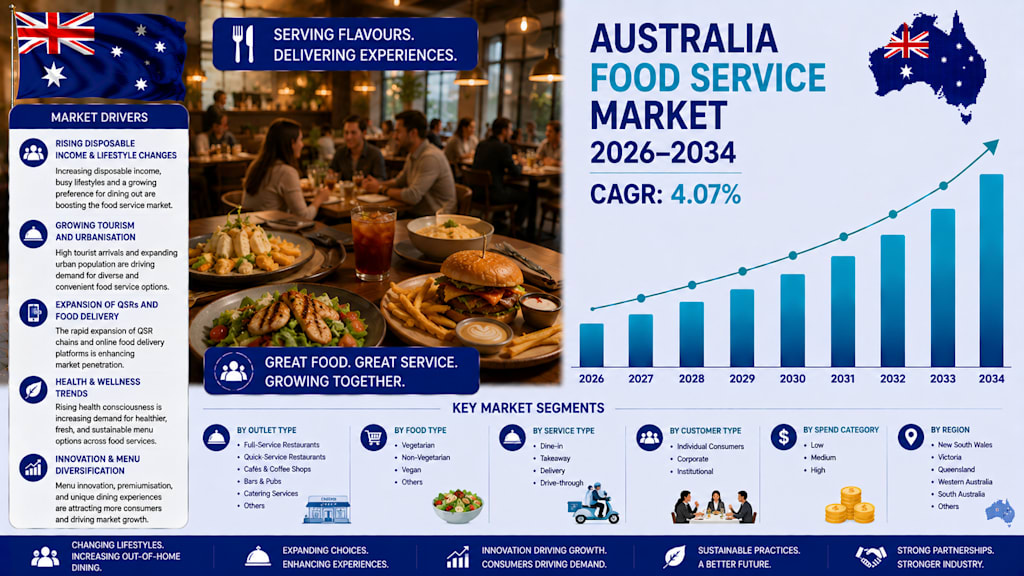
Australia Food Service Market Overview
The Australia food service market is one of the country's largest consumer-facing industries, encompassing restaurants, cafés, quick-service restaurants (QSRs), catering services, food delivery platforms, institutional food services, and hospitality dining establishments. The sector plays a vital role in supporting tourism, employment, hospitality, and consumer spending across Australia.
According to IMARC Group, the Australia food service market size reached USD 90.1 Billion in 2025 and is projected to reach USD 130.4 Billion by 2034, exhibiting a compound annual growth rate (CAGR) of 4.07% during 2026–2034. The market is expanding due to increasing tourism activity, rising consumer spending on dining experiences, growing demand for healthy and organic food options, and the rapid adoption of digital ordering and food delivery technologies.
Australia’s diverse culinary culture, strong café ecosystem, and increasing preference for convenience-oriented dining solutions continue to support long-term market growth across commercial and non-commercial food service segments.
Key Market Drivers
Increasing Tourism Activities
Tourism remains a major growth driver for Australia's food service industry. Domestic and international travelers actively seek local and international dining experiences, increasing demand for restaurants, cafés, quick-service outlets, and food service establishments in key tourist destinations. Growing visitor volumes are encouraging hospitality businesses to expand operations, improve menu offerings, and enhance customer experiences.
Rising Demand for Healthy and Organic Food
Consumers are increasingly prioritizing nutrition, ingredient transparency, and wellness-oriented eating habits. Growing demand for organic meals, plant-based products, gluten-free offerings, and clean-label foods is encouraging food service operators to diversify menus and introduce healthier alternatives.
Urban Lifestyle Changes and Convenience-Oriented Consumption
Busy lifestyles, dual-income households, and changing work patterns are driving demand for convenient dining solutions, including takeaway meals, quick-service restaurants, delivery services, and grab-and-go offerings. The country's strong café and brunch culture also continues supporting food service growth.
Digital Transformation of Food Services
The widespread adoption of smartphones, online ordering platforms, mobile applications, loyalty programs, and contactless payment technologies is transforming customer engagement and operational efficiency across the sector. Food delivery services and digital ordering systems continue gaining popularity among consumers.
Growing Demand for Multicultural Cuisine
Australia’s multicultural population is fostering strong demand for diverse international cuisines, fusion dining concepts, and authentic culinary experiences. Restaurants are expanding menus and introducing innovative food concepts to cater to evolving consumer preferences.
Request a Sample Report with the Latest 2026 Data & Forecasts
What the Opportunities Are
Expansion of Online Food Delivery Services
The increasing popularity of food delivery applications and digital ordering platforms is creating significant opportunities for restaurants and cloud kitchen operators. Delivery-focused business models continue expanding across major metropolitan markets.
Growth of Cloud Kitchens and Ghost Kitchens
Food service operators are increasingly adopting delivery-only kitchen models that reduce operational costs while improving scalability. These facilities enable brands to serve multiple cuisine categories through a single location.
Rising Demand for Sustainable Dining
Consumers are becoming more environmentally conscious, encouraging restaurants to adopt sustainable sourcing practices, reduce food waste, utilize eco-friendly packaging, and promote ethical supply chains.
Premium Dining and Experiential Food Services
Customers are increasingly seeking unique dining experiences, premium ingredients, chef-driven concepts, and immersive hospitality offerings. This trend is creating opportunities for upscale restaurants and specialty food service providers.
Technology-Driven Restaurant Innovation
Artificial intelligence, digital menu boards, self-service kiosks, automated ordering systems, and customer analytics solutions are helping food service businesses improve efficiency and customer satisfaction.
Recent News and Developments
May 2026 : Food service operators continued investing in digital ordering systems, loyalty programs, and delivery infrastructure to improve customer engagement and operational efficiency.
April 2026 : Restaurants expanded healthy menu offerings, plant-based products, and sustainability-focused initiatives in response to evolving consumer preferences.
March 2026 : Hospitality businesses strengthened partnerships with tourism operators to enhance dining experiences and attract domestic and international visitors.
February 2026 : Cloud kitchens and delivery-focused food service concepts continued expanding across major urban centers to address growing demand for convenience-oriented dining.
January 2026 : Industry participants accelerated investments in restaurant automation technologies, contactless payment systems, and customer experience enhancements.
2025–2026 (Market Trend) : The Australia food service market is being shaped by tourism growth, digital transformation, convenience-focused consumption, multicultural cuisine demand, and increasing health-conscious dining preferences. Industry participants are investing in food delivery infrastructure, cloud kitchens, sustainable operations, and technology-driven customer experiences to strengthen competitiveness and support long-term growth.
Why You Should Know About the Australia Food Service Market?
The Australia food service market remains a cornerstone of the country’s hospitality, tourism, and consumer services economy.
With projected growth from USD 90.1 Billion in 2025 to USD 130.4 Billion by 2034, the market demonstrates strong long-term potential supported by rising tourism activity, changing consumer lifestyles, digital innovation, and growing demand for diverse dining experiences.
As restaurants, cafés, hospitality operators, delivery platforms, and food service providers continue investing in innovation, sustainability, and customer-centric experiences, the sector is expected to play a pivotal role in shaping Australia’s hospitality and consumer landscape throughout the coming decade.
About the Creator
Amyra Singh
Market research analyst who loves spotting patterns, digging into data, and turning insights into strategies that help brands grow and stay ahead of the curve.
Enjoyed the story? Support the Creator.
Subscribe for free to receive all their stories in your feed.
Comments
There are no comments for this story
Be the first to respond and start the conversation.