
Australia Endoscopy Devices Market Expands Rapidly as Minimally Invasive Healthcare Gains Momentum
Rising chronic disease cases, advanced imaging technologies, and stronger preventive healthcare programs are accelerating Australia’s endoscopy devices industry.

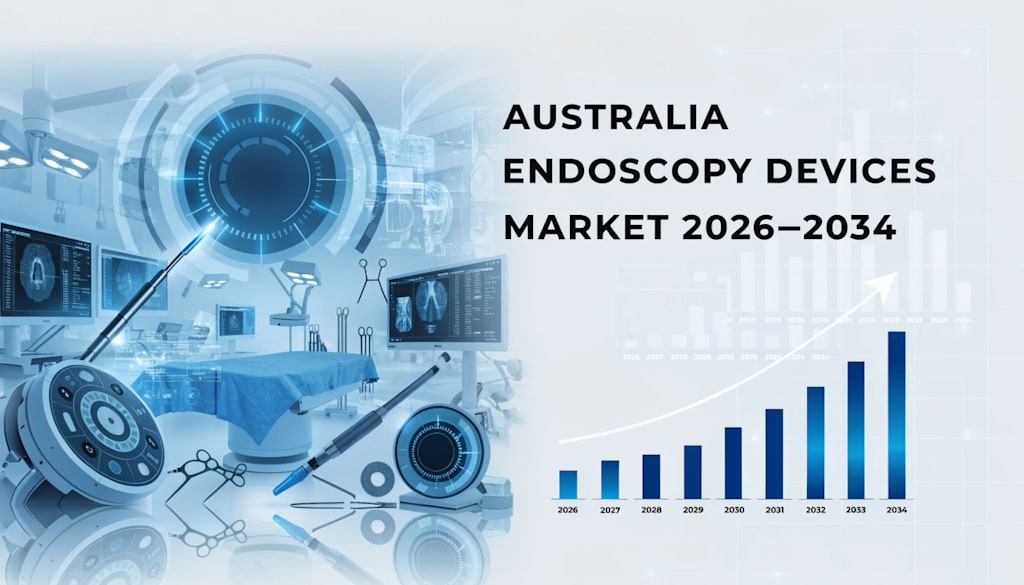
Australia’s endoscopy devices market is undergoing significant expansion as healthcare providers increasingly adopt minimally invasive diagnostic and surgical technologies across hospitals, clinics, and ambulatory care centers. Growing awareness of preventive healthcare, rising gastrointestinal disease cases, and rapid advances in imaging and robotic-assisted technologies are driving strong demand for modern endoscopic systems throughout the country.
According to IMARC Group, the Australia endoscopy devices market reached USD 1,056.7 million in 2025 and is projected to grow to USD 1,691.7 million by 2034, expanding at a CAGR of 5.21% during 2026–2034. The market’s growth is being fueled by increasing preference for minimally invasive procedures, government-backed screening initiatives, and healthcare infrastructure modernization.
Endoscopy devices are widely used to diagnose and treat gastrointestinal, urology, gynecology, respiratory, and orthopedic conditions through minimally invasive procedures that reduce recovery time and improve patient outcomes. Australia’s healthcare system is increasingly integrating advanced endoscopic equipment featuring high-definition imaging, AI-assisted diagnostics, robotic navigation, and flexible minimally invasive technologies.
IMARC notes that the market is segmented by type into endoscopes, endoscopy visualization systems, endoscopy visualization components, and operative devices. By application, the market includes gastrointestinal endoscopy, urology endoscopy, laparoscopy, gynecology endoscopy, arthroscopy, and others. End users include hospitals and clinics, ambulatory surgical centers, and other healthcare facilities. Regional demand spans Australia Capital Territory & New South Wales, Victoria & Tasmania, Queensland, Northern Territory & Southern Australia, and Western Australia.
Request a Business Sample Report for Procurement & Investment Evaluation:
Why the Market Is Growing So Rapidly
One of the biggest drivers behind Australia’s endoscopy devices market growth is the increasing prevalence of gastrointestinal and chronic diseases. Conditions such as colorectal cancer, obesity-related digestive disorders, acid reflux, and inflammatory bowel disease are becoming more common across Australia. IMARC highlights that colorectal cancer is projected to remain one of the country’s most frequently diagnosed cancers, significantly increasing demand for colonoscopy and related endoscopic procedures.
The rapid shift toward minimally invasive surgeries is another major growth catalyst. Patients and healthcare providers increasingly prefer endoscopic procedures because they offer shorter recovery times, smaller incisions, reduced surgical trauma, and lower complication risks compared to traditional open surgeries. Hospitals are therefore investing heavily in modern endoscopic systems capable of delivering higher precision and better patient outcomes.
Technological innovation is transforming the competitive landscape of the market. Advanced features such as high-definition imaging, 3D visualization, robotic-assisted endoscopy, capsule endoscopy, and AI-powered diagnostics are significantly improving procedural accuracy and disease detection rates. Australian healthcare providers are rapidly integrating these technologies to enhance diagnostic efficiency and clinical decision-making.
Government support for preventive healthcare and early disease screening is also strengthening market demand. National healthcare initiatives such as the National Bowel Cancer Screening Program continue encouraging regular screening and early diagnosis among at-risk populations. Public healthcare investments are helping hospitals and clinics upgrade surgical and diagnostic infrastructure, creating favorable conditions for endoscopy device adoption nationwide.
Another important growth factor is Australia’s aging population. Older adults are more vulnerable to gastrointestinal diseases, respiratory disorders, arthritis, and chronic health conditions requiring diagnostic or therapeutic endoscopic procedures. As the elderly population expands, healthcare systems are expected to perform significantly higher volumes of minimally invasive procedures over the next decade.
Medical tourism is contributing to market expansion as well. Australia’s advanced healthcare infrastructure and highly trained specialists continue attracting international patients seeking complex minimally invasive treatments. Healthcare providers are responding by investing in cutting-edge endoscopy systems capable of supporting high-quality clinical outcomes and improved patient experiences.
What the Opportunities Are
1. Expansion of AI-Assisted Endoscopy Systems
AI-powered imaging and diagnostic platforms are creating major opportunities for healthcare providers seeking faster and more accurate disease detection capabilities.
2. Growth in Minimally Invasive Surgery Demand
Rising patient preference for minimally invasive procedures continues driving investment in advanced endoscopic technologies across hospitals and surgical centers.
3. Development of Portable and Flexible Endoscopy Devices
Portable systems designed for outpatient and regional healthcare facilities offer strong growth potential, especially in underserved communities.
4. Robotic-Assisted Endoscopic Procedures
Robotic technologies are improving precision and reducing procedural complexity, opening new opportunities in advanced surgical applications.
5. Expansion of Ambulatory Surgical Centers
Increasing use of same-day procedures is boosting demand for compact, efficient, and cost-effective endoscopy systems in ambulatory care environments.
6. Healthcare Infrastructure Modernization
Ongoing investment in hospital upgrades and digital healthcare transformation creates opportunities for suppliers of next-generation visualization systems and operative devices.
7. Infection Prevention and Sterilization Solutions
Growing focus on infection control is increasing demand for single-use endoscopes, sterilization technologies, and advanced reprocessing systems.
Recent News & Developments in Australia Endoscopy Devices Market
• January 2025: Mediquip expanded its Australian healthcare footprint through the acquisition of Innovative Medical Solutions (WA), Austvet Endoscopy (VIC), and Bosco Medical Australia (QLD). The expansion strengthened the company’s technical support capabilities, endoscopy product portfolio, and nationwide service network across Australia’s healthcare and veterinary sectors. Company executives emphasized that the acquisitions would improve clinical efficiencies and after-sales support for healthcare providers nationwide. The move reflected rising consolidation activity within Australia’s growing medical technology market.
• May 2025: Australian healthcare institutions accelerated investments in advanced endoscopic imaging systems and AI-assisted diagnostics to improve early detection of gastrointestinal diseases and cancers. Several hospital networks expanded minimally invasive surgical capabilities by integrating high-definition visualization platforms and robotic-assisted technologies into procedural workflows. Healthcare analysts reported rising procedural volumes linked to preventive screening initiatives and increasing patient demand for minimally invasive treatment options. Industry participants projected continued investment growth across Australia’s hospital infrastructure sector.
• September 2025: Healthcare providers across Australia reported stronger adoption of flexible and portable endoscopy technologies aimed at improving regional healthcare accessibility. Hospitals and ambulatory surgical centers increased deployment of minimally invasive systems supporting faster recovery times and improved operational efficiency. Industry observers also noted growing demand for infection-prevention technologies, including single-use endoscopes and advanced sterilization services. The market’s continued modernization reinforced expectations for long-term expansion in Australia’s endoscopy devices industry.
Why Should You Know About Australia Endoscopy Devices Market?
Australia’s endoscopy devices market represents one of the country’s most important healthcare technology growth sectors. As healthcare systems increasingly prioritize preventive diagnostics, minimally invasive treatment, and faster patient recovery, endoscopic technologies are becoming central to modern medical care.
For investors and medical technology companies, the market offers strong long-term opportunities driven by rising chronic disease prevalence, healthcare infrastructure investment, and rapid technological innovation. For hospitals and healthcare providers, advanced endoscopy systems improve procedural precision, operational efficiency, and patient outcomes while supporting cost-effective care delivery.
Policymakers also recognize minimally invasive healthcare technologies as essential tools for strengthening preventive medicine, reducing long-term treatment costs, and improving national healthcare capacity. As Australia continues modernizing its healthcare ecosystem, the endoscopy devices market is positioned to play an increasingly critical role in the country’s future medical landscape.
About the Creator
Rashi Sharma
I am a market researcher.
Enjoyed the story? Support the Creator.
Subscribe for free to receive all their stories in your feed.
Comments
There are no comments for this story
Be the first to respond and start the conversation.