
Australia E-Invoicing Market: Powering a Digital-First Financial Ecosystem
Government mandates, automation, and SME adoption are accelerating Australia’s shift toward seamless digital invoicing

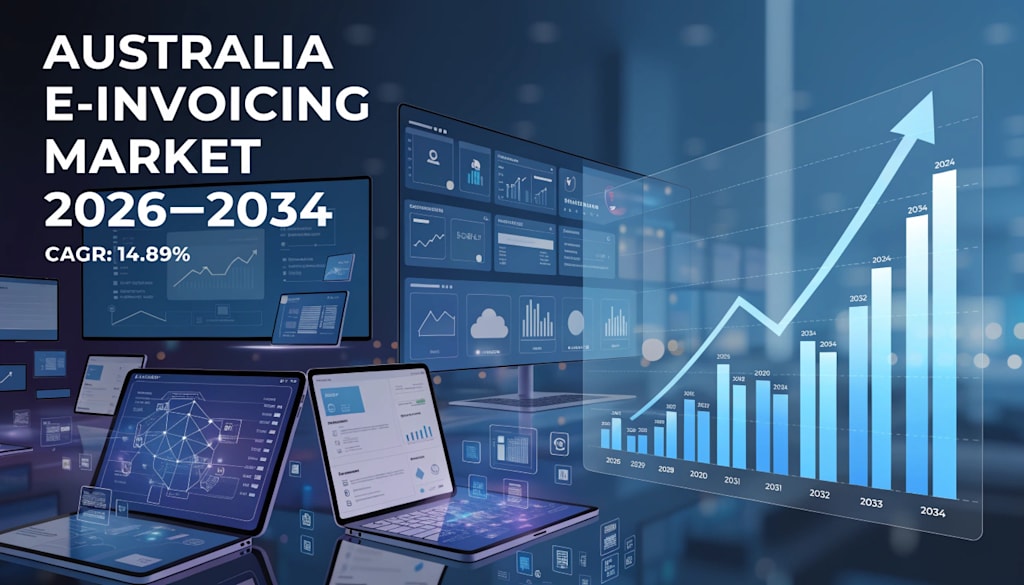
The Australia e-invoicing market is rapidly becoming a cornerstone of the country’s digital economy, transforming how businesses manage transactions, compliance, and financial workflows. According to IMARC Group, the market reached a value of USD 512.9 million in 2025 and is expected to grow significantly to USD 1,854.5 million by 2034, exhibiting a strong CAGR of 14.89% during 2026–2034.
This remarkable growth highlights a fundamental shift from traditional paper-based invoicing to automated, real-time digital systems. E-invoicing is no longer just a technological upgrade—it is a strategic enabler of efficiency, transparency, and scalability. Businesses across sectors are embracing structured digital invoicing to reduce manual work, eliminate errors, and improve cash flow management.
At the heart of this transformation lies Australia’s adoption of standardized frameworks like Peppol, supported by strong government initiatives. As organizations move toward integrated digital ecosystems, e-invoicing is becoming a foundational layer of modern financial operations, connecting buyers, suppliers, and institutions in a seamless network.
Request a Business Sample Report for Procurement & Investment Evaluation:
Segmentation Categories:
• Channel: B2B, B2C, Others
• Deployment Type: Cloud-based, On-premises
• Application: Energy and Utilities, FMCG, E-Commerce, BFSI, Government, Others
• Region: Australia Capital Territory & New South Wales, Victoria & Tasmania, Queensland, Northern Territory & Southern Australia, Western Australia
Why the Market Is Growing So Rapidly
A major driver of the Australia e-invoicing market is strong government support and regulatory mandates. Federal agencies are required to adopt e-invoicing capabilities, creating a structured ecosystem that encourages businesses to follow suit. This top-down approach ensures widespread adoption and builds trust in digital invoicing systems.
Cost efficiency is another powerful catalyst. Businesses—especially small and medium-sized enterprises (SMEs)—are leveraging e-invoicing to eliminate manual processes, reduce administrative costs, and minimize errors. Research indicates that SMEs can save up to A$40,000 annually by adopting digital invoicing systems, making it both an operational and financial advantage.
Improved cash flow and faster payment cycles are also driving adoption. E-invoicing enables real-time invoice delivery and automated validation, reducing delays and disputes. Government policies supporting faster payment timelines further enhance liquidity for businesses, particularly SMEs that depend on consistent cash flow.
Technological advancements, particularly in artificial intelligence (AI) and automation, are reshaping the market. AI-powered systems can extract, validate, and process invoice data with minimal human intervention, while robotic process automation (RPA) streamlines workflows. These innovations are significantly improving efficiency and scalability across industries.
Cybersecurity has emerged as a critical growth factor as well. With increasing digital transactions, businesses are prioritizing secure invoicing platforms featuring encryption, multi-factor authentication, and fraud detection tools. The rising number of data breaches has made secure e-invoicing solutions a necessity rather than an option.
What the Opportunities Are
The Australia e-invoicing market offers a wide range of strategic opportunities for businesses and investors:
• End-to-End Digital Procurement: Integrating e-invoicing into full procure-to-pay systems enables seamless automation across financial workflows, improving efficiency and visibility.
• SME Enablement Platforms: Simplified, user-friendly solutions tailored for SMEs can accelerate adoption and unlock a large untapped market segment.
• AI-Driven Financial Intelligence: Advanced analytics and predictive tools can provide real-time insights into cash flow, compliance, and operational performance.
• Cross-Border Transaction Enablement: Standardized invoicing frameworks enable smoother international trade and integration with global supply chains.
• Cybersecurity Solutions: As digital transactions grow, demand for secure platforms and fraud detection systems will continue to rise.
• Cloud-Based SaaS Expansion: Scalable subscription-based platforms offer flexibility and affordability, particularly for growing businesses.
• Sustainability Initiatives: Digital invoicing reduces paper usage and environmental impact, aligning with ESG goals and corporate sustainability strategies.
• February 2025: The Australian government expanded its digital economy initiatives by strengthening e-invoicing compliance across federal procurement systems. These measures encouraged suppliers to adopt Peppol-enabled invoicing to ensure faster and more transparent transactions. The move is expected to accelerate nationwide adoption, particularly among SMEs.
• June 2025: A leading fintech provider launched an AI-powered e-invoicing platform designed to automate invoice validation, fraud detection, and payment tracking. The platform supports real-time analytics and integrates with ERP systems, improving operational efficiency for businesses. This reflects growing innovation and competition in the market.
• September 2025: Industry data indicated a significant increase in SME participation in e-invoicing networks, driven by cost savings and faster payment cycles. Businesses reported improved efficiency and reduced administrative burdens. This trend highlights the expanding maturity and scalability of Australia’s digital invoicing ecosystem.
Why Should You Know About Australia E-Invoicing Market?
The Australia e-invoicing market represents a critical shift toward a fully digital, efficient, and interconnected business environment. With strong regulatory backing, rapid technological innovation, and clear cost advantages, it is set to become a standard component of financial operations.
For businesses, adopting e-invoicing means faster payments, fewer errors, and better compliance. For investors and innovators, it offers a high-growth opportunity driven by automation, digital transformation, and expanding SME adoption.
Ultimately, understanding this market means understanding the future of finance—where speed, accuracy, and digital connectivity define success in an increasingly competitive and data-driven economy.
About the Creator
Rashi Sharma
I am a market researcher.
Enjoyed the story? Support the Creator.
Subscribe for free to receive all their stories in your feed.
Comments
There are no comments for this story
Be the first to respond and start the conversation.