
Australia Digital Health Market: Transforming Healthcare Through Technology and Innovation
Telehealth expansion, AI-driven care, and government-backed infrastructure are accelerating Australia’s digital health revolution

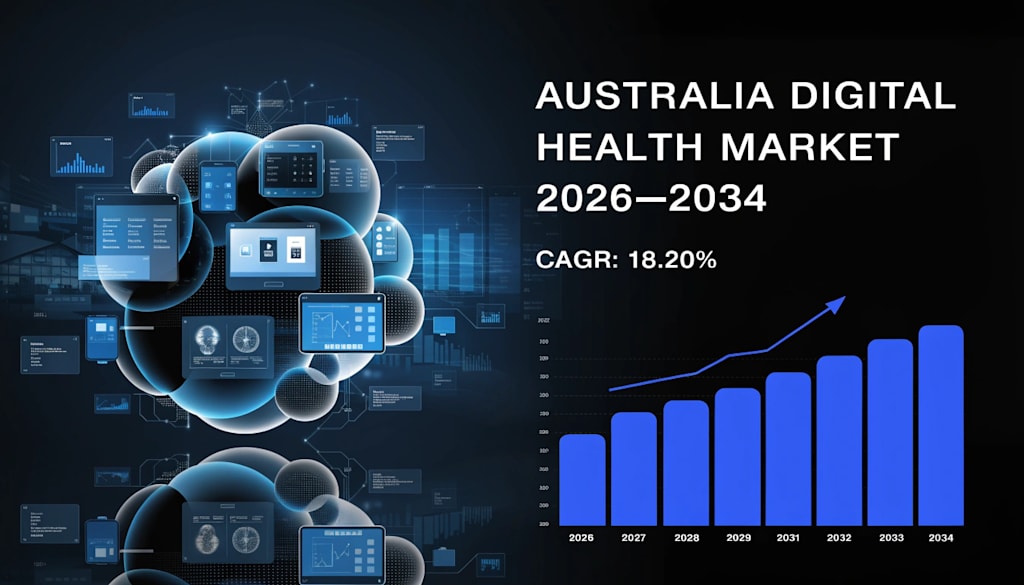
The Australia digital health market is rapidly evolving into a cornerstone of the country’s healthcare system, driven by technology, policy support, and changing patient expectations. According to IMARC Group, the market reached a value of USD 8.9 billion in 2025 and is projected to grow significantly to USD 31.1 billion by 2034, expanding at a strong CAGR of 14.92% during 2026–2034.
This remarkable growth reflects a broader transformation in how healthcare is delivered and consumed. Digital health technologies—ranging from telemedicine and wearable devices to electronic health records and AI-powered analytics—are redefining patient care, making it more accessible, personalized, and efficient.
Australia’s healthcare ecosystem, which blends public and private systems, provides a strong foundation for digital innovation. With increasing demand for remote care, chronic disease management, and data-driven decision-making, digital health is becoming a critical enabler of improved outcomes and system efficiency.
Request a Business Sample Report for Procurement & Investment Evaluation:
Segmentation Categories:
• Type: Telehealth, Medical Wearables, EMR/EHR Systems, Medical Apps, Healthcare Analytics, Others
• Component: Software, Hardware, Services
• Region: Australia Capital Territory & New South Wales, Victoria & Tasmania, Queensland, Northern Territory & Southern Australia, Western Australia
Why the Market Is Growing So Rapidly
One of the most significant drivers of the Australia digital health market is the rapid adoption of telehealth services. Patients increasingly prefer virtual consultations for convenience, accessibility, and reduced waiting times. Telehealth is particularly valuable in rural and remote regions, where access to healthcare facilities is limited, enabling equitable healthcare delivery across vast geographies.
Government support and national infrastructure are also playing a pivotal role. Initiatives such as the My Health Record system and broader digital health strategies provide a unified platform for storing and sharing patient data securely. These efforts enhance interoperability, improve care coordination, and create a stable environment for innovation and investment.
The rise of mobile health (mHealth) solutions is another key growth factor. With smartphone usage expected to reach 23.6 million users by 2026, mobile apps are becoming central to healthcare delivery—offering services such as appointment scheduling, chronic disease management, mental health support, and fitness tracking.
Private sector involvement is further accelerating market expansion. Health insurers, technology firms, and startups are collaborating to develop integrated digital care solutions, including wearable integration, AI-based diagnostics, and remote monitoring platforms. This ecosystem fosters innovation and expands the scope of digital healthcare services.
Additionally, the shift toward personalized and preventive care is transforming the industry. Digital tools enable continuous health monitoring, early detection of diseases, and tailored treatment plans. This proactive approach not only improves patient outcomes but also reduces long-term healthcare costs.
What the Opportunities Are
The Australia digital health market presents numerous high-impact opportunities for businesses and investors:
• AI-Driven Diagnostics and Analytics: Advanced algorithms can improve disease detection, treatment planning, and predictive healthcare, offering strong innovation potential.
• Expansion of Telehealth Platforms: Continued demand for remote care creates opportunities for scalable telemedicine solutions, particularly in underserved regions.
• Wearable Health Technology Growth: Devices that monitor vital signs and chronic conditions in real time are becoming essential for preventive care and patient engagement.
• Personalized Healthcare Solutions: Integration of genetic data, lifestyle tracking, and AI insights enables tailored health plans, opening new revenue streams.
• Rural and Indigenous Healthcare Access: Digital tools can bridge healthcare gaps in remote communities, offering both social impact and market growth potential.
• Interoperable Health Data Systems: Developing platforms that integrate data across providers can improve decision-making and create a unified healthcare ecosystem.
• Cloud-Based Healthcare Infrastructure: Scalable, secure cloud solutions are increasingly in demand to support data storage, analytics, and system integration.
Recent News & Developments in Australia Digital Health Market
• February 2025: The Australian government continued strengthening national digital health infrastructure by enhancing interoperability standards across healthcare systems. These updates aim to improve data sharing between hospitals, clinics, and insurers, ensuring more coordinated patient care. The initiative is expected to accelerate adoption of integrated digital platforms nationwide.
• June 2025: A leading health technology company launched an AI-powered remote monitoring platform designed to track chronic conditions in real time. The solution integrates wearable devices with analytics dashboards, enabling healthcare providers to deliver proactive care. This innovation reflects growing investment in personalized and preventive digital health solutions.
• September 2025: Market data indicated a sharp increase in telehealth usage across Australia, particularly in rural and regional areas. Healthcare providers reported higher patient engagement and improved access to services. This trend underscores the growing importance of digital health in addressing geographic healthcare disparities.
Why Should You Know About Australia Digital Health Market?
The Australia digital health market represents a fundamental shift in how healthcare is delivered, accessed, and experienced. With rapid technological advancement, strong government support, and increasing consumer demand, it is one of the fastest-growing sectors in the healthcare industry.
For businesses and investors, it offers high-growth opportunities driven by innovation and digital transformation. For healthcare providers, it enables more efficient, patient-centric care. And for society as a whole, it represents a future where healthcare is more accessible, personalized, and proactive—ultimately improving outcomes and quality of life across the nation.
About the Creator
Rashi Sharma
I am a market researcher.
Enjoyed the story? Support the Creator.
Subscribe for free to receive all their stories in your feed.
Comments
There are no comments for this story
Be the first to respond and start the conversation.