
Australia Digital Banking Market: Redefining Finance Through Innovation and Customer Experience
AI, mobile-first banking, and open banking regulations are accelerating Australia’s shift toward a fully digital financial ecosystem

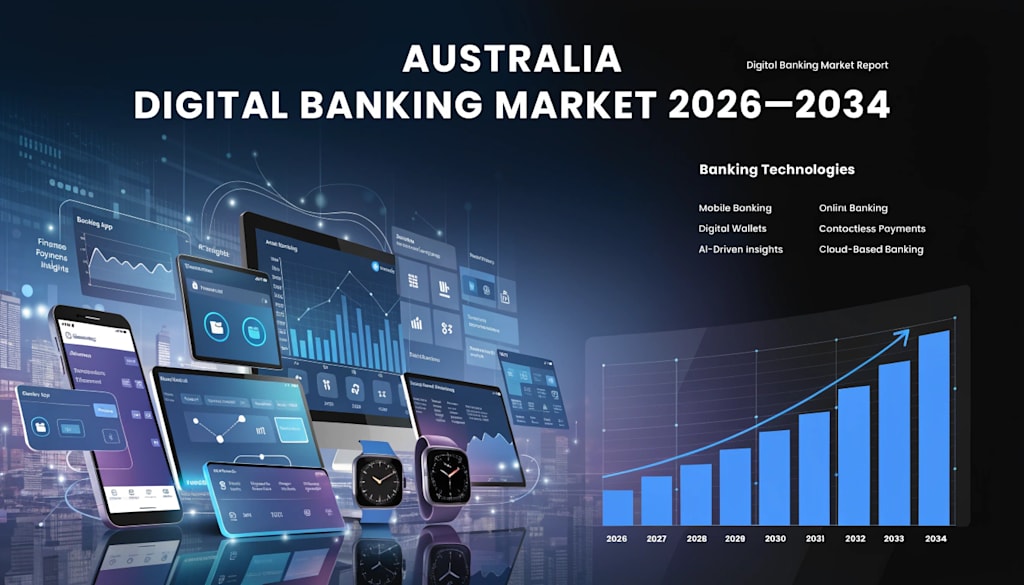
The Australia digital banking market is rapidly reshaping the country’s financial landscape, driven by technology, evolving consumer expectations, and regulatory innovation. According to IMARC Group, the market reached a value of USD 231.6 million in 2025 and is projected to grow to USD 607.8 million by 2034, exhibiting a CAGR of 10.98% during 2026–2034.
This steady growth highlights a major transition from traditional branch-based banking to fully digital, customer-centric financial services. Digital banking platforms—ranging from mobile apps to AI-powered financial tools—are enabling faster transactions, real-time insights, and seamless user experiences.
Australia’s financial ecosystem is particularly well-positioned for this shift. High smartphone penetration, strong internet infrastructure, and a tech-savvy population are creating ideal conditions for digital banking adoption. At the same time, regulatory frameworks like open banking are encouraging competition and innovation, making the market more dynamic than ever.
Request a Business Sample Report for Procurement & Investment Evaluation:
Segmentation Categories:
• Services: Transactional (Cash Deposits and Withdrawals, Fund Transfers, Auto-Debit/Auto-Credit Services, Loans), Non-transactional (Information Security, Risk Management, Financial Planning, Stock Advisory)
• Deployment Type: On-Premises, Cloud
• Technology: Internet Banking, Digital Payments, Mobile Banking
• Industry: Media and Entertainment, Manufacturing, Retail, Banking, Healthcare
• Region: Australia Capital Territory & New South Wales, Victoria & Tasmania, Queensland, Northern Territory & Southern Australia, Western Australia
Why the Market Is Growing So Rapidly
One of the most important growth drivers is the rising focus on enhancing user experience through digital transformation. Banks are investing heavily in intuitive mobile apps, seamless interfaces, and personalized features to meet growing customer expectations. Features like virtual cards, real-time tracking, and 24/7 support are becoming standard, significantly improving customer satisfaction and loyalty.
Technological advancements are also playing a central role. Artificial intelligence (AI), machine learning (ML), and blockchain technologies are enabling smarter and more efficient banking operations. These tools allow banks to offer personalized financial advice, automate transactions, and enhance fraud detection—making digital banking both convenient and secure.
The widespread adoption of smartphones and high-speed internet is another major catalyst. With over 90% of Australians using smartphones, mobile banking has become the preferred way to manage finances. This shift toward mobile-first behavior is pushing banks to continuously upgrade their digital platforms and deliver faster, more accessible services.
Changing consumer behavior is equally significant. Customers now demand real-time services, transparency, and convenience. Younger generations, in particular, prefer fully digital experiences that align with their lifestyle—leading banks to move away from branch-centric models toward digital-first strategies.
Regulatory support is further accelerating market growth. Initiatives such as the Consumer Data Right (CDR) and open banking frameworks enable secure data sharing between institutions, fostering innovation and competition. These policies empower consumers with greater control over their financial data while encouraging fintech collaboration.
What the Opportunities Are
The Australia digital banking market offers several high-potential opportunities:
• AI-Powered Personalization: Banks can leverage AI and data analytics to deliver customized financial advice, improving customer engagement and retention.
• Cloud-Based Banking Infrastructure: Transitioning to cloud platforms enables scalability, cost efficiency, and faster innovation cycles.
• Embedded Finance Solutions: Integrating banking services into non-financial platforms (e-commerce, apps) opens new revenue streams and customer touchpoints.
• SME-Focused Digital Banking: Tailored solutions for small and micro businesses can address underserved segments and drive growth.
• Cybersecurity and Fraud Prevention: Advanced security solutions are increasingly critical as digital transactions grow in volume and complexity.
• Fintech Collaboration: Partnerships between traditional banks and fintech startups can accelerate innovation and improve service offerings.
• Expansion of Mobile-First Services: Continuous enhancement of mobile apps and digital wallets can capture a larger share of daily financial activities.
Recent News & Developments in Australia Digital Banking Market
• February 2025: AMP launched a new digital banking platform targeting small and micro businesses across Australia. Built on advanced banking infrastructure, the platform offers features such as numberless debit cards, cash flow tools, and fee-free currency conversion. This initiative reflects growing competition and innovation in the digital banking space.
• March 2025: Bankwest introduced its “Just Enough Bank” digital platform, focusing on simplicity and user-friendly experiences. The platform was developed based on customer feedback and aims to deliver streamlined, intuitive financial services. This launch highlights the increasing importance of customer-centric design in digital banking.
• September 2025: Industry trends indicated a continued surge in digital banking adoption, with more consumers shifting away from physical branches to mobile and online platforms. Banks reported higher engagement rates and increased usage of digital services. This shift reinforces the long-term dominance of digital-first banking models in Australia.
Why Should You Know About Australia Digital Banking Market?
The Australia digital banking market represents a fundamental shift in how financial services are delivered and experienced. It combines technology, customer-centric design, and regulatory innovation to create a faster, smarter, and more inclusive financial ecosystem.
For businesses and investors, it offers strong growth potential fueled by digital transformation and fintech collaboration. For banks, it is an opportunity to redefine customer relationships and operational efficiency. And for consumers, it delivers unprecedented convenience, personalization, and control over financial decisions.
Understanding this market means understanding the future of finance—where digital platforms, intelligent systems, and seamless experiences define how money moves in an increasingly connected world.
About the Creator
Rashi Sharma
I am a market researcher.
Enjoyed the story? Support the Creator.
Subscribe for free to receive all their stories in your feed.
Comments
There are no comments for this story
Be the first to respond and start the conversation.