
Australia Dairy Alternatives Market 2026: Plant-Based Surge, Functional Innovation & Foodservice Growth
How health consciousness, sustainability values and next generation food tech are transforming Australia's dairy landscape

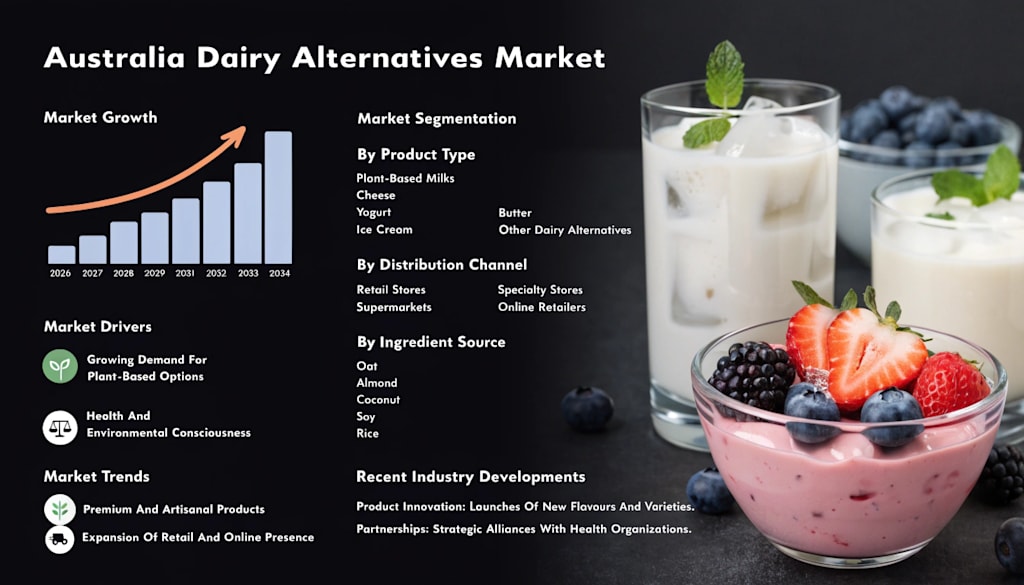
The Australia dairy alternatives market is experiencing a period of dynamic transformation as consumers across the continent increasingly turn to plant based milks, yoghurts, cheeses and ice creams. Driven by health awareness, environmental concerns and sophisticated product innovation, dairy free options have moved from niche specialty aisles into mainstream grocery baskets, café menus and family refrigerators. According to IMARC Group, the Australia dairy alternatives market size reached USD 1,055.1 Million in 2025 and is projected to reach USD 2,636.1 Million by 2034, exhibiting a compound annual growth rate (CAGR) of 10.39% during 2026–2034. With a wave of new product launches and emerging technologies under regulatory review, the market is set to reshape how Australians consume — and think about — their daily dairy.
What's Driving Market Growth?
Rising Health Awareness and Dietary Shifts. Australian consumers have become more deliberate about their food choices, increasingly selecting options perceived to be cleaner, more natural or aligned with specific health goals. Approximately 6.5 million Australians are actively reducing their meat consumption, and a remarkable 79% of them incorporate plant based meals into their diets at least once a week. The rise of flexitarianism — where individuals moderate animal product intake without eliminating them entirely — has helped normalise plant based dairy across broad demographic groups.
Lactose Intolerance and Dairy Sensitivities. A notable segment of the Australian population deals with lactose intolerance or dairy allergies, driving sustained demand for alternative products. Plant based options like almond, soy and oat milk provide acceptable substitutes that do not sacrifice taste or nutritional benefits, and brands are broadening their ranges to meet this health centric demand.
Sustainability and Ethical Consumerism. Concerns over climate change, water usage, deforestation and animal cruelty are steering consumers toward plant based alternatives perceived as greener and more humane. The ecological cost of conventional dairy production — including significant water consumption and greenhouse gas emissions — has stimulated interest in lower resource alternatives. This is particularly pronounced among younger, environment conscious shoppers who emphasise eco friendly consumption.
Expanded Retail Presence and Strategic Marketing. The increased availability of dairy alternatives in mainstream supermarkets, cafés and online platforms is significantly enhancing adoption. Leading companies are introducing innovative plant based products and deploying engaging marketing strategies focused on health, taste and sustainability. Partnerships between plant based producers and coffee chains or fast casual restaurants are reinforcing mainstream appeal.
Market Segmentation & Key Insights
By Product Type, the market covers cheese, creamers, yoghurt, ice creams, milk and others. Plant based milk remains the largest and most established category, with growth underpinned by the rising popularity of barista style formats, particularly oat based.
By Source, the market includes almond, soy, oats, hemp, coconut, rice and others. Oat milk has recently overtaken almond in consumer preference in several markets, prized for its creamy texture and superior frothing ability. Soy milk, once the category leader, has lost market share to newer entrants but remains a staple for many households. Surveys show soy and oat are nearly tied as the go to choice for about one third of plant milk consumers respectively, with almond following at around 17%.
By Distribution Channel, the market is segmented into supermarkets and hypermarkets, convenience stores, online stores and others. Omnichannel strategies are powering the next phase of expansion, with online grocery platforms providing emerging brands a route to market without requiring large scale distribution.
By Region, key markets include Australia Capital Territory & New South Wales, Victoria & Tasmania, Queensland, Northern Territory & Southern Australia, and Western Australia.
What the Opportunities Are?
Foodservice and Hospitality Expansion. Cafés, quick service restaurants and casual dining establishments are increasingly accommodating shifting dietary preferences, with many now including plant based milk as a standard offering rather than a niche option. The rise of barista quality oat and almond milks designed specifically for flat whites and lattes — particularly in Melbourne and Sydney's world renowned coffee culture — presents strong growth opportunities for B2B partnerships with hospitality entities.
Functional and Fortified Offerings. Escalating health awareness is driving demand for plant based milk and yoghurt enriched with protein, calcium, vitamins B12 and D, and gut healthy probiotics. Functional claims such as “supports immunity,” “bone health” or “high in omega 3” have become compelling selling points. Brands prioritising R&D to create these formulations are positioned to gain a competitive edge.
Private Label and Niche Branding Growth. Supermarkets are launching competitively priced store brands, increasing accessibility for mass consumers seeking dairy free options. At the same time, niche startups are focusing on specific consumer groups — keto friendly, allergen free or organic alternatives — cultivating loyal customer bases through tailored branding and transparent labeling.
Regional and Rural Market Expansion. Although the dairy alternatives market has historically been concentrated in cities like Sydney, Melbourne and Brisbane, regional and rural communities present untapped growth potential as health consciousness gradually transforms consumption patterns outside urban centres.
Recent News and Developments in Australia Dairy Alternatives Market
March 2026: Liddells launched the first lactose free Aussie Jack Burger Cheese Slices, designed for the country's booming burger night culture. The product offers a real dairy, natural cheese experience without lactose, catering to a growing demand that has seen lactose free products grow more than 12 per cent year on year.
March 2026: New Zealand's Boring Oat Milk launched in more than 1,000 Woolworths stores across Australia — its largest supermarket distribution to date — with Original and Barista oat milk variations now available in 953 Woolworths supermarkets (95 per cent of the nationwide network) and 80 Metro stores.
December 2025: Melbourne food tech startup Eden Brew submitted the country's first regulatory application for a precision fermented milk protein to Food Standards Australia New Zealand (FSANZ). The application covers animal free beta casein protein that can be used as a substitute for conventional dairy or plant proteins and generates 70% fewer emissions, uses only 5% of the land and lowers water consumption by 99% compared to conventional dairy, while emitting no methane. A decision is expected by November 2026.
November 2025: According to Euromonitor International, plant based dairy in Australia continued to outpace traditional dairy, growing at 5.2 per cent compared to 3.6 per cent in the overall dairy category. However, signs of maturity are emerging as consumers seek better nutrition, stronger functionality and more authentic flavour. “A few years ago people switched to plant based because it wasn't dairy. Today, they're choosing it because it's a good product,” said Julia Illera, research manager at Euromonitor International.
June 2025: Researchers at the University of New South Wales unveiled a plant based cheese prototype that replicates the melt, stretch and browning behaviour of conventional cheese without using a single drop of milk. Led by Professor Cordelia Selomulya, the team refined a process that pairs pea protein with polysaccharides to create a stable, elastic network capable of holding its shape under heat — and preserving key nutrients often lost during industrial processing.
June 2025: VegOut Magazine's consumer satisfaction survey revealed that Australians now rate oat and soy milks as the top plant based choices, with each claiming about a third of consumer preference. Almond milk, the early trendsetter, placed third at approximately 17%.
Why Should You Know About Australia Dairy Alternatives Market?
You should know about this market because it illustrates how health priorities, sustainability values and biotechnology innovation intersect to create strong and sustained growth in one of the most dynamic segments of Australia's food and beverage landscape. Dairy alternatives are no longer simple substitutes for the lactose intolerant — they are increasingly sophisticated, functional and nutritionally fortified products that meet the evolving expectations of health conscious, environmentally aware and flavour driven consumers.
For investors, the dairy alternatives market offers exposure to a high growth consumer category anchored in the national shift toward flexitarian and plant forward eating habits, accelerating product innovation and expanding distribution through both retail and foodservice channels. The projected CAGR of 10.39% reflects strong confidence in adoption trends, technological differentiation and recurring revenue opportunities tied to daily household consumption.
For food manufacturers, retailers, hospitality operators and ingredient suppliers, understanding dairy alternative segmentation, source preferences, functional trends and emerging precision fermentation technologies helps shape intelligent investment decisions, product development roadmaps and strategic partnerships that deliver measurable consumer satisfaction and market share outcomes.
In essence, the Australia dairy alternatives market captures how plant based nutrition, climate consciousness and gourmet expectations converge — making it a compelling area for innovators, investors and organisations seeking smarter approaches to sustainable eating, brand differentiation and the future of food.
About the Creator
Thomas
Market Research Analyst | Industry Trends & Forecasting | Turning market data into clear, actionable business insights across global sectors.
Enjoyed the story? Support the Creator.
Subscribe for free to receive all their stories in your feed.
Comments
There are no comments for this story
Be the first to respond and start the conversation.