
Australia Cold Chain Logistics Market Is Strengthening as Demand for Temperature-Controlled Supply Chains Grows
Expanding food exports, pharmaceutical distribution, and e-commerce logistics are driving the evolution of Australia’s cold chain infrastructure.

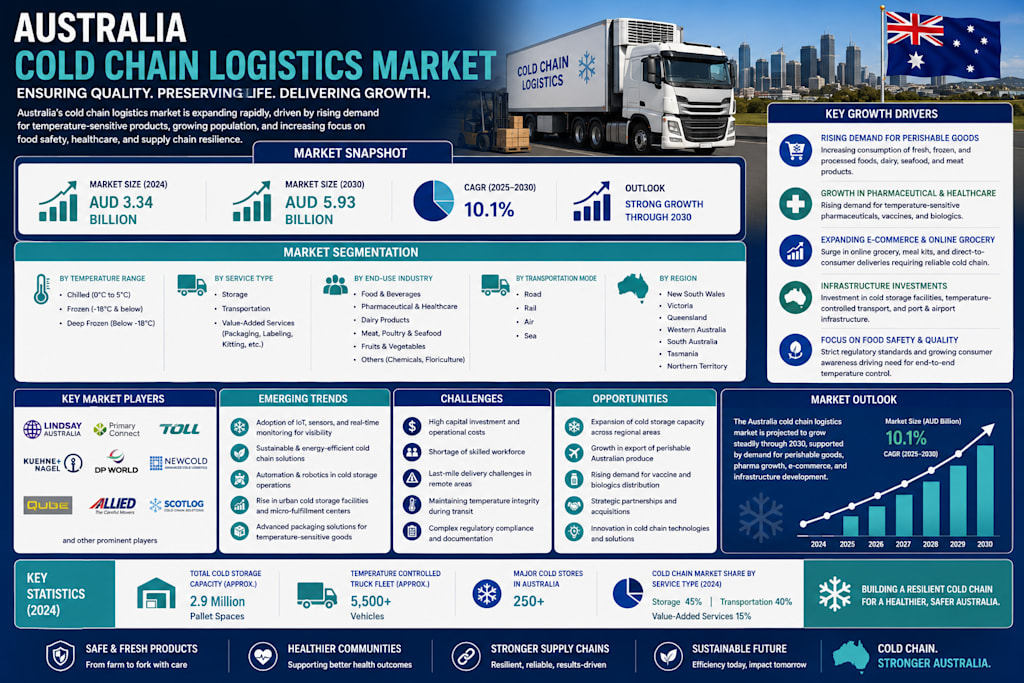
Modern supply chains increasingly depend on precision, speed, and reliability. For industries handling perishable products such as food, beverages, pharmaceuticals, and healthcare products, maintaining strict temperature control throughout transportation and storage is essential. This growing need has placed cold chain logistics at the center of Australia’s supply chain transformation.
Cold chain logistics encompasses temperature-controlled warehousing, refrigerated transportation, monitoring technologies, and distribution networks designed to preserve product quality and safety from origin to final delivery. As consumer expectations rise and regulatory requirements become more stringent, businesses are investing heavily in advanced cold chain solutions to ensure product integrity and minimize waste.
According to IMARC Group, the Australia cold chain logistics market was valued at USD 5.2 Billion in 2025. Looking ahead, the market is projected to reach USD 7.3 Billion by 2034, exhibiting a CAGR of 3.80% during 2026–2034.
The sector's growth reflects increasing demand from food processing companies, retailers, pharmaceutical manufacturers, healthcare providers, and exporters. As Australia continues to strengthen its position in global trade and domestic consumption patterns evolve, cold chain logistics is expected to remain a critical component of the country's economic infrastructure.
Evaluate Market Opportunity with the Business Sample Report:
Market segmentation includes:
By Type:
• Refrigerated Warehousing
• Refrigerated Transportation
By Temperature Range:
• Chilled
• Frozen
By Application:
• Fruits and Vegetables
• Dairy Products
• Meat and Seafood
• Processed Foods
• Pharmaceuticals
• Chemicals
• Others
By End User:
• Food and Beverage
• Healthcare and Pharmaceuticals
• Retail
• Chemicals
• Others
Region:
• New South Wales
• Victoria
• Queensland
• South Australia
• Western Australia
• Others
Why the Market Is Growing So Rapidly
One of the primary growth drivers is the increasing demand for fresh and frozen food products. Australian consumers are seeking higher-quality food options, including fresh produce, dairy products, seafood, and ready-to-eat meals. Maintaining freshness throughout transportation and storage requires sophisticated cold chain infrastructure, driving investment across the logistics sector.
The pharmaceutical industry is emerging as another major contributor to market growth. Many medicines, vaccines, biologics, and specialty healthcare products require strict temperature management throughout the supply chain. As healthcare spending increases and pharmaceutical innovation accelerates, demand for reliable cold chain logistics services continues to expand.
Australia's strong agricultural and seafood export industry is also supporting market development. International buyers increasingly expect high-quality products that meet stringent safety and freshness standards. Cold chain logistics providers play a vital role in ensuring products reach overseas markets in optimal condition, enhancing Australia's competitiveness in global trade.
Technological advancements are improving operational efficiency across the industry. Real-time temperature monitoring, Internet of Things (IoT) sensors, automated warehouse systems, GPS tracking, and predictive analytics are helping logistics companies improve visibility, reduce spoilage risks, and enhance supply chain performance.
The growth of e-commerce and direct-to-consumer delivery services is creating additional opportunities. Consumers increasingly expect convenient home delivery of groceries, meal kits, and temperature-sensitive products. This trend is encouraging investment in last-mile cold chain solutions and specialized distribution networks.
What the Opportunities Are
1. Pharmaceutical Cold Chain Expansion
The increasing demand for temperature-sensitive medicines, vaccines, and biologic therapies creates significant opportunities for logistics providers specializing in healthcare transportation and storage.
2. Advanced Monitoring Technologies
Companies offering real-time temperature tracking, IoT-enabled monitoring systems, and predictive analytics solutions can support greater supply chain transparency and reliability.
3. Food Export Logistics
Australia's strong reputation as a food exporter creates opportunities for cold chain providers serving international markets with reliable transportation and storage capabilities.
4. Automated Refrigerated Warehousing
The adoption of automation technologies in refrigerated warehouses can improve efficiency, reduce operating costs, and enhance inventory management capabilities.
5. Last-Mile Cold Delivery Solutions
Growing demand for online grocery shopping and direct-to-consumer food delivery creates opportunities for innovative temperature-controlled last-mile logistics services.
6. Sustainable Refrigeration Technologies
Businesses are increasingly seeking environmentally friendly refrigeration systems that reduce energy consumption and support sustainability goals. Providers that invest in green technologies can strengthen their competitive position.
7. Regional Infrastructure Development
Expanding cold storage and transportation networks in regional areas can support agricultural production, export growth, and improved access to fresh products across Australia.
Recent News & Developments in Australia Cold Chain Logistics Market
• February 2025: Australian logistics and supply chain stakeholders announced initiatives focused on strengthening temperature-controlled transportation infrastructure to support growing food and pharmaceutical distribution requirements. The programs emphasized operational efficiency, product safety, and enhanced supply chain resilience across key regions.
• June 2025: Several cold storage and logistics operators unveiled investments in advanced refrigerated warehousing facilities equipped with automated inventory systems and real-time temperature monitoring technologies. These developments were designed to improve storage capacity and support increasing demand from food and healthcare customers.
• September 2025: Industry participants reported continued growth in demand for cold chain services driven by expanding food exports, pharmaceutical distribution activities, and online grocery delivery services. Logistics providers highlighted increasing adoption of digital monitoring solutions to improve visibility and maintain product integrity throughout the supply chain.
Why Should You Know About Australia Cold Chain Logistics Market?
Cold chain logistics is becoming one of the most important enablers of modern commerce. From ensuring food safety and reducing waste to supporting pharmaceutical innovation and international trade, the industry plays a critical role in connecting producers, businesses, and consumers.
For investors, the market offers exposure to essential infrastructure supporting multiple high-growth sectors, including healthcare, food processing, retail, and exports. For logistics providers, opportunities exist in automation, digitalization, sustainable technologies, and specialized transportation services. For policymakers, strengthening cold chain infrastructure contributes to food security, public health, and economic competitiveness.
With the Australia cold chain logistics market expected to grow from USD 5.2 Billion in 2025 to USD 7.3 Billion by 2034, the sector is positioned to remain a vital component of the nation's supply chain ecosystem. As demand for temperature-sensitive products continues to increase, cold chain logistics will play an increasingly important role in supporting Australia's economic growth and global trade ambitions.
About the Creator
Rashi Sharma
I am a market researcher.
Enjoyed the story? Support the Creator.
Subscribe for free to receive all their stories in your feed.
Comments
There are no comments for this story
Be the first to respond and start the conversation.