
Australia Cardiac Arrhythmia Monitoring Devices Market to Reach US$230.23 Million by 2033 as Remote Cardiac Care and Wearable Technology Transform Heart Monitoring
Rising cardiovascular disease prevalence, rapid adoption of wearable cardiac monitoring devices, expanding telehealth services, and advances in artificial intelligence are driving strong growth in Australia's cardiac arrhythmia monitoring devices market.

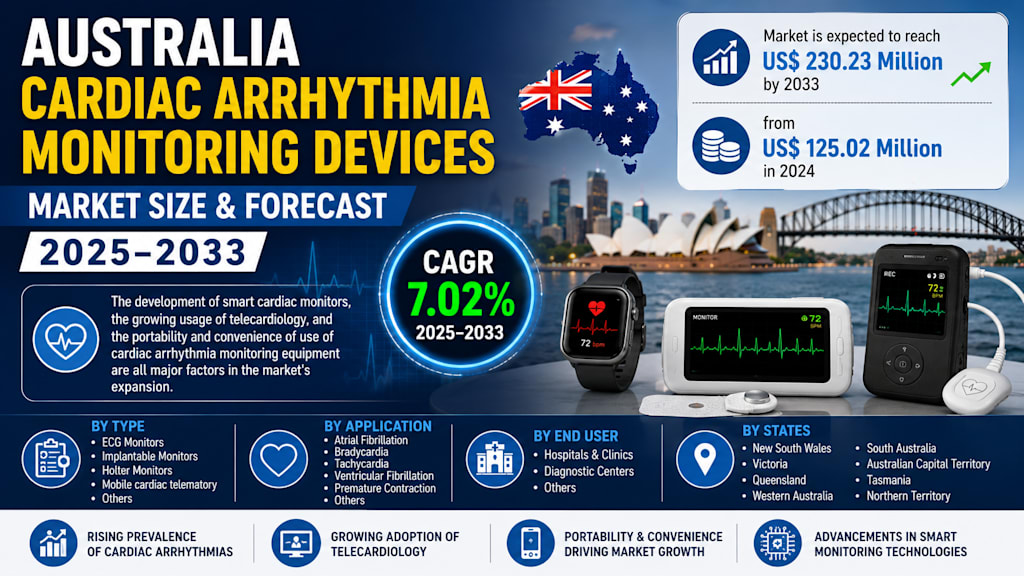
Smart Cardiac Monitoring Is Transforming Heart Care Across Australia
Cardiovascular disease remains one of Australia's leading health challenges, making early diagnosis and continuous monitoring increasingly important for improving patient outcomes. Cardiac arrhythmias—including atrial fibrillation, tachycardia, bradycardia, and ventricular rhythm disorders—often develop without noticeable symptoms, making timely detection essential for preventing serious complications such as stroke, heart failure, and sudden cardiac arrest.
Modern cardiac arrhythmia monitoring devices are changing how healthcare providers diagnose and manage these conditions. Advances in wearable sensors, wireless communication, artificial intelligence, and remote patient monitoring now allow clinicians to observe heart rhythms continuously without requiring prolonged hospital stays. These innovations are making cardiac care more convenient, accurate, and accessible throughout Australia.
According to the latest market outlook, the Australia Cardiac Arrhythmia Monitoring Devices Market is projected to grow from US$125.02 million in 2024 to US$230.23 million by 2033, registering a compound annual growth rate (CAGR) of 7.02% during 2025–2033. Increasing cardiovascular disease prevalence, expanding telehealth services, technological innovation, and growing awareness of preventive cardiac care continue supporting long-term market growth.
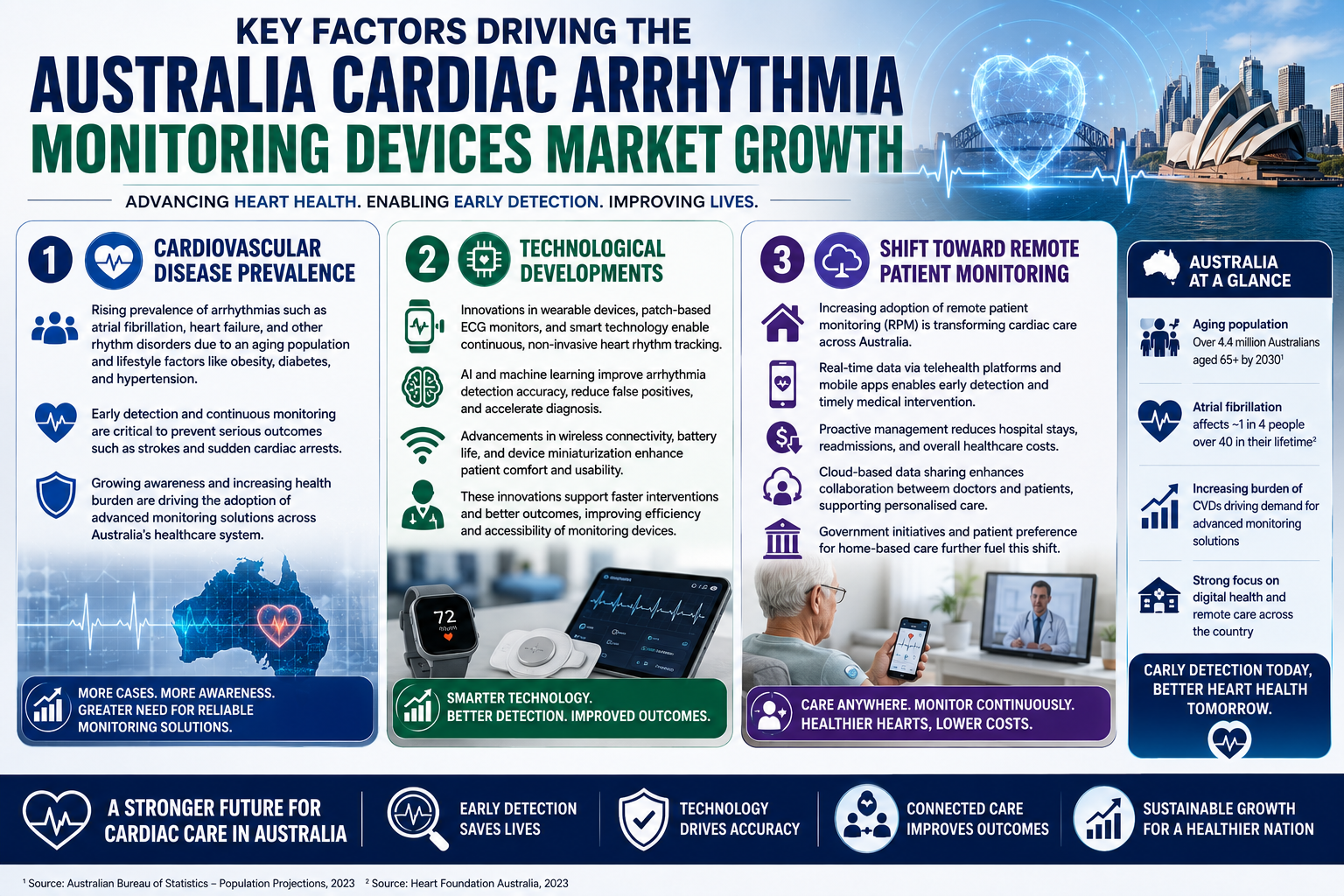
Cardiac Arrhythmia Monitoring Enables Early Diagnosis
Cardiac arrhythmia monitoring devices continuously record electrical activity within the heart to detect abnormal heart rhythms.
Common monitoring technologies include electrocardiogram (ECG) monitors, Holter monitors, implantable loop recorders, mobile cardiac telemetry systems, wearable cardiac patches, and wireless remote monitoring devices.
These technologies allow physicians to diagnose intermittent rhythm disorders that may not appear during routine clinical examinations.
Continuous monitoring also supports treatment planning, medication adjustments, and long-term management of cardiovascular disease while improving patient safety.
Rising Cardiovascular Disease Continues Driving Market Growth
One of the strongest contributors to market expansion is the increasing prevalence of cardiovascular disease across Australia.
An aging population, together with rising rates of obesity, diabetes, hypertension, and sedentary lifestyles, has increased the incidence of cardiac arrhythmias requiring continuous monitoring.
Early diagnosis plays a vital role in preventing severe complications including stroke and heart failure, encouraging healthcare providers to recommend long-term cardiac monitoring for high-risk patients.
Growing public awareness regarding heart health and preventive screening continues strengthening demand for advanced monitoring technologies.
Wearable Technology Is Revolutionizing Cardiac Care
Wearable monitoring devices have become one of the most significant innovations within the cardiac monitoring industry.
Lightweight ECG patches, smartwatches, portable monitors, and wireless sensors allow patients to track heart rhythms comfortably during normal daily activities.
Unlike conventional short-term monitoring, wearable devices provide continuous long-term data that improve detection of intermittent arrhythmias.
Patients also appreciate their convenience, portability, and ease of use compared with traditional monitoring systems.
Manufacturers continue improving battery life, wireless connectivity, and device comfort to encourage broader adoption.
Artificial Intelligence Improves Diagnostic Accuracy
Artificial intelligence is significantly enhancing cardiac arrhythmia detection.
AI-powered algorithms analyze enormous volumes of cardiac rhythm data to identify abnormal electrical patterns rapidly and accurately.
Automated analysis reduces physician workload while minimizing false-positive results and supporting earlier clinical intervention.
Machine learning technologies also assist clinicians in identifying subtle rhythm abnormalities that may otherwise remain undetected.
Continuous improvements in AI-driven diagnostics continue increasing physician confidence while improving patient outcomes.
Telehealth Expands Remote Cardiac Monitoring
Australia's rapid adoption of telehealth has significantly strengthened demand for remote cardiac monitoring.
Patients can now transmit cardiac rhythm data securely from home through wireless monitoring systems connected to healthcare providers.
Clinicians receive real-time alerts regarding abnormal heart activity, allowing prompt intervention without requiring repeated hospital visits.
Remote monitoring also benefits patients living in rural and geographically isolated regions where specialist cardiac services may be less accessible.
Telecardiology continues becoming an increasingly important component of Australia's modern healthcare system.
ECG Monitors Lead the Product Segment
Electrocardiogram monitors remain the most widely used cardiac arrhythmia monitoring devices.
These systems accurately record the heart's electrical activity and assist physicians in diagnosing atrial fibrillation, conduction abnormalities, ischemia, and other rhythm disorders.
Portable ECG devices have become increasingly compact while offering digital connectivity, cloud-based reporting, and integration with electronic health records.
Growing demand for preventive cardiac screening continues supporting strong sales of ECG monitoring systems.
Implantable Monitors Support Long-Term Diagnosis
Implantable cardiac monitors continue gaining popularity for patients experiencing infrequent or difficult-to-diagnose arrhythmias.
These miniature devices are implanted beneath the skin and continuously monitor heart rhythms for months or even years.
Long-term monitoring significantly improves detection rates for intermittent cardiac abnormalities that shorter monitoring periods may miss.
Advances in miniaturization, battery technology, and wireless communication continue expanding clinical applications for implantable monitoring devices.
Atrial Fibrillation Remains a Major Application
Atrial fibrillation represents one of the largest clinical applications within Australia's cardiac arrhythmia monitoring market.
As one of the most common cardiac rhythm disorders, atrial fibrillation substantially increases the risk of stroke and heart failure if left untreated.
Continuous cardiac monitoring enables physicians to diagnose irregular heart rhythms earlier while guiding treatment decisions involving medications, catheter ablation, and anticoagulation therapy.
The growing elderly population continues contributing to increasing atrial fibrillation prevalence across Australia.
Hospitals and Clinics Continue Leading Adoption
Hospitals and specialist cardiac clinics remain the largest end users of arrhythmia monitoring devices.
These healthcare facilities provide advanced diagnostic services, specialist cardiology expertise, and comprehensive treatment programs for patients experiencing cardiac rhythm disorders.
Hospitals increasingly integrate remote monitoring technologies into outpatient care to reduce hospital admissions while improving long-term disease management.
Growing investment in digital healthcare infrastructure continues strengthening hospital adoption of advanced monitoring systems.
High Device Costs Remain a Challenge
Despite their clinical advantages, advanced cardiac monitoring devices often involve substantial costs.
Implantable monitors, mobile telemetry systems, wearable technologies, and wireless monitoring platforms require significant investment by healthcare providers and patients.
Limited reimbursement for certain advanced monitoring technologies may restrict access, particularly among patients without comprehensive private health insurance.
Improving affordability remains an important priority for healthcare policymakers and device manufacturers.
Data Privacy Requires Continuous Attention
The growing use of wireless communication and cloud-based healthcare platforms introduces important cybersecurity considerations.
Cardiac monitoring systems collect highly sensitive patient information that must remain protected from unauthorized access.
Healthcare providers and manufacturers continue investing in secure encryption technologies, regulatory compliance, and advanced cybersecurity measures to safeguard patient data.
Maintaining public trust remains essential for supporting continued adoption of connected healthcare technologies.
Regional Markets Continue Driving Growth
New South Wales remains Australia's largest cardiac arrhythmia monitoring devices market due to its advanced healthcare infrastructure, strong adoption of telehealth, major cardiac treatment centers, and continued investment in digital healthcare technologies.
Victoria continues experiencing robust market growth through its leading hospitals, advanced cardiology services, expanding use of AI-assisted monitoring, and increasing adoption of wearable healthcare technologies.
Queensland is steadily strengthening its market through growing cardiovascular disease awareness, expanding healthcare infrastructure, improved remote patient monitoring services, and increasing investment in telecardiology across urban and regional communities.
Together, these states continue driving innovation and nationwide adoption of advanced cardiac monitoring technologies.
Innovation Will Shape the Future of Cardiac Monitoring
The future of Australia's cardiac arrhythmia monitoring market will be driven by wearable technologies, artificial intelligence, cloud-based healthcare platforms, and predictive analytics.
Manufacturers continue developing smaller monitoring devices featuring longer battery life, continuous wireless connectivity, automated arrhythmia detection, and seamless integration with telehealth systems.
Future innovations are expected to improve diagnostic accuracy while making long-term cardiac monitoring even more comfortable and accessible for patients.
As digital healthcare continues evolving, cardiac monitoring devices will play an increasingly important role in preventive cardiovascular medicine.
Final Thoughts
Australia's cardiac arrhythmia monitoring devices market continues experiencing strong growth as healthcare providers increasingly prioritize early diagnosis, preventive cardiology, and remote patient care.
The projected expansion from US$125.02 million in 2024 to US$230.23 million by 2033, supported by a 7.02% CAGR, reflects rising cardiovascular disease prevalence, advances in wearable technology, expanding telehealth adoption, and continuous innovation in artificial intelligence.
Although device affordability, reimbursement limitations, and cybersecurity concerns remain important challenges, ongoing technological progress and growing emphasis on patient-centered cardiac care position Australia's cardiac arrhythmia monitoring industry for sustained long-term growth. As remote healthcare and intelligent monitoring technologies continue advancing, these devices will become increasingly essential for improving cardiovascular outcomes across the country.
About the Creator
Enjoyed the story? Support the Creator.
Subscribe for free to receive all their stories in your feed.
Comments
There are no comments for this story
Be the first to respond and start the conversation.