
Australia Aged Care Market 2026: Aging Population, Government Reforms & Home Care Expansion
How demographic shifts, policy reforms, and technology integration are shaping Australia’s aged care industry

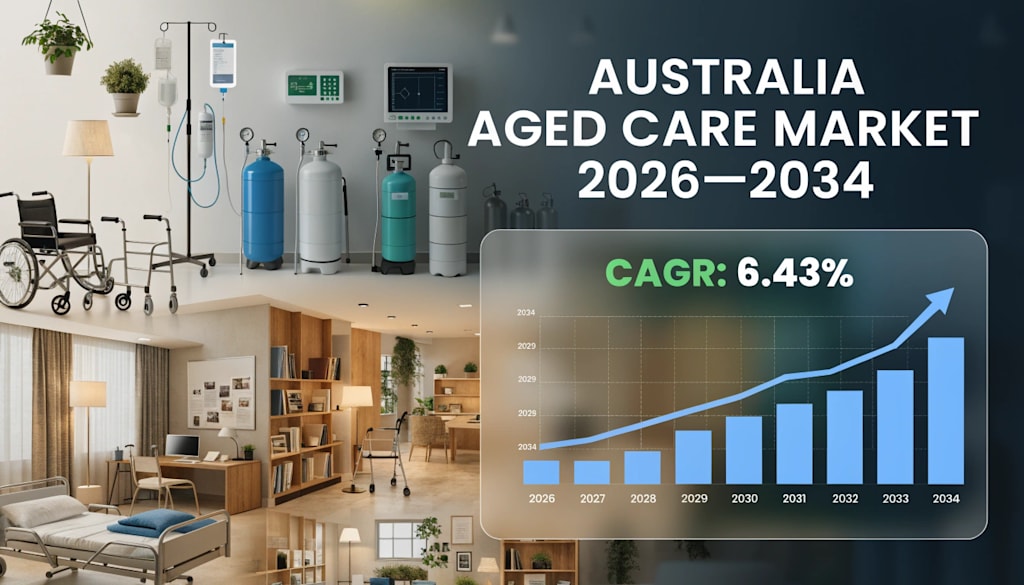
Australia Aged Care Market Overview
The Australia aged care market is a critical component of the country’s healthcare and social support system, encompassing residential care, home care services, respite care, and community-based support programs. The sector plays a vital role in ensuring quality of life, independence, and medical support for the elderly population.
According to IMARC Group, the Australia aged care market size reached USD 34.4 Billion in 2025 and is projected to reach USD 61.3 Billion by 2034, exhibiting a compound annual growth rate (CAGR) of 6.43% during 2026–2034.
The market is primarily driven by a rapidly aging population, increasing demand for high-quality and personalized care services, and strong government support aimed at improving aged care standards.
Key Market Drivers
Rising Aging Population
The growing proportion of elderly individuals is significantly increasing demand for aged care services. By 2026, over 22% of Australians are expected to be aged 65 and above, compared to 16% in 2020.
Government Funding and Policy Reforms
Government initiatives and funding programs are strengthening the aged care system, improving service quality, and expanding access to care services across the country.
Increasing Demand for Personalized Care
There is a growing preference for individualized, patient-centered care solutions that cater to specific medical and lifestyle needs of elderly individuals.
Growth of Home and Community-Based Care
A shift toward in-home care services is gaining momentum, as seniors increasingly prefer to age in place rather than move to residential facilities.
Advancements in Healthcare Technology
Technological innovations such as telehealth, remote monitoring, and digital health platforms are improving care delivery and accessibility.
Request a Sample Report with the Latest 2026 Data & Forecasts
What the Opportunities Are
Expansion of Home Care Services
The rising demand for home-based care presents significant growth opportunities for service providers offering flexible and personalized solutions.
Integration of Digital Health Technologies
Adoption of telecare, AI, and remote monitoring systems is transforming aged care by enhancing efficiency and improving patient outcomes.
Increasing Demand for Specialized Care
Services focusing on dementia care, mental health support, and chronic disease management are becoming increasingly important.
Development of Community-Based Programs
Community support initiatives are expanding to promote social engagement and improve overall well-being among elderly populations.
Workforce and Infrastructure Development
Growing demand is encouraging investments in skilled workforce training and modern care facilities.
Recent News and Developments
April 2026: Australia’s aged care sector is facing intensifying pressure as demand continues to rise faster than capacity. A major concern highlighted is the widening gap between the number of elderly Australians and available aged care beds, with projections suggesting the need for thousands of additional beds annually over the next two decades. The issue is being driven by a rapidly ageing population, particularly the incoming Baby Boomer cohort, and is creating longer wait times and strain on existing facilities.
April 2026: At the same time, the sector is undergoing structural and policy changes, including debates around funding models and taxation. Recent policy adjustments, such as changes to aged care service fees and taxation on optional care add-ons, are expected to generate additional government revenue but have raised concerns about affordability for some elderly residents. These changes are part of broader reforms aimed at balancing fiscal pressure with rising care demand.
April 2026: Technological transformation is emerging as a major development theme, with AI and robotics increasingly integrated into aged care delivery. New deployments of AI-enabled companion robots in care facilities are being used to assist residents with dementia, provide companionship, and support daily activities. While these innovations are improving service delivery and reducing workforce pressure, experts are also warning about ethical, safety, and oversight risks as adoption accelerates.
March 2026: The Australian government continues to roll out aged care reforms under the strengthened Aged Care Act 2024 framework, with a strong focus on digitalisation and service quality improvements. Recent updates include electronic medication management systems and broader digital health integration across residential aged care facilities. These reforms aim to improve safety, efficiency, and accountability across the system.
February 2026: Industry bodies have warned that demand is outpacing supply, with more than 100,000 older Australians waiting for home care packages and another large cohort waiting for assessment. Waiting times for approved care have doubled in recent years, reaching up to eight months or more in some cases. This has been described as a growing structural crisis requiring urgent expansion of care capacity and workforce supply.
Why You Should Know About the Australia Aged Care Market?
The Australia aged care market is a rapidly growing sector driven by demographic changes and evolving healthcare needs.
With projected growth from USD 34.4 Billion in 2025 to USD 61.3 Billion by 2034, the market demonstrates strong long-term potential supported by government initiatives, technological advancements, and increasing demand for quality care services.
As the population continues to age and care models evolve toward personalized and home-based solutions, the aged care market is expected to remain a key pillar of Australia’s healthcare ecosystem.
About the Creator
Amyra Singh
Market research analyst who loves spotting patterns, digging into data, and turning insights into strategies that help brands grow and stay ahead of the curve.
Enjoyed the story? Support the Creator.
Subscribe for free to receive all their stories in your feed.
Comments
There are no comments for this story
Be the first to respond and start the conversation.