
Asparagus Market to Reach US$ 44.61 Billion by 2033 as Healthy Eating Trends Fuel Global Demand
Growing health consciousness, expanding retail distribution, and rising demand for premium fresh vegetables are accelerating the growth of the global asparagus market through 2033.

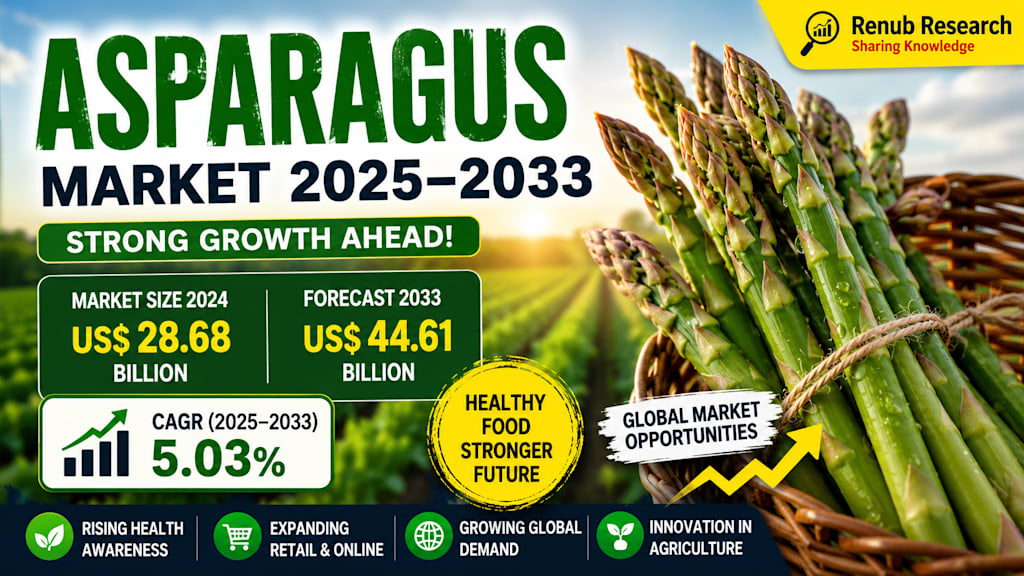
Asparagus Market Size and Forecast 2025–2033
The global asparagus market is entering a promising growth phase as consumers worldwide increasingly embrace healthier lifestyles and nutrient-rich diets. Once considered a seasonal delicacy, asparagus has transformed into a mainstream vegetable found in supermarkets, restaurants, and online grocery platforms throughout the year.
According to Renub Research, the Global Asparagus Market is expected to grow from US$ 28.68 Billion in 2024 to US$ 44.61 Billion by 2033, expanding at a CAGR of 5.03% during the forecast period 2025–2033.
This growth is being supported by multiple factors, including rising awareness regarding nutritional benefits, increasing demand for organic produce, improvements in global supply chains, and growing popularity of plant-based diets. As consumers become more health-focused, asparagus is emerging as one of the most sought-after vegetables in both developed and emerging economies.
Why Asparagus Is Becoming a Consumer Favorite
Asparagus has gained widespread popularity because of its impressive nutritional profile. It contains essential vitamins such as A, C, E, K, and B6, along with folate, potassium, fiber, and antioxidants.
Health-conscious consumers are increasingly turning toward foods that offer preventive health benefits, and asparagus fits perfectly into this trend. The vegetable is naturally low in calories and carbohydrates, making it an attractive choice for individuals seeking weight management solutions and diabetic-friendly foods.
Its antioxidant-rich composition also supports digestive health, heart health, and immune system function. As wellness becomes a global lifestyle movement rather than a niche trend, asparagus continues to gain attention from nutritionists, healthcare professionals, and consumers alike.
Plant-Based Diets Creating New Growth Opportunities
One of the strongest growth drivers for the asparagus market is the rapid adoption of plant-based diets.
Consumers are increasingly reducing meat consumption and incorporating more vegetables into their daily meals. Whether following vegetarian, vegan, flexitarian, or Mediterranean dietary patterns, many individuals are searching for versatile vegetables that provide nutrition and culinary flexibility.
Asparagus is particularly valued because it can be prepared in numerous ways, including:
Grilled
Roasted
Steamed
Stir-fried
Added to soups
Included in salads
Served as side dishes
Its adaptability makes it suitable for both everyday cooking and premium dining experiences. Restaurants and chefs worldwide are incorporating asparagus into gourmet dishes, further enhancing its image as a healthy and sophisticated ingredient.
Expanding Retail Networks Supporting Market Growth
The growth of organized retail and digital grocery platforms has dramatically improved asparagus accessibility.
Previously, consumers in many regions could only access asparagus during limited harvest seasons. Today, modern supply chains and international trade have made year-round availability possible.
Major retail channels supporting market expansion include:
Supermarkets
Hypermarkets
Specialty organic stores
Wholesale food distributors
Online grocery platforms
Direct-to-consumer delivery services
The rise of e-commerce grocery shopping has been particularly beneficial. Consumers can now conveniently purchase fresh, frozen, and canned asparagus from their homes, increasing overall consumption rates.
Improved cold-chain logistics and efficient transportation systems have further reduced spoilage while maintaining freshness across long distances.
Agricultural Innovations Improving Production
Modern farming techniques have played a crucial role in expanding global asparagus production.
Advancements such as precision agriculture, drip irrigation, greenhouse cultivation, and improved seed varieties have enhanced productivity and crop quality.
Leading asparagus-producing countries have invested heavily in agricultural innovation to maximize yields while maintaining sustainability. These efforts have resulted in:
Higher production efficiency
Improved product consistency
Reduced environmental impact
Better export quality
Extended harvest periods
As climate-smart agriculture gains momentum, asparagus producers are increasingly adopting environmentally responsible farming methods to meet consumer demand for sustainably grown produce.
Rising Export Opportunities Strengthening the Industry
Global trade has become a major pillar of asparagus market growth.
Countries such as China, Peru, Mexico, and Spain have established strong export infrastructures that enable year-round supply to major consuming regions.
Government support programs, export incentives, and trade agreements have helped producers expand international market access. Investments in refrigerated transportation, packaging technology, and storage facilities have improved product quality throughout the supply chain.
As global food trade continues to expand, asparagus exporters are expected to benefit from increasing demand across North America, Europe, Asia-Pacific, and the Middle East.
Challenges Limiting Market Expansion
Despite strong growth prospects, the asparagus market faces several operational challenges.
Short Shelf Life and Seasonal Production
Fresh asparagus is highly perishable and requires careful post-harvest handling.
In many producing regions, harvest periods remain relatively short, resulting in seasonal fluctuations in supply and pricing. Without proper refrigeration and storage infrastructure, product quality can decline rapidly.
Although frozen and canned alternatives provide year-round availability, many consumers still prefer fresh asparagus, creating ongoing logistical challenges for suppliers.
Labor-Intensive Harvesting
Asparagus cultivation requires significant manual labor, particularly during harvesting.
Workers must carefully hand-pick asparagus spears to maintain product quality and market standards. Labor shortages, rising wages, and stricter labor regulations have increased production costs in several key producing regions.
The industry's reliance on seasonal labor continues to create operational uncertainties, especially in countries dependent on migrant workers.
While mechanization solutions are being explored, widespread adoption remains limited due to technological complexity and high implementation costs.
Regional Market Analysis
United States Asparagus Market
The United States remains one of the world's largest asparagus consumers.
Domestic production is concentrated primarily in California, Michigan, and Washington, while imports from Mexico and Peru help ensure year-round availability.
Growing interest in healthy eating, local sourcing, and organic foods continues to stimulate demand. Consumers increasingly view asparagus as a premium seasonal vegetable that complements modern wellness-oriented lifestyles.
Although domestic producers face competition from imports, rising demand for locally grown produce offers significant opportunities for American farmers.
United Kingdom Asparagus Market
The United Kingdom has developed a strong appreciation for locally grown asparagus.
British asparagus enjoys premium status among consumers due to its freshness and quality. Seasonal promotions by retailers help drive significant demand during the spring harvest period.
To maintain year-round supply, the UK imports asparagus from Spain, Peru, and Mexico. Growing consumer interest in healthy eating and plant-based diets continues to support long-term market growth.
Sustainability initiatives and local sourcing campaigns are also strengthening consumer engagement with domestically produced asparagus.
India Asparagus Market
India's asparagus market remains relatively small but is experiencing notable growth.
Urbanization, increasing disposable income, globalization of food culture, and rising health awareness are encouraging demand for exotic vegetables, including asparagus.
Consumption is largely concentrated in metropolitan cities where international cuisines are popular. Premium restaurants, hotels, and health-focused consumers represent key customer segments.
Challenges such as limited domestic production, inadequate cold-chain infrastructure, and relatively high prices continue to restrict broader adoption. However, long-term growth potential remains substantial as awareness expands.
United Arab Emirates Asparagus Market
The UAE represents an attractive market for premium imported asparagus.
A large expatriate population, thriving hospitality sector, and growing health-conscious consumer base contribute to strong demand.
Most asparagus consumed in the UAE is imported from countries such as Peru, the Netherlands, and the United States. Advanced logistics infrastructure and sophisticated retail networks ensure consistent product availability.
Future investments in vertical farming and controlled-environment agriculture could create opportunities for limited domestic asparagus production in the coming years.
Market Segmentation
By Product
Fresh Asparagus
Canned Asparagus
Frozen Asparagus
Fresh asparagus currently dominates the market due to strong consumer preference for natural and minimally processed foods.
By Variety
Green Asparagus
White Asparagus
Purple Asparagus
Others
Green asparagus accounts for the largest market share owing to its widespread availability, affordability, and consumer familiarity.
10 Recent Developments in the Asparagus Industry
1. Square One Farms Launches New Digital Platform (2025)
Square One Farms introduced a redesigned website to better serve retail, foodservice, and wholesale partners while highlighting its asparagus product portfolio.
2. Pacific Produce Expands Peru Operations (2024)
Pacific Produce announced plans to triple asparagus production in Peru through expanded cultivation and major water infrastructure investments.
3. Rising Investment in Controlled Environment Agriculture
Several producers are investing in greenhouse and indoor farming technologies to reduce seasonal limitations.
4. Growth of Organic Asparagus Production
Major growers are expanding certified organic acreage to meet increasing consumer demand.
5. Expansion of Cold-Chain Infrastructure
Exporters continue investing in refrigerated logistics systems to improve product quality and shelf life.
6. Increased Retail Partnerships
Leading asparagus suppliers are strengthening relationships with supermarket chains globally.
7. Adoption of Precision Agriculture
Producers are implementing digital farming technologies to improve yield and resource efficiency.
8. Growth in Premium Packaging Solutions
Companies are introducing sustainable packaging designed to maintain freshness while reducing environmental impact.
9. Export Market Diversification
Producers are expanding beyond traditional markets to capture growth opportunities in Asia and the Middle East.
10. Development of New Seed Varieties
Seed companies continue developing improved asparagus varieties offering higher productivity and disease resistance.
Key Companies Shaping the Global Asparagus Market
The global asparagus industry features a mix of producers, seed developers, and agricultural specialists focused on innovation and market expansion.
Major companies include:
Altar Produce LLC
Walker Brothers, Inc.
Limgroup B.V.
Jersey Asparagus Farms Inc
Cutter Asparagus Seed
Thiermann Spargelhof
Danper
Golden Valley Seed
Transplants Inc.
Südwestdeutsche Saatzucht GmbH & Co.KG
These companies continue investing in research, cultivation technology, sustainability initiatives, and international expansion strategies to strengthen their market positions.
Final Thoughts
The global asparagus market is poised for steady and sustainable growth through 2033. Increasing health awareness, expanding plant-based food consumption, improved retail distribution, and stronger international trade networks are creating favorable conditions for industry expansion.
While challenges such as labor shortages, perishability, and seasonal production remain important considerations, ongoing investments in agricultural technology, cold-chain logistics, and sustainable farming practices are helping the industry overcome these obstacles.
As consumers increasingly prioritize nutrition, wellness, and premium fresh produce, asparagus is expected to remain one of the most attractive vegetable categories in the global food and agriculture sector. With the market projected to reach US$ 44.61 billion by 2033, the future outlook for asparagus producers, exporters, retailers, and investors remains highly promising.
About the Creator
Enjoyed the story? Support the Creator.
Subscribe for free to receive all their stories in your feed.
Comments
There are no comments for this story
Be the first to respond and start the conversation.