
Asia’s Fight Against Cervical Cancer Gains Momentum as Diagnostics Market Heads Toward $4 Billion by 2034
Improved screening programs, advanced HPV testing, and stronger healthcare infrastructure are transforming cervical cancer detection across Asia

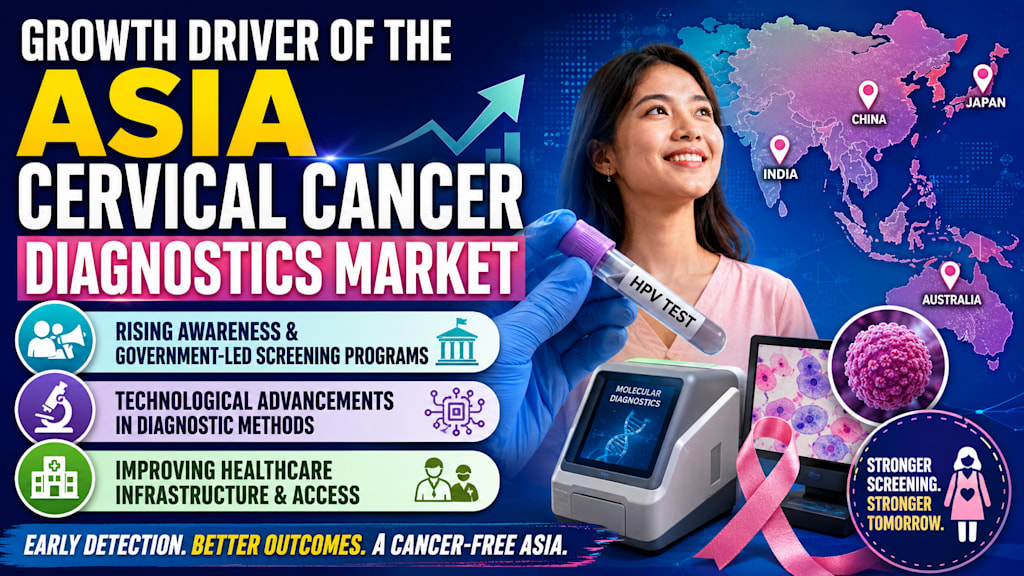
A New Era in Women’s Health Across Asia
For decades, cervical cancer has remained one of the most preventable yet persistent health challenges affecting women worldwide. Despite significant advances in medicine, millions of women across Asia have historically faced barriers to timely screening and diagnosis, resulting in delayed treatment and unnecessary loss of life. However, a remarkable transformation is underway as governments, healthcare providers, and technology companies work together to improve access to cervical cancer screening and diagnostic services.
The growing emphasis on preventive healthcare has placed cervical cancer diagnostics at the center of public health strategies across the region. As awareness rises and healthcare systems continue to modernize, women are increasingly benefiting from earlier detection, better treatment outcomes, and improved access to lifesaving healthcare services.
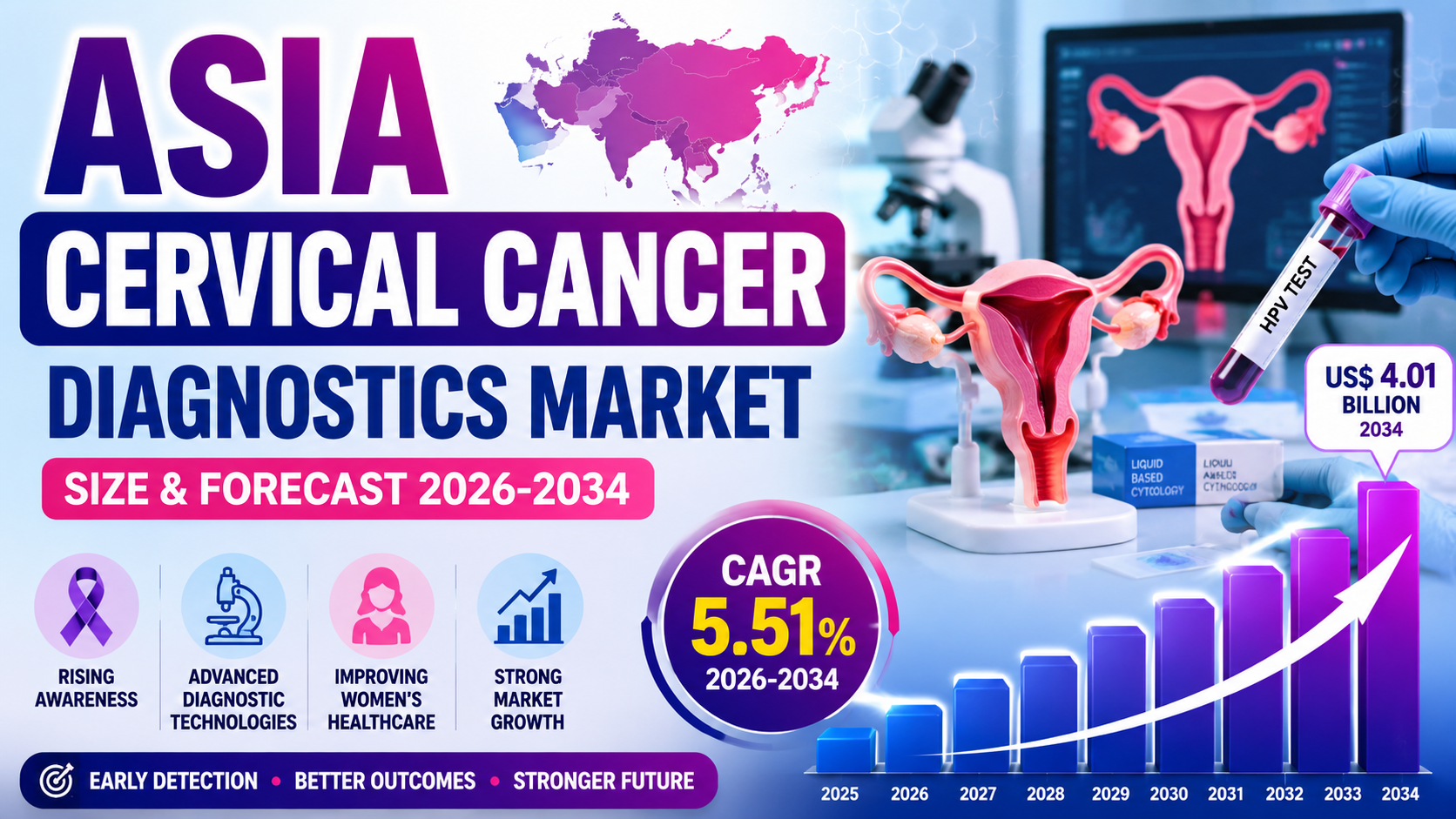
According to Renub Research, the Asia Cervical Cancer Diagnostics Market is expected to increase from US$ 2.47 billion in 2025 to US$ 4.01 billion by 2034, representing a compound annual growth rate (CAGR) of 5.51% between 2026 and 2034. This growth highlights the region’s commitment to improving women’s health through enhanced screening programs, advanced diagnostic technologies, and stronger healthcare infrastructure.
Why Cervical Cancer Screening Matters
Cervical cancer is one of the few cancers that can be effectively prevented through routine screening and early intervention. Diagnostic techniques such as Pap smear testing, HPV DNA testing, colposcopy, and biopsies help identify abnormal cervical cells and high-risk infections before they progress into invasive cancer.
Early detection plays a critical role in reducing mortality rates because cervical cancer is highly treatable when discovered at an early stage. Unfortunately, many Asian countries previously struggled with limited screening coverage, particularly in rural and underserved communities. As a result, a large percentage of cases were diagnosed at advanced stages when treatment options were more complex and outcomes less favorable.
Today, growing public awareness and improved access to healthcare are helping reverse this trend. More women are participating in regular screenings, while healthcare providers are expanding outreach efforts to reach vulnerable populations. This shift toward preventive healthcare is becoming one of the most significant drivers of growth within the cervical cancer diagnostics market.
Government Initiatives Are Creating New Opportunities
Government support has emerged as one of the strongest catalysts for the expansion of cervical cancer diagnostics throughout Asia. National screening programs are being implemented and expanded in numerous countries to encourage women to undergo regular cervical health examinations and increase awareness about the importance of early detection.
These initiatives aim to reduce the burden of cervical cancer by making screening services more accessible and affordable. Public health authorities are also investing in educational campaigns designed to eliminate misconceptions surrounding cervical cancer and promote participation in screening programs.
International cooperation is also playing an important role. In 2024, the United States, Australia, India, and Japan announced a major collaboration through the Quad Cancer Moonshot initiative. The program seeks to strengthen cancer prevention, detection, treatment, research, and healthcare infrastructure across the Indo-Pacific region, with cervical cancer serving as one of the initial focus areas.
Such initiatives demonstrate the growing recognition that cervical cancer is not merely a healthcare issue but a broader public health challenge that requires coordinated action at national and international levels.
Technological Innovation Is Reshaping Diagnostics
Advancements in diagnostic technology are significantly improving the effectiveness and accessibility of cervical cancer screening throughout Asia. Traditional screening methods remain important, but modern technologies are creating new opportunities for earlier detection and more accurate diagnoses.
Innovations such as HPV DNA testing, molecular diagnostics, liquid-based cytology, automated screening systems, digital imaging technologies, self-sampling diagnostic kits, and point-of-care testing solutions are helping healthcare professionals identify high-risk infections and precancerous abnormalities more efficiently than ever before.
Automation has become particularly valuable in densely populated countries where healthcare providers must process large volumes of screenings quickly and accurately. Digital technologies help reduce human error while increasing diagnostic efficiency, enabling healthcare systems to serve more patients without compromising quality.
The development of self-sampling solutions is also proving to be a major breakthrough. These technologies allow women to collect samples in private settings, reducing barriers associated with embarrassment, stigma, or limited access to healthcare facilities. As technological innovation continues and costs decline, advanced diagnostic tools are becoming increasingly accessible across diverse populations.
Healthcare Infrastructure Is Expanding Access
The growth of the cervical cancer diagnostics market is closely linked to improvements in healthcare infrastructure throughout Asia. Many countries are investing heavily in hospitals, diagnostic laboratories, community health centers, and women's healthcare facilities to strengthen their healthcare systems.
Urbanization and rising healthcare spending have accelerated the development of modern diagnostic facilities while increasing the availability of trained healthcare professionals. Private healthcare providers are also expanding their presence, introducing advanced screening technologies and improving service quality.
Beyond urban centers, governments and healthcare organizations are utilizing mobile clinics and community-based healthcare programs to extend screening services into rural and remote areas. These initiatives are helping reduce disparities in healthcare access and ensuring that more women can benefit from routine cervical cancer screening.
The expansion of healthcare infrastructure not only improves accessibility but also supports the adoption of advanced diagnostic technologies, creating a positive cycle that strengthens the overall healthcare ecosystem.
Persistent Challenges Continue to Affect Growth
Despite substantial progress, several challenges continue to hinder the widespread adoption of cervical cancer diagnostics across Asia.
One major obstacle is the presence of cultural and social barriers. In certain communities, discussions about reproductive health remain sensitive, and misconceptions surrounding cervical cancer persist. Fear, embarrassment, and lack of awareness often discourage women from participating in routine screenings. These issues are particularly common in conservative societies and rural regions where healthcare education remains limited.
Another challenge involves unequal access to healthcare resources. While major cities often benefit from advanced diagnostic technologies and specialized healthcare professionals, many rural areas continue to experience shortages of equipment, laboratories, and trained personnel. Resource constraints can make it difficult to provide consistent screening services across large populations.
Financial barriers also remain a concern. Advanced diagnostic tests can be expensive for low-income populations, and reimbursement systems vary significantly between countries. Addressing these challenges will be essential to achieving equitable access to cervical cancer screening throughout the region.
HPV DNA Testing Emerges as a Major Growth Driver
Among the various diagnostic methods available today, HPV DNA testing is rapidly gaining popularity across Asia. This technology directly identifies high-risk strains of the human papillomavirus, which are responsible for the majority of cervical cancer cases worldwide.
Compared with traditional screening methods, HPV DNA testing offers several advantages, including higher sensitivity, earlier detection of risk factors, longer screening intervals, improved diagnostic confidence, and more effective long-term monitoring. These benefits are encouraging healthcare providers to incorporate HPV DNA testing into routine screening protocols.
As awareness of the relationship between HPV infection and cervical cancer continues to grow, demand for HPV DNA testing is expected to increase significantly. Technological advancements and declining costs are further supporting adoption, making this segment one of the fastest-growing areas within the cervical cancer diagnostics market.
Pap Smear Testing Remains a Critical Tool
Although newer technologies are attracting considerable attention, Pap smear testing continues to play an essential role in cervical cancer screening throughout Asia. For decades, Pap smear tests have served as the foundation of screening programs and remain widely trusted by healthcare professionals.
The affordability and clinical reliability of Pap smear testing make it particularly valuable for large-scale public health initiatives. Many national healthcare systems continue to include Pap smear examinations as part of routine women's health services and government-sponsored screening programs.
Advancements such as liquid-based cytology have further improved the effectiveness of Pap smear testing by enhancing sample quality and diagnostic accuracy. As a result, Pap smear diagnostics are expected to remain an important component of comprehensive cervical cancer prevention strategies for years to come.
VIA Screening Supports Underserved Communities
Visual Inspection with Acetic Acid, commonly known as VIA, continues to play a vital role in cervical cancer prevention efforts across resource-limited settings. The procedure is simple, inexpensive, and capable of delivering immediate results without requiring sophisticated laboratory infrastructure.
VIA is particularly valuable in rural communities where access to advanced diagnostic technologies may be limited. Governments and non-governmental organizations frequently utilize VIA as part of large-scale screening campaigns designed to reach underserved populations.
Countries such as India and Thailand continue to rely on VIA programs to expand screening coverage and reduce cervical cancer mortality rates. While VIA may not offer the same level of specificity as molecular diagnostic techniques, its affordability and accessibility make it an indispensable tool in many healthcare environments.
Country-Level Growth Trends
Several Asian countries are emerging as key contributors to market growth.
China continues to expand cervical cancer screening through large-scale public health programs, increasing laboratory capacity, and growing awareness of preventive healthcare. The country’s massive population creates substantial demand for both traditional and advanced diagnostic solutions.
Japan remains a leader in cervical cancer diagnostics thanks to its advanced healthcare infrastructure, routine health screening culture, and strong emphasis on early detection. Automated screening technologies and high-quality laboratory services continue to support stable market growth.
India is experiencing rapid expansion in HPV DNA testing as awareness grows regarding HPV-related cancer risks. At the same time, VIA screening remains critical for reaching rural populations and addressing healthcare accessibility challenges.
Malaysia is witnessing steady growth in HPV DNA testing due to improved healthcare access, government-supported screening initiatives, and increasing adoption of molecular diagnostic technologies.
Thailand continues to strengthen its cervical cancer prevention efforts through extensive VIA-based screening programs that focus on improving access for women living in underserved regions.
Final Thoughts
The future of cervical cancer diagnostics in Asia appears increasingly promising. The market’s projected growth from US$ 2.47 billion in 2025 to US$ 4.01 billion by 2034 reflects more than just commercial expansion. It represents a growing commitment to protecting women's health through early detection, technological innovation, and improved healthcare accessibility.
Although challenges related to awareness, cultural perceptions, and healthcare disparities remain, significant progress is being made throughout the region. Governments are expanding screening programs, healthcare providers are embracing advanced diagnostic technologies, and women are becoming more proactive about preventive healthcare.
As these trends continue, cervical cancer diagnostics will play an even greater role in reducing disease burden, improving survival rates, and creating healthier futures for millions of women across Asia. The combination of innovation, investment, and awareness offers a powerful foundation for continued progress in the fight against cervical cancer.
About the Creator
Enjoyed the story? Support the Creator.
Subscribe for free to receive all their stories in your feed.
Comments
There are no comments for this story
Be the first to respond and start the conversation.