
Asia Pacific Powder Dietary Supplements Market Expected to Expand Rapidly Through 2034 as Preventive Health and Fitness Trends Accelerate Demand
Rising Health Awareness, Sports Nutrition Adoption, and E-Commerce Expansion Are Driving Strong Growth Across the Asia Pacific Supplement Industry

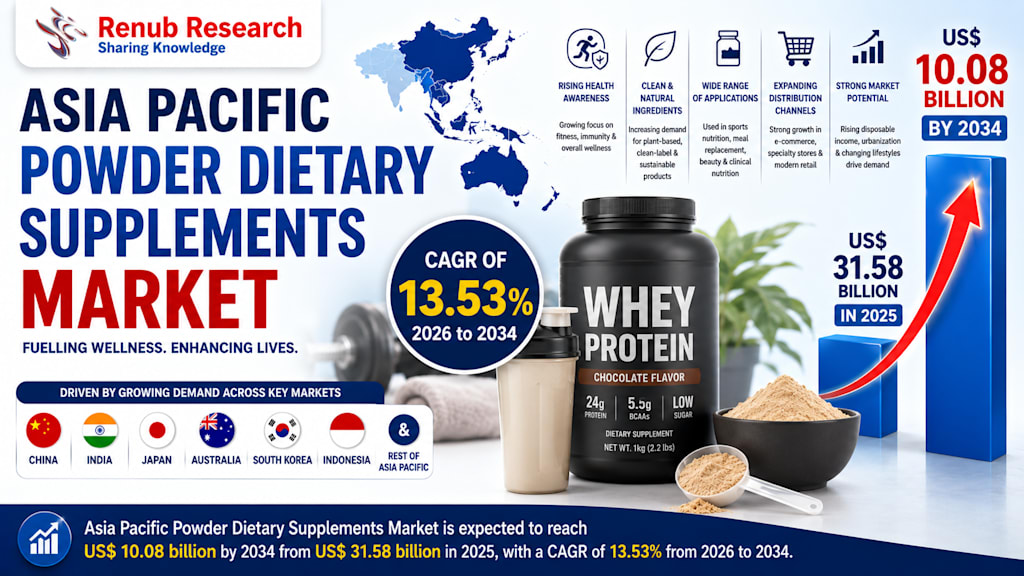
The Asia Pacific powder dietary supplements market is witnessing remarkable growth as consumers across the region increasingly prioritize preventive healthcare, fitness, immunity support, and personalized nutrition. From protein powders and herbal blends to probiotics and collagen supplements, powder-based nutritional products are rapidly becoming essential components of modern wellness lifestyles.
According to Renub Research, the Asia Pacific powder dietary supplements market is projected to experience significant expansion through 2034, driven by rising health awareness, urbanization, sports nutrition trends, and growing consumer interest in convenient nutritional solutions. The market is expected to grow at a strong CAGR of 13.53% between 2026 and 2034.
Powder dietary supplements include concentrated nutritional formulations containing proteins, vitamins, minerals, amino acids, herbal extracts, probiotics, and specialty nutrients designed to support overall health and wellness. These products are typically mixed with water, milk, or smoothies and are widely used for muscle development, digestive health, immunity enhancement, weight management, and energy support.
As consumers increasingly seek flexible, customizable, and convenient nutrition formats, powder supplements are becoming one of the fastest-growing categories within the broader health and wellness industry across Asia Pacific.
Preventive Healthcare Is Becoming a Major Consumer Priority
One of the strongest drivers behind the Asia Pacific powder dietary supplements market is the growing shift toward preventive healthcare and long-term wellness management.
Consumers across the region are becoming increasingly proactive about protecting their health rather than relying solely on reactive medical treatment.
Rising rates of lifestyle-related conditions such as obesity, diabetes, cardiovascular disease, stress-related disorders, and weakened immunity are encouraging individuals to incorporate supplements into their daily routines.
Powder supplements offer an accessible and convenient way for consumers to address nutritional deficiencies without making major dietary changes.
The post-pandemic environment has further accelerated awareness around immunity-building nutrients, especially products containing:
- Vitamin C
- Zinc
- Herbal ingredients
- Probiotics
- Adaptogens
- Functional proteins
Consumers increasingly view supplements as part of a broader strategy to maintain resilience, energy, and long-term health.
Public health campaigns, growing wellness education, and increased availability of science-backed products are also helping strengthen consumer confidence in nutritional supplementation.
Younger consumers influenced by social media wellness culture are particularly driving demand for lifestyle-oriented health products.
Powder Formats Are Gaining Popularity Over Traditional Supplements
Powder supplements are becoming increasingly popular because they offer several advantages compared to pill-based alternatives.
Consumers often perceive powders as:
- Easier to digest
- Faster to absorb
- More customizable
- More versatile
- More convenient for active lifestyles
Powders also allow flexible dosing and easy integration into smoothies, shakes, and meal-replacement routines.
This flexibility is especially appealing to fitness enthusiasts, busy professionals, athletes, and younger wellness-focused consumers.
Clean-label and natural ingredient trends are further supporting growth within the category.
Consumers increasingly prefer supplements that feature transparent ingredient lists, plant-based formulas, low sugar content, and minimal artificial additives.
As personalized nutrition becomes more mainstream, powder formats are expected to remain highly attractive because they can easily be tailored to individual dietary needs and lifestyle goals.
Fitness and Sports Nutrition Are Fueling Market Expansion
The rapid growth of fitness culture across Asia Pacific is another major force driving supplement demand.
Gyms, wellness studios, sports communities, and home fitness programs are expanding rapidly throughout the region as consumers increasingly adopt active lifestyles.
Protein powders, amino acid formulas, hydration blends, and recovery supplements are now widely consumed not only by professional athletes but also by casual fitness participants and wellness-conscious consumers.
The popularity of fitness-oriented social media content, influencer marketing, and body-aesthetic trends has helped normalize supplement usage among younger demographics.
K-pop culture, anime-inspired physiques, and digital fitness communities are especially influential in shaping wellness aspirations among Gen Z and Millennial consumers.
Powder supplements fit naturally into modern fitness routines because they offer quick preparation and convenient post-workout consumption.
The rise of endurance sports, wearable fitness tracking devices, and home workout ecosystems is also contributing to increased interest in performance-enhancing and recovery-focused nutritional products.
As fitness evolves from a niche hobby into a mainstream lifestyle trend across Asia Pacific, demand for powder dietary supplements is expected to continue rising strongly.
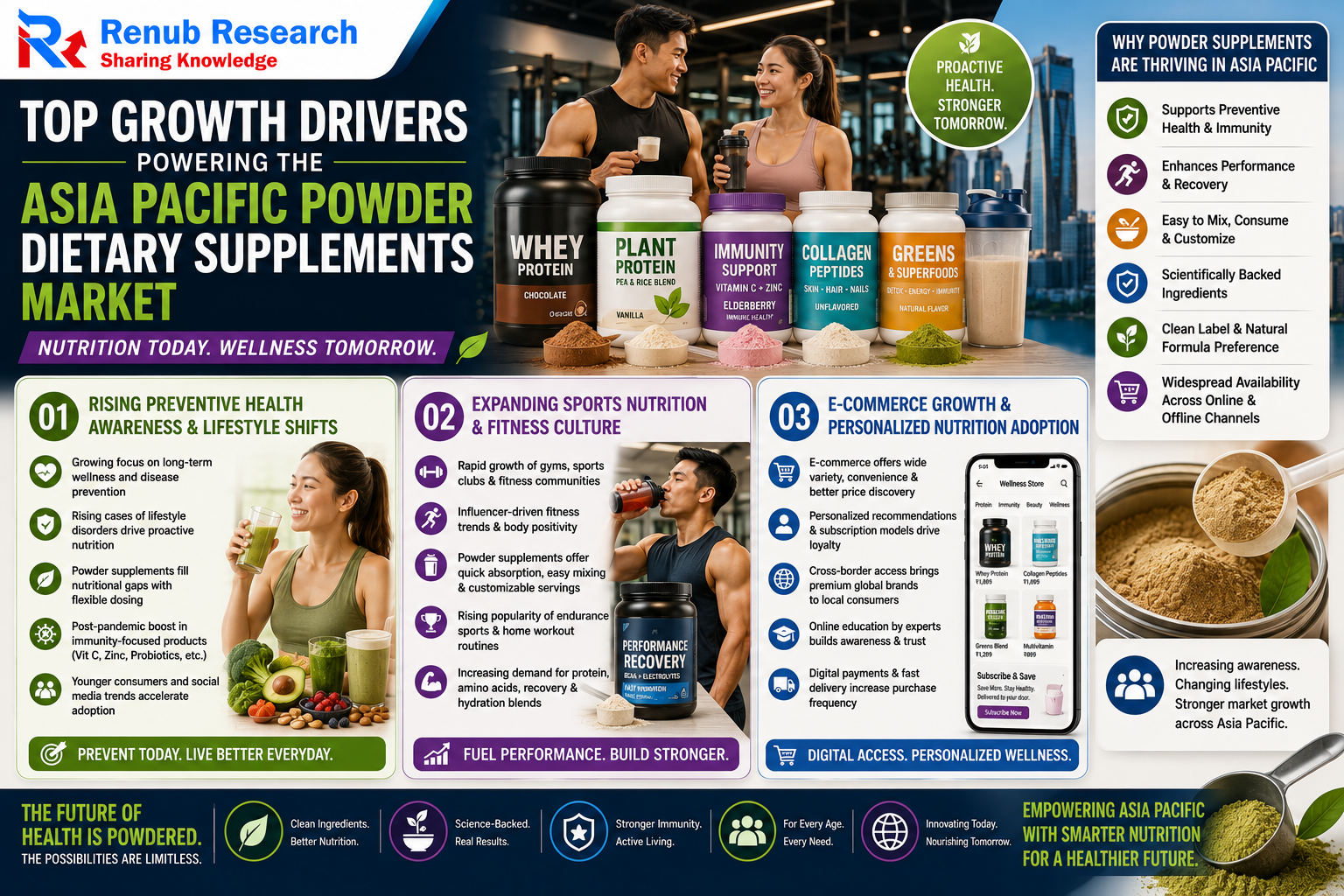
E-Commerce Is Reshaping the Supplement Industry
Digital transformation and rapid e-commerce growth are dramatically changing how consumers discover and purchase nutritional products across Asia Pacific.
Online platforms now provide consumers with access to both local and international supplement brands, significantly expanding product availability.
E-commerce allows shoppers to:
- Compare prices
- Read reviews
- Research ingredients
- Access educational content
- Receive personalized recommendations
- Subscribe to recurring deliveries
Social media creators, fitness influencers, wellness coaches, and nutrition experts also play increasingly important roles in driving supplement awareness and consumer trust.
Cross-border online retail has become particularly important because it gives consumers in smaller cities access to premium international products previously unavailable through traditional retail channels.
Algorithm-based recommendations and personalized shopping experiences are also helping consumers feel more confident when selecting products suited to their specific wellness goals.
Additionally, same-day delivery services and digital payment adoption are strengthening purchasing convenience and repeat buying behavior.
Smaller supplement startups are benefiting from low-barrier online market entry opportunities, increasing competition and product diversity throughout the region.
Personalized Nutrition Is Becoming a Key Trend
One of the most important emerging trends in the market is the growing interest in personalized nutrition.
Consumers increasingly want supplements tailored to their age, lifestyle, fitness level, beauty goals, digestive health, or specific medical concerns.
This demand is encouraging companies to develop specialized products targeting areas such as:
- Women’s health
- Menopause support
- Cognitive performance
- Beauty and collagen support
- Weight management
- Sleep and stress relief
- Gut health
- Sports performance
In January 2024, Dr. Reddy’s Laboratories expanded its women’s health portfolio by acquiring the MenoLabs business from Amyris. The acquisition included a range of dietary supplements focused on menopause and perimenopause symptom support.
This reflects the growing commercial importance of targeted wellness and personalized supplement categories.
Consumers increasingly expect products to address specific health needs rather than offering generalized nutritional support.
Strategic Acquisitions Are Strengthening the Industry
Strategic acquisitions and industry consolidation are also playing major roles in market development.
Large companies are increasingly expanding beyond traditional food and beverage businesses into wellness-focused nutrition sectors.
In April 2023, Kirin Holdings Co. Ltd. acquired Australian vitamin manufacturer Blackmores Ltd for approximately US$ 1.2 billion.
The acquisition represented a major strategic shift by Kirin toward the broader health and wellness industry beyond its traditional alcoholic beverage business.
Such transactions highlight how major corporations increasingly view nutraceuticals and dietary supplements as high-growth long-term investment opportunities.
Strategic integrations also improve product distribution, innovation capabilities, and market penetration across regional and international markets.
Regulatory Complexity Remains a Significant Challenge
Despite strong growth opportunities, regulatory fragmentation across Asia Pacific remains one of the market’s biggest challenges.
Different countries maintain varying standards regarding:
- Product registration
- Ingredient restrictions
- Health claims
- Labeling requirements
- Quality certifications
- Import regulations
These inconsistencies create significant compliance burdens for manufacturers and distributors operating across multiple markets.
Frequent regulatory updates further increase complexity and operational costs.
Smaller companies often struggle to manage testing, documentation, and certification requirements across different jurisdictions.
Inconsistent enforcement also allows some low-quality or counterfeit products to enter the market, potentially damaging consumer trust.
As awareness around supplement quality and safety continues increasing, regulatory expectations are expected to become even stricter.
Price Sensitivity Continues Affecting Consumer Adoption
Price sensitivity remains another important challenge, particularly in developing economies throughout Asia Pacific.
Although interest in health and wellness products is rising rapidly, many consumers still view premium dietary supplements as expensive or non-essential purchases.
Economic uncertainty, inflation, and uneven income distribution further influence purchasing decisions.
Local brands often compete aggressively on affordability, while international brands face challenges balancing premium positioning with accessible pricing.
Consumers may also lack sufficient education around ingredient quality, dosage effectiveness, and scientific formulation differences, making premium pricing more difficult to justify.
As competition intensifies, brands must continue improving value propositions without compromising product quality.
China Leads the Regional Market
China represents the largest and most dynamic powder dietary supplements market in Asia Pacific.
Rising disposable incomes, rapid urbanization, growing middle-class populations, and strong preventive-health awareness continue driving robust supplement demand throughout the country.
Chinese consumers increasingly purchase:
- Protein powders
- Herbal supplements
- Functional nutrition blends
- Collagen products
- Wellness beverages
The country’s highly advanced e-commerce ecosystem also plays a major role in shaping supplement purchasing behavior.
Domestic brands benefit from strong familiarity with traditional wellness concepts, while international companies attract consumers seeking premium formulations and imported quality standards.
Japan Focuses on Healthy Aging and Premium Quality
Japan’s supplement market is heavily influenced by its aging population and long-standing wellness culture.
Consumers place strong emphasis on long-term health maintenance and functional nutrition products designed to support aging-related wellness concerns.
Popular categories include:
- Collagen supplements
- Digestive enzymes
- Protein powders
- Immunity formulas
- Joint-support products
Strict regulatory standards help maintain high product quality and consumer trust, although they also create barriers for new entrants.
Japanese consumers particularly value clean formulations, convenience, and scientifically supported products.
India Emerges as a High-Growth Market
India’s powder dietary supplements market is expanding rapidly due to rising fitness awareness, urban lifestyles, and increasing middle-class spending on wellness products.
Protein powders, herbal formulas, and weight-management supplements are especially popular among younger consumers and fitness enthusiasts.
Digital commerce and social media influencers are significantly accelerating product awareness across both urban and smaller-city markets.
Although affordability remains a key concern, preventive healthcare awareness continues rising steadily across the country.
India is increasingly viewed as one of the most promising long-term supplement growth markets globally.
South Korea Blends Beauty and Wellness Trends
South Korea’s supplement market is strongly influenced by beauty culture, digital lifestyles, and wellness-driven consumer behavior.
Collagen powders, probiotics, detox blends, and beauty-enhancing nutritional products are particularly popular.
The country’s highly connected digital ecosystem enables strong online supplement adoption driven by influencers, entertainment culture, and mobile-first shopping habits.
Premium branding, scientific credibility, and visually appealing product design perform especially well within the South Korean market.
Major Companies Continue Expanding Across the Region
Leading companies competing within the Asia Pacific powder dietary supplements market include:
- Abbott Laboratories
- Bayer AG
- Pfizer Inc.
- Herbalife International of America Inc.
- Dabur India Ltd
- Amway Corporation
Competition increasingly focuses on clean-label formulations, personalized nutrition, digital engagement, and premium product positioning.
The Future of the Powder Dietary Supplements Market
The future of the Asia Pacific powder dietary supplements market appears exceptionally strong as consumers continue prioritizing preventive health, fitness, and personalized wellness solutions.
Rising urbanization, digital commerce expansion, growing sports culture, and increasing awareness around nutrition science are expected to remain key long-term growth drivers.
At the same time, companies capable of balancing affordability, quality, scientific validation, and consumer trust will likely emerge as market leaders.
As wellness culture continues becoming deeply integrated into everyday lifestyles across Asia Pacific, powder dietary supplements are expected to play an increasingly important role within the region’s evolving health economy.
Final Thoughts
The Asia Pacific powder dietary supplements market is rapidly transforming as consumers embrace preventive healthcare, fitness-oriented lifestyles, and personalized nutrition solutions. Powder supplements are no longer niche products reserved for athletes—they are becoming mainstream wellness essentials used across diverse demographic groups and health goals.
Although regulatory complexity and price sensitivity remain ongoing challenges, strong digital growth, expanding health awareness, and rising demand for convenient wellness products continue positioning the industry for substantial long-term expansion through 2034.
About the Creator
Enjoyed the story? Support the Creator.
Subscribe for free to receive all their stories in your feed.
Comments
There are no comments for this story
Be the first to respond and start the conversation.