
Asia Pacific Ice Cream Market Outlook 2025–2033: Premium Flavors, Urban Lifestyles, and Retail Expansion Accelerate Industry Growth
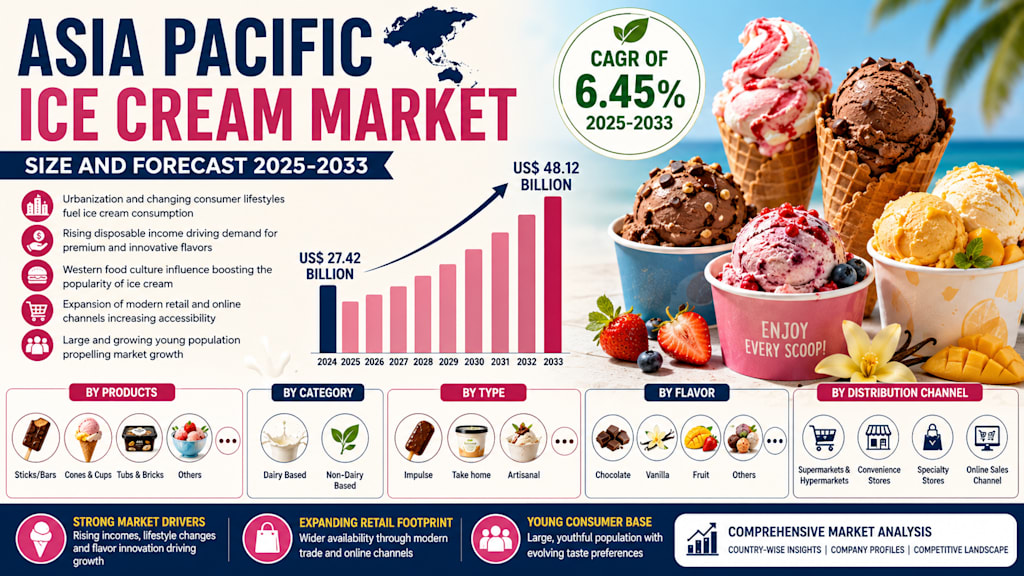
Renub Research forecasts the Asia Pacific Ice Cream Market to grow from US$ 27.42 billion in 2024 to US$ 48.12 billion by 2033, driven by urbanization, rising disposable income, premium product demand, flavor innovation, and the rapid expansion of retail and online distribution channels.

Asia Pacific Ice Cream Market Continues to Expand Rapidly
The Asia Pacific ice cream market is witnessing strong and consistent growth as changing lifestyles, rising urban populations, and evolving consumer preferences reshape the region’s food and beverage industry. Ice cream is no longer viewed simply as a seasonal dessert. It has become a lifestyle-driven indulgence associated with comfort, premium experiences, innovation, and social interaction.
Consumers across Asia Pacific are increasingly exploring premium flavors, healthier alternatives, artisanal offerings, and international dessert trends. The growing influence of Western eating habits combined with strong regional flavor preferences is encouraging brands to launch highly customized and culturally inspired products.
According to Renub Research, the Asia Pacific Ice Cream Market is expected to reach US$ 48.12 billion by 2033 from US$ 27.42 billion in 2024, growing at a CAGR of 6.45% from 2025 to 2033. The report identifies urbanization, changing lifestyles, increasing disposable income, premium product demand, retail expansion, and a growing young population as key factors supporting market growth across the region.
The market is evolving into one of the most competitive and innovation-driven sectors within the regional food industry, with both global and local companies investing heavily in flavor development, distribution expansion, and premiumization strategies.
Urbanization and Modern Lifestyles Are Boosting Consumption
Urbanization remains one of the biggest drivers behind the rapid growth of the Asia Pacific ice cream market. As more consumers move into cities and adopt fast-paced lifestyles, demand for convenient, ready-to-eat indulgent products continues increasing.
Busy work schedules, dual-income households, and modern retail culture are changing food consumption patterns across countries such as China, India, Japan, South Korea, Indonesia, and Thailand. Ice cream fits perfectly into this evolving lifestyle because it is convenient, accessible, portable, and widely available through supermarkets, convenience stores, cafés, and online delivery platforms.
Younger consumers in urban areas are especially driving demand for impulse purchases, premium desserts, and unique flavor experiences. Social media trends and food-focused digital culture are also increasing interest in visually appealing and innovative ice cream products.
The report notes that the influence of Western lifestyles and changing food habits is further accelerating frequent ice cream consumption throughout the region.
Flavor Innovation Is Reshaping Consumer Preferences
Flavor innovation has become one of the strongest competitive tools in the Asia Pacific ice cream market. Consumers are increasingly looking for unique, culturally inspired, and experimental flavor experiences rather than relying only on traditional vanilla or chocolate offerings.
Manufacturers are combining regional ingredients with international dessert concepts to create products that appeal to local tastes while maintaining premium appeal. Exotic fruit combinations, tea-based flavors, traditional dessert inspirations, and fusion recipes are becoming increasingly common across the market.
The report highlights several important examples of flavor innovation. In April 2024, Havmor, owned by LOTTE Wellfood Co Ltd, introduced new flavors designed for the summer season by blending traditional favorites with modern flavor combinations. Similarly, health-focused ice cream brand NOTO launched three Indian-inspired gelato flavors in March 2023 that contained significantly lower fat and sugar content while maintaining rich texture and taste.
Such innovations help brands create stronger emotional connections with consumers while differentiating themselves in a highly competitive marketplace.
Regional flavor personalization is particularly important in Asia Pacific because consumer tastes vary significantly between countries. Japanese consumers may prefer matcha or black sesame flavors, while Indian consumers increasingly explore kulfi-inspired and saffron-based variations.
Premiumization Trend Continues Gaining Momentum
Premiumization is becoming a defining trend in the Asia Pacific ice cream industry. Consumers are increasingly willing to spend more on artisanal products, gourmet flavors, luxury packaging, and higher-quality ingredients.
Premium ice cream brands are focusing on rich textures, natural ingredients, indulgent inclusions, handcrafted production methods, and unique product experiences. Gourmet toppings, imported chocolates, real fruit pieces, and artisanal presentation styles are helping brands position themselves within the premium category.
The premiumization trend is especially strong among younger urban consumers who prioritize experience-driven food choices. Social sharing culture and influencer marketing also contribute to growing demand for aesthetically appealing and premium dessert products.
As disposable incomes rise across Asia Pacific economies, premium ice cream consumption is expected to continue expanding rapidly.
Health-Conscious Consumers Are Driving Demand for Better-For-You Products
Health awareness is increasingly influencing the ice cream industry across Asia Pacific. Consumers are now seeking products that balance indulgence with nutritional value.
Low-fat, low-sugar, dairy-free, and plant-based ice creams are becoming more popular as consumers adopt healthier lifestyles. Brands are investing heavily in product reformulation to meet demand for reduced-calorie and functional dessert products.
The report notes that growing health and wellness awareness has encouraged manufacturers to innovate with non-dairy and healthier alternatives.
Plant-based ice cream products are especially gaining popularity among vegan consumers and individuals with lactose intolerance. Almond milk, oat milk, coconut milk, and soy-based alternatives are increasingly entering mainstream retail channels.
Consumers are also becoming more interested in functional ingredients such as probiotics, natural fruit extracts, protein enrichment, and reduced sugar formulations.
This health-oriented transformation is expected to remain one of the most influential trends shaping the future of the ice cream market in Asia Pacific.
Expanding Distribution Channels Improve Accessibility
The rapid expansion of retail and distribution networks is significantly improving market accessibility across the region.
Modern supermarkets, hypermarkets, convenience stores, and specialty dessert outlets are making ice cream products more widely available than ever before. In addition, e-commerce platforms and food delivery applications are creating new growth opportunities for manufacturers and retailers.
Online ordering and home delivery services have become increasingly important, particularly among younger urban consumers who prioritize convenience.
The report highlights a major industry development involving Mengniu Dairy’s subsidiary Aice Group, which completed Southeast Asia’s largest smart ice cream factory in the Philippines in March 2023. The facility significantly improved production efficiency and supply chain capabilities to meet rising regional demand.
The continued modernization of retail infrastructure across Asia Pacific is expected to remain a major growth catalyst for the ice cream industry.
Cold Chain Infrastructure Remains a Significant Challenge
Despite strong market potential, the Asia Pacific ice cream market faces several important operational challenges. One of the biggest obstacles is maintaining effective cold chain infrastructure across large and diverse geographic regions.
Ice cream products require constant temperature-controlled storage and transportation to preserve texture, taste, and safety. However, many rural and developing regions continue facing inadequate refrigeration infrastructure and unreliable electricity supply.
The report notes that disruptions in cold chain systems can lead to spoilage, shorter shelf life, product loss, and inconsistent product quality.
Maintaining reliable cold chain operations also increases transportation and logistics costs, especially for companies trying to expand distribution into remote markets.
Improving refrigerated transportation networks and storage infrastructure will therefore remain critical for long-term industry growth.
Intense Competition Increases Market Pressure
Competition within the Asia Pacific ice cream industry is becoming increasingly intense as both international corporations and domestic brands fight for market share.
Companies are constantly launching new flavors, promotional campaigns, seasonal products, and premium collections to maintain consumer interest. This highly competitive environment requires significant investment in marketing, product innovation, and distribution expansion.
According to the report, price wars and frequent product launches often create pressure on profitability, particularly for smaller brands and new market entrants.
To remain competitive, companies are focusing heavily on differentiation through premium ingredients, localized flavors, healthier formulations, and digital engagement strategies.
China Remains One of the Largest Ice Cream Markets
China continues to represent one of the largest and fastest-growing ice cream markets in Asia Pacific. Rising disposable income, urbanization, and changing consumer preferences are driving strong market expansion across the country.
Chinese consumers are increasingly exploring premium, innovative, and health-focused ice cream products. In October 2023, Yili Group expanded its portfolio with low-sugar and functional ingredient-based ice cream varieties targeting health-conscious consumers.
The report also highlights Mengniu Dairy’s efforts to improve productivity and product quality through advanced production technologies and strategic partnerships. China’s strong e-commerce ecosystem and developed cold chain infrastructure further support widespread product availability.
The Chinese market continues offering significant opportunities for both domestic and international brands focused on innovation and premiumization.
India’s Ice Cream Market Expands with Premium and Innovative Offerings
India’s ice cream market is growing rapidly as rising disposable incomes, modern retail expansion, and evolving consumer tastes reshape the industry.
Consumers are increasingly demanding premium products, unique textures, and innovative dessert experiences. The report mentions that NIC Honestly Crafted Ice Creams launched NIC Waffle Cones in February 2024 to complement its ice cream offerings while delivering freshness and premium quality.
Organized retail growth, online delivery platforms, and expanding café culture are making premium ice cream products more accessible across urban India.
Health-conscious product innovation and indulgent artisanal experiences are both contributing to market growth simultaneously.
Japan Continues Leading in Unique Flavor Innovation
Japan remains one of the most innovative ice cream markets globally. Japanese consumers are highly receptive to seasonal flavors, limited-edition products, and unconventional ingredients.
Traditional Japanese flavors such as matcha, hojicha, black sesame, cherry blossom, and mochi-inspired variations continue gaining popularity. At the same time, consumers are also willing to experiment with bold flavors like wasabi and squid ink.
The report highlights several innovative launches from Häagen-Dazs Japan, including Hanamochi Kinako Kuromitsu, Hojicha Latte, and Hanamochi Zunda varieties inspired by Japanese culinary traditions.
In March 2024, Eclipse Foods also introduced plant-based ice cream products in Japan under the “eclipseco” brand through Family Mart locations in Tokyo. The launch included flavors such as Cookie Butter Crumble, Classic Chocolate, and Mango Passion Fruit.
Japan’s strong culture of food experimentation and seasonal innovation continues making it one of the most dynamic markets within Asia Pacific.
Competitive Landscape Reflects Strong Global and Regional Participation
The Asia Pacific ice cream market features a highly competitive landscape involving multinational corporations as well as strong domestic brands.
Companies covered in the Renub Research report include Meiji Co Ltd, General Mills, Yili Group, Unilever Group, Mondelez International Inc., Nestlé SA, Bright Dairy & Food Co. Ltd., and Danone S.A.
These companies are investing heavily in product innovation, cold chain infrastructure, premiumization, health-focused formulations, and digital distribution capabilities to strengthen market presence.
Recent Developments by Leading Companies
- Havmor launched innovative seasonal ice cream flavors designed to combine traditional tastes with modern consumer preferences.
- NOTO introduced Indian-inspired low-fat gelato products targeting health-conscious consumers.
- Mengniu Dairy completed Southeast Asia’s largest smart ice cream factory through its Aice Group subsidiary in the Philippines.
- Yili Group expanded low-sugar and functional ingredient-based ice cream product lines for wellness-focused consumers.
- NIC Honestly Crafted Ice Creams launched vacuum-packed waffle cones to improve freshness and premium experience.
- Häagen-Dazs Japan introduced unique Japanese-inspired flavors including Hojicha Latte and Hanamochi variants.
- Eclipse Foods launched plant-based ice cream products in Tokyo through Family Mart retail outlets.
- Unilever Group continued expanding premium and non-dairy ice cream product offerings across Asia Pacific.
- Nestlé strengthened innovation efforts in health-oriented frozen dessert products.
- Multiple regional brands increased investment in online delivery and digital retail partnerships.
Future Outlook for the Asia Pacific Ice Cream Market Remains Strong
The future outlook for the Asia Pacific ice cream market remains highly positive as demographic growth, urbanization, lifestyle evolution, and premium consumption trends continue strengthening across the region.
Consumers are increasingly seeking products that combine indulgence, convenience, health benefits, and unique experiences. This evolving demand environment is encouraging rapid innovation across flavors, ingredients, formats, and retail strategies.
Technological advancements in cold chain management, smart manufacturing, and digital distribution are also expected to improve operational efficiency and market reach.
Although challenges such as infrastructure limitations and intense competition remain important concerns, the long-term fundamentals of the market continue appearing highly attractive.
As disposable incomes rise and consumers continue embracing premium and personalized food experiences, the Asia Pacific ice cream market is expected to remain one of the region’s most dynamic and fast-growing food sectors through 2033.
About the Creator
Enjoyed the story? Support the Creator.
Subscribe for free to receive all their stories in your feed.
Comments
There are no comments for this story
Be the first to respond and start the conversation.