
Argentina Organic Food Market Size, Share, Trends, and Growth Outlook 2034
Argentina Organic Food Market Size Insights & Industry Forecast 2034

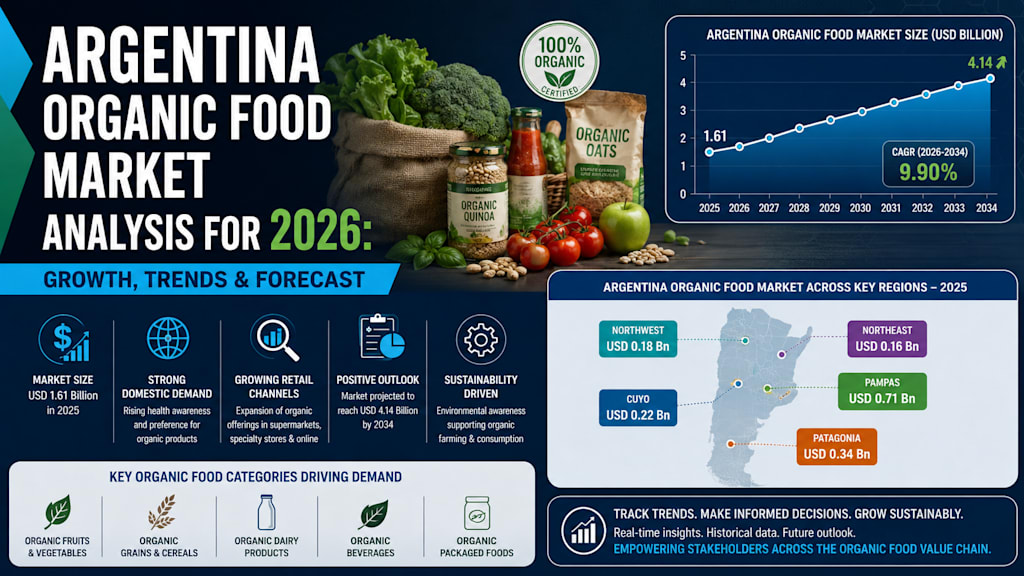
Argentina Organic Food Market Size Overview 2034
The organic food industry in Argentina has gained significant attention over the past decade as consumers increasingly seek healthier and more sustainable food choices. Organic products are cultivated without synthetic pesticides, chemical fertilizers, or genetically modified organisms, making them appealing to individuals who prioritize food quality and environmental responsibility.
According to industry estimates, the Argentina organic food market reached a value of USD 1.61 billion in 2025. Looking ahead, the market is expected to attain USD 4.14 billion by 2034, growing at a CAGR of 9.90% during 2026–2034. Rising awareness regarding nutrition, food safety, and sustainable agricultural practices continues to support demand across the country.
Request a Sample Report with Latest 2026 Data & Forecasts:
Why Organic Food Consumption Is Rising Across Argentina
Consumer preferences in Argentina are gradually shifting toward products that offer transparency, quality, and natural ingredients. More households are paying closer attention to food labels and production methods, resulting in stronger interest in organic fruits, vegetables, dairy products, grains, and packaged foods.
Health consciousness has become an important factor influencing purchasing decisions. Many consumers associate organic foods with fewer chemical residues and higher-quality production standards. At the same time, increasing access to information through digital channels has helped educate buyers about the environmental and social benefits of organic farming.
Urban populations, particularly in larger cities, are showing greater willingness to explore organic food options as part of broader wellness-focused lifestyles.
Key Trends Shaping the Organic Food Industry
Several trends are influencing the development of the organic food sector in Argentina. One notable trend is the expansion of product categories available to consumers. While fresh produce remains a major segment, demand is growing for organic snacks, beverages, cereals, and processed foods.
Another important trend is the growing emphasis on product traceability. Consumers increasingly want to understand where their food comes from and how it was produced. This has encouraged producers and food companies to improve labeling practices and certification processes.
The adoption of digital technologies across the food supply chain is also helping businesses manage inventory, improve logistics, and communicate product information more effectively to consumers.
Investment Opportunities in Organic Agriculture and Food Processing
The continued expansion of the organic food market is creating opportunities for investors, agricultural producers, and food manufacturers. Argentina possesses extensive agricultural resources and favorable climatic conditions that support organic farming activities across multiple regions.
Investments in certified organic cultivation, food processing facilities, packaging solutions, and distribution networks can help address growing domestic and international demand. Businesses that focus on value-added organic products may also benefit from changing consumer preferences and premium pricing opportunities.
In addition, technological innovations related to farming efficiency, quality monitoring, and supply chain management are attracting interest from stakeholders seeking long-term growth opportunities within the agricultural sector.
Retail, Supermarket, and Online Distribution Developments
Distribution channels play a crucial role in expanding consumer access to organic products. Supermarkets and hypermarkets have increased the availability of organic food offerings, allowing consumers to purchase these products alongside conventional alternatives.
Specialty organic stores continue to serve customers looking for a broader range of certified products and personalized shopping experiences. Meanwhile, online retail platforms have become increasingly important as consumers seek convenience and greater product variety.
E-commerce channels allow producers and brands to connect directly with customers while providing detailed information about product origins, certifications, and nutritional attributes. This growing accessibility is helping broaden the customer base for organic foods throughout Argentina.
Export Demand Supporting Industry Growth
Argentina is recognized internationally for its agricultural capabilities, and organic products represent an important export opportunity. Growing demand for organic foods in international markets has encouraged local producers to meet global certification standards and strengthen export capabilities.
Export-oriented production can contribute to industry expansion by creating additional revenue streams and encouraging investments in quality assurance, sustainable farming methods, and processing infrastructure.
As global consumers continue to seek responsibly produced food products, Argentina's established agricultural sector may benefit from increasing opportunities in overseas markets.
Sustainability and Traceability Trends in Organic Food Production
Sustainability remains a central aspect of organic agriculture. Organic farming practices often emphasize soil health, biodiversity conservation, responsible water usage, and reduced dependence on synthetic agricultural inputs.
These practices align with the preferences of consumers who value environmentally responsible food production. At the same time, businesses are adopting traceability systems that enable greater visibility throughout the supply chain.
Improved traceability helps strengthen consumer trust, supports compliance with certification requirements, and allows producers to demonstrate their commitment to quality and sustainability standards.
Challenges Affecting Market Expansion
Despite positive growth prospects, the organic food industry faces several challenges. Organic farming can involve higher production costs due to certification requirements, labor-intensive practices, and lower yields in certain circumstances.
Price sensitivity among some consumer groups may also limit adoption, particularly when organic products carry premium pricing compared to conventional alternatives. In addition, maintaining consistent supply volumes while meeting certification standards requires ongoing investment and operational discipline.
Supply chain complexities, market competition, and regulatory compliance considerations can also influence the pace of market development.
Competitive Landscape and Business Opportunities
The Argentine organic food market includes a diverse mix of agricultural producers, food processors, retailers, and specialty brands. Competition is encouraging companies to focus on product quality, certification standards, innovation, and consumer engagement.
Businesses that invest in sustainable sourcing, transparent labeling, and differentiated product offerings may be better positioned to strengthen their market presence. Partnerships across the value chain can also help improve distribution efficiency and expand access to new customer segments.
As consumer demand evolves, companies that understand changing preferences and maintain strong quality standards are likely to find attractive opportunities within the sector.
Future Growth Prospects for the Argentina Organic Food Market
The future of Argentina's organic food market appears promising as health awareness, environmental concerns, and demand for transparency continue to influence purchasing behavior. Expanding retail availability, growing export opportunities, and increasing investments in sustainable agriculture are expected to support industry development over the coming years.
While challenges related to costs and supply chain management remain, ongoing innovation and consumer interest are creating a favorable environment for growth. As organic products become more accessible and widely recognized, the sector is likely to play an increasingly important role in Argentina's broader food industry landscape.
About the Creator
Kim Soo hyun
My name is Kim Soo hyun, and I am a research analyst at IMARC Group, specializing in market trends and data analysis to provide insights and support strategic decision-making.
Enjoyed the story? Support the Creator.
Subscribe for free to receive all their stories in your feed.
Comments
There are no comments for this story
Be the first to respond and start the conversation.