
Argentina Grain Market Size Growth Share Trends Demand & Forecast 2034
The Argentina grain market reached USD 11.29 million in 2025 and is projected to grow to USD 17.97 million by 2034,

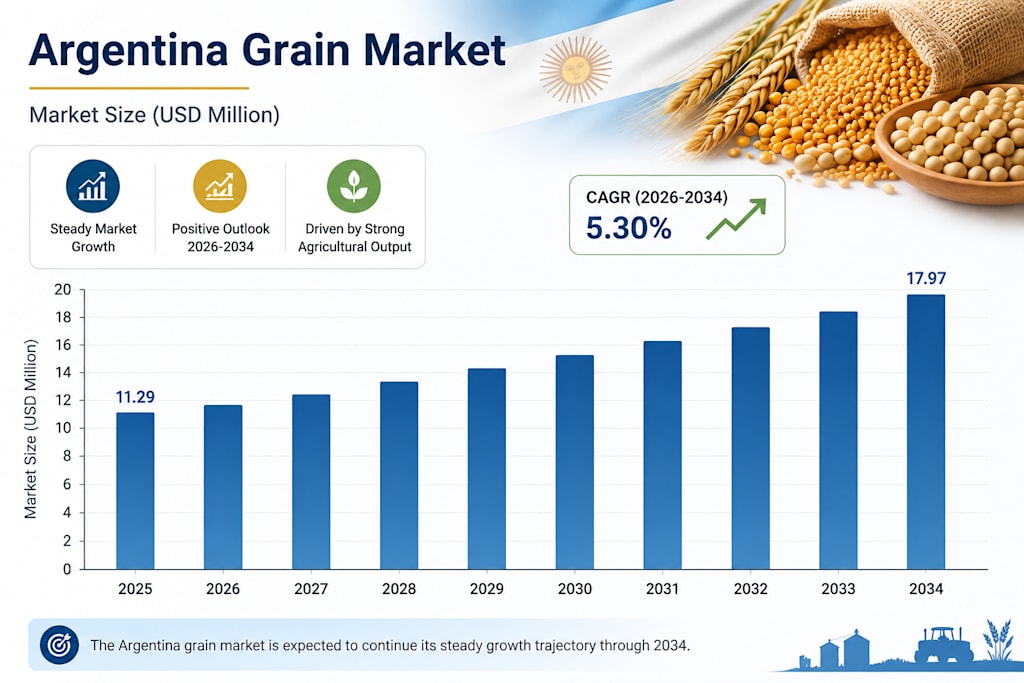
Argentina Grain Market Size, Share, and Growth Forecast (2026–2034)
The Argentina grain market continues to play a significant role in the country’s agricultural economy, supported by strong export capabilities and large-scale cultivation activities. The market reached USD 11.29 million in 2025 and is projected to grow to USD 17.97 million by 2034, registering a CAGR of 5.30% during 2026–2034.
Argentina remains one of the key grain-producing countries globally, benefiting from favorable agricultural land, established farming practices, and strong international trade connections. Rising global food demand and increasing consumption of feed grains are supporting long-term market expansion. For agribusiness companies, exporters, and investors, the market presents opportunities across production, storage, processing, and logistics operations.
Request the Latest Market Report with 2026–2034 Forecast Insights
Key Trends Shaping the Argentina Grain Market
Several trends are influencing the development of the grain market in Argentina. One major trend is the increasing adoption of modern farming technologies aimed at improving productivity and crop efficiency. Farmers are using precision agriculture tools, advanced irrigation systems, and data-driven farming practices to optimize output.
Sustainability is also becoming more important within the agricultural sector. Producers are focusing on soil health management, efficient water usage, and sustainable cultivation methods to maintain long-term productivity and meet evolving export market requirements.
Another notable trend is the growing integration of digital technologies across agricultural operations. Grain producers and exporters are using digital platforms for supply chain management, commodity tracking, and market analysis, improving operational transparency and decision-making.
Growth Drivers in the Argentina Grain Industry
The growth of the Argentina grain industry is supported by several structural and economic factors. One of the primary drivers is rising international demand for grains used in food processing, animal feed, and biofuel production. Export-oriented production continues to strengthen Argentina’s position in global agricultural trade.
Favorable climatic conditions and fertile agricultural land also contribute to strong grain output across key producing regions. In addition, ongoing investments in farming equipment and crop management practices are helping improve productivity and operational efficiency.
Government support measures and trade agreements are further supporting the industry by facilitating export activities and encouraging agricultural investment. Expanding global population and increasing food consumption are expected to maintain demand for grain products over the long term.
Export Demand and Trade Dynamics in the Argentina Grain Market
Exports remain a critical component of Argentina’s grain market. The country is a major supplier of corn, wheat, and soy-related products to international markets, making global trade conditions highly influential on industry performance.
Demand from regions such as Asia, the Middle East, and Europe continues to create opportunities for exporters. Competitive pricing and established trade relationships support Argentina’s position within the global grain supply chain.
However, trade dynamics can also introduce volatility. Currency fluctuations, international commodity prices, and changing trade regulations can directly affect profitability and export competitiveness. As a result, grain producers and exporters are increasingly focusing on diversification strategies and operational flexibility to manage market risks.
Supply Chain, Storage, and Logistics Challenges in the Argentina Grain Market
Despite strong growth potential, the Argentina grain market faces several operational challenges. Supply chain efficiency remains a major concern, particularly during peak harvest seasons when transportation networks experience high demand.
Storage infrastructure is another important issue. Limited storage capacity in some regions can lead to post-harvest losses and pricing pressure. Investments in modern storage facilities and grain handling systems are becoming increasingly necessary to improve efficiency and product quality preservation.
Logistics costs also continue to impact the industry. Transportation delays, infrastructure limitations, and fuel price fluctuations can affect supply chain performance and export timelines. Addressing these challenges will be essential for maintaining competitiveness in international markets.
Investment Opportunities in the Argentina Grain Industry
The Argentina grain industry offers multiple investment opportunities across farming, infrastructure, processing, and logistics. Rising export demand is encouraging investment in storage facilities, transportation networks, and port infrastructure to support higher trade volumes.
Technology adoption presents another important growth area. Companies providing precision agriculture solutions, irrigation systems, crop monitoring technologies, and digital farm management platforms are expected to benefit from increasing modernization within the agricultural sector.
There is also growing interest in value-added grain processing, including products linked to food manufacturing, animal nutrition, and biofuels. Businesses that can improve efficiency and strengthen supply chain integration are likely to gain long-term advantages.
For investors, the market offers opportunities tied to global food demand, export growth, and agricultural innovation.
Competitive Landscape and Key Players in the Argentina Grain Market
The Argentina grain market includes a mix of domestic agribusiness companies, multinational commodity traders, exporters, and farming cooperatives. Competition is largely influenced by production scale, export capabilities, logistics efficiency, and pricing strategies.
Leading companies are focusing on expanding storage capacity, improving supply chain networks, and strengthening export operations. Technology integration and sustainable farming practices are also becoming important competitive factors.
Strategic partnerships between producers, exporters, and logistics providers are helping improve operational efficiency and market access. As global demand for grains continues to grow, companies with strong infrastructure, diversified operations, and efficient supply chains are expected to maintain a competitive position in the market.
About the Creator
Kim Soo hyun
My name is Kim Soo hyun, and I am a research analyst at IMARC Group, specializing in market trends and data analysis to provide insights and support strategic decision-making.
Enjoyed the story? Support the Creator.
Subscribe for free to receive all their stories in your feed.
Comments
There are no comments for this story
Be the first to respond and start the conversation.