
Argentina Beer Market Size Trends, Growth Demand & Forecast 2026-2034
Argentina Beer Market Size Growth & Industry Trends Forecast to 2034

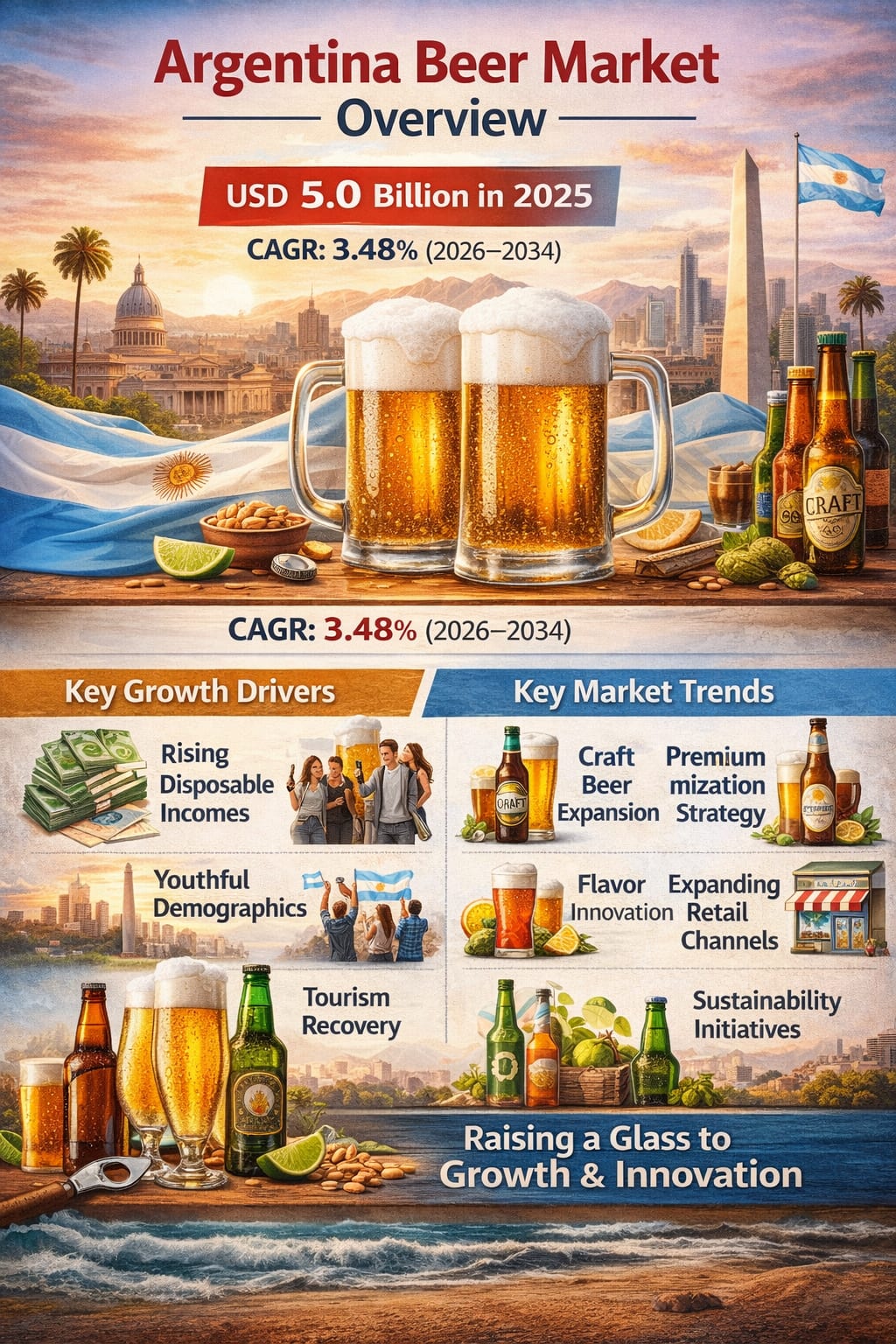
Argentina Beer Market Overview and Industry Outlook (2026–2034)
The Argentina beer market reached a value of USD 5.0 billion in 2025 and is expected to grow steadily through 2034. Beer remains one of the most widely consumed alcoholic beverages in the country, supported by changing consumer lifestyles, urbanization, and a strong social culture centered around food and beverages. The market includes a wide range of products, from mass-market lagers to premium and craft beer offerings.
Over the past decade, consumer expectations have evolved considerably. Many buyers are no longer focused solely on price and availability. Instead, they are paying greater attention to flavor profiles, ingredients, product quality, and brand identity. This shift has encouraged both multinational brewers and local producers to expand their product portfolios and introduce new varieties.
The industry is also benefiting from the gradual recovery of tourism, growth in modern retail channels, and increasing demand for premium beverage experiences. While economic challenges continue to influence purchasing decisions, the market remains supported by strong consumer interest and ongoing product innovation.
Key Trends Influencing the Argentina Beer Market
Several trends are shaping the direction of the Argentina beer market. One of the most visible developments is the growing interest in premium beer products. Consumers are increasingly exploring options that offer distinct flavors, higher-quality ingredients, and unique brewing techniques. This trend has encouraged producers to diversify their offerings and introduce products that target specific consumer preferences.
Another notable trend is the expansion of craft beer culture. Independent breweries have gained attention by focusing on small-batch production, local ingredients, and specialized recipes. Many consumers view craft beer as an alternative to traditional mass-produced products, particularly when seeking new drinking experiences.
Digital engagement is also becoming increasingly important. Breweries and beverage companies are using social media platforms and online marketing channels to connect with consumers, promote new product launches, and strengthen brand awareness. These trends continue to influence purchasing behavior and market competition.
Consumer Preferences and Purchasing Patterns in the Argentina Beer Market
Consumer behavior plays a significant role in determining product demand within the beer industry. Beer consumption in Argentina is often associated with social gatherings, sporting events, celebrations, and dining occasions. As a result, purchasing patterns are influenced by both cultural traditions and changing lifestyle preferences.
Many consumers are seeking greater variety when selecting beer products. Traditional lager remains widely consumed, but there is growing interest in wheat beers, pale ales, stouts, and other specialty styles. Younger consumers, in particular, are more willing to experiment with new flavors and limited-edition products.
Convenience is another important factor affecting purchasing decisions. Supermarkets, convenience stores, specialty beverage retailers, and online channels all contribute to product accessibility. Packaging formats also influence consumer choices, with cans, bottles, and multipack options serving different usage occasions.
Price sensitivity remains an important consideration, especially during periods of economic uncertainty. However, many consumers continue to allocate spending toward premium products when they perceive added value through quality, taste, or brand reputation.
The Role of Product Innovation in the Argentina Beer Market
Product innovation has become an important competitive strategy within the Argentina beer market. Breweries are investing in research and development to create products that meet changing consumer expectations and respond to emerging trends.
Flavor innovation represents one of the most active areas of development. Breweries are experimenting with fruit-infused varieties, seasonal offerings, and regionally inspired recipes. These products help brands differentiate themselves while attracting consumers interested in new experiences.
Packaging innovation is also gaining importance. Companies are introducing packaging formats that improve convenience, sustainability, and product preservation. Lightweight materials, recyclable packaging, and environmentally conscious production practices are receiving greater attention throughout the industry.
In addition, some breweries are expanding into low-alcohol and alcohol-free product categories. These offerings appeal to consumers who want greater flexibility in their beverage choices while maintaining social drinking occasions. Innovation across product development, packaging, and marketing continues to support industry competitiveness.
Challenges Affecting the Argentina Beer Market Growth
Despite positive long-term prospects, the Argentina beer market faces several challenges. Economic conditions remain one of the most significant factors affecting industry performance. Inflation, changes in consumer purchasing power, and fluctuations in production costs can influence both demand and profitability.
Raw material costs also present challenges for manufacturers. Ingredients such as barley, hops, and packaging materials are subject to price fluctuations that can impact operating expenses. Supply chain disruptions may further increase production costs and affect product availability.
Regulatory requirements related to alcohol sales, advertising practices, and product labeling also require ongoing attention from industry participants. Companies must adapt to evolving regulations while maintaining compliance across their operations.
Competition within the market is another important consideration. Established global brands, regional breweries, and emerging craft producers compete for consumer attention, creating pressure to maintain product quality, pricing strategies, and brand differentiation.
Business Opportunities Emerging in the Argentina Beer Market
Although challenges exist, several opportunities continue to support industry development. Premium beer categories remain an area of interest for many producers as consumers seek products that offer unique characteristics and enhanced drinking experiences.
Tourism-related demand also presents opportunities for breweries and hospitality businesses. Visitors often seek local beverage experiences, creating demand for regionally produced beers and brewery-focused tourism activities. This trend can support smaller producers and strengthen local brand recognition.
E-commerce and direct-to-consumer sales channels may provide additional growth opportunities. Digital platforms allow companies to reach consumers more efficiently while offering greater convenience in product selection and purchasing.
Sustainability initiatives represent another area of opportunity. Consumers are increasingly interested in environmentally responsible business practices, encouraging breweries to invest in resource-efficient production methods, waste reduction programs, and recyclable packaging solutions.
Production, Supply Chain, and Competitive Dynamics in the Argentina Beer Market
Beer production in Argentina involves a combination of large-scale brewing operations and smaller independent breweries. Major manufacturers benefit from extensive distribution networks, strong brand recognition, and significant production capacity. At the same time, craft breweries compete by offering specialized products and locally focused branding strategies.
Supply chain management remains a critical aspect of industry performance. Producers depend on reliable access to ingredients, packaging materials, transportation infrastructure, and retail distribution channels. Maintaining operational efficiency is essential for controlling costs and meeting consumer demand.
Competition within the market continues to evolve as companies introduce new products, strengthen marketing efforts, and expand distribution networks. Strategic partnerships with retailers, restaurants, bars, and hospitality businesses also play a role in supporting market presence and product visibility.
Leading Companies Operating in the Argentina Beer Market
The Argentina beer market includes a mix of international beverage companies and domestic breweries. Large multinational firms maintain a strong presence through established brands, broad distribution capabilities, and significant marketing investments. At the same time, local producers continue to expand their influence by focusing on regional preferences and differentiated product offerings.
Leading companies compete through product innovation, brand development, packaging improvements, and consumer engagement strategies. Many businesses are also investing in sustainability initiatives and operational efficiency improvements to strengthen their long-term market position.
As consumer preferences continue to evolve, successful companies are expected to focus on balancing affordability, product quality, innovation, and responsible business practices. These factors will remain important in shaping competition and future development within the Argentina beer market.
About the Creator
Kim Soo hyun
My name is Kim Soo hyun, and I am a research analyst at IMARC Group, specializing in market trends and data analysis to provide insights and support strategic decision-making.
Enjoyed the story? Support the Creator.
Subscribe for free to receive all their stories in your feed.
Comments
There are no comments for this story
Be the first to respond and start the conversation.