
Are Prediction Markets Legal? What Every Trader Needs to Know in 2026
The answer isn't a simple yes or no — it depends on where you live, what you're trading, and which regulator thinks they're in charge.

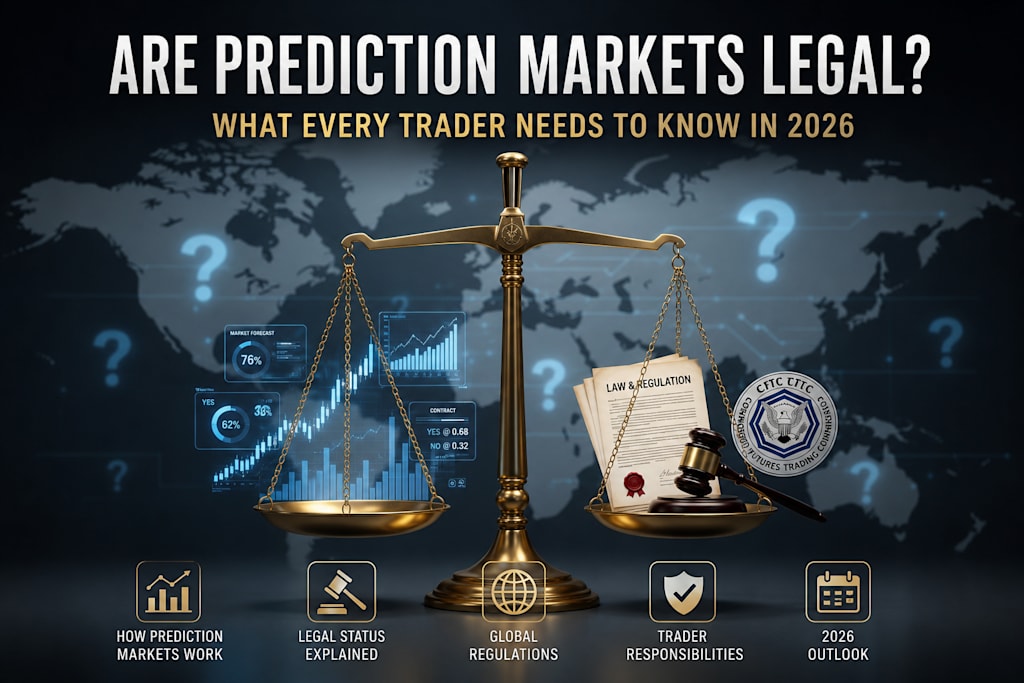
Prediction markets have exploded from niche academic curiosity to a $150B+ industry — and millions of traders are now wagering on everything from election outcomes to whether Elon Musk will post more than 20 tweets in a day. But here's what most of those traders haven't checked: is this actually legal where they live?
The honest answer is: it depends. And in 2026, that answer is shifting under your feet in real time.
The core legal tension: derivative or gamble?
Prediction markets operate as event contracts — you buy a Yes or No position based on whether something will happen. The price of that contract reflects what the market collectively thinks the probability is. Sounds simple enough. The legal headache starts with what regulators decide to call it.
Platforms like Kalshi and Polymarket argue their contracts are swaps — derivatives regulated at the federal level by the Commodity Futures Trading Commission (CFTC). Under this view, they're financial instruments, not gambling products, and federal law preempts state gaming rules.
State gambling authorities disagree. To them, a contract that pays out based on whether the Spurs beat the Knicks looks a lot like a sports bet — and sports betting requires a state license.
"States contend that Kalshi's sports-indexed markets are not legitimate contract markets of the sort that Congress intended to regulate… They urge that the CEA regulate financial and commercial contracts, not traditional sports betting contracts that are 'dolled up' to look like financial instruments." — Stanford Law Professor Joseph Grundfest
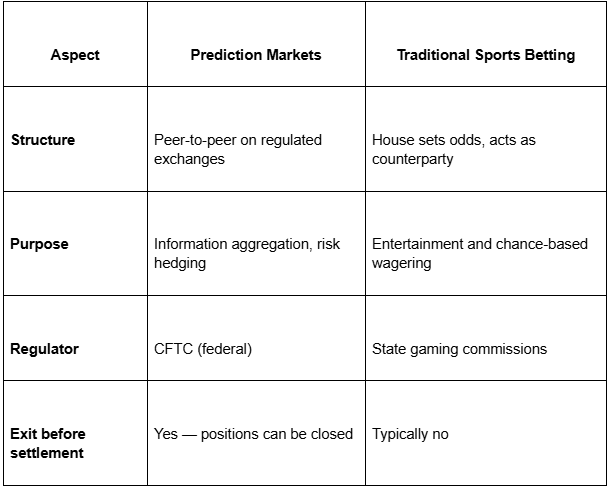
How the two sides compare
The court battles reshaping access right now
This isn't just a theoretical debate — it's playing out in federal courts. The CFTC has filed lawsuits against Wisconsin and targeted the New York Attorney General to defend its exclusive jurisdiction over these platforms. In some circuits, judges have sided with federal preemption and allowed Kalshi to operate freely. In others, state regulators have pushed back successfully, creating a circuit split that legal experts widely expect to reach the Supreme Court.
In the meantime, temporary injunctions mean that residents of a small number of states face restrictions — particularly on sports and entertainment event contracts. The situation changes quickly, and platforms update their geo-restrictions accordingly.
Insider trading is a real risk
One thing often overlooked by new traders: prediction markets have insider trading rules. The CFTC issued advisories in early 2026 making clear that its anti-fraud rules apply fully to event contracts. If you're trading on material non-public information — say, private polling data from a campaign you work for — you're exposed to enforcement action, fines, platform bans, and potentially criminal consequences. Kalshi has already internally penalized violators.
What about international traders?
Outside the US, the picture is equally fragmented. Switzerland, Spain, the Netherlands, Hong Kong, and Bulgaria generally allow access to major platforms. The UK typically treats these as gambling products requiring dedicated licenses. Australia restricts many event contracts as prohibited wagering. The safest approach anywhere: check whether the platform you're using is licensed or registered in your jurisdiction before depositing funds.
What traders should actually do?
Three practical steps: First, verify the platform is CFTC-registered at cftc.gov/check before using it. Second, complete all KYC and identity verification — platforms that skip this step are a red flag. Third, read the terms of service, especially the section on prohibited activities. Ignorance is not a defense if you end up on the wrong side of an enforcement action.
The bottom line: prediction markets are legal for most US traders on CFTC-registered platforms right now — but the rules governing which contracts you can trade are actively being contested. Stay informed, trade on regulated platforms, and watch PolyPunter for updates as the legal landscape continues to evolve.
About the Creator
Poly Punter
Poly Punter covers prediction market news, Polymarket trends, crypto forecasting, trader insights, and real-time event trading. We publish informative content about decentralised prediction markets and forecasting culture.
Enjoyed the story? Support the Creator.
Subscribe for free to receive all their stories in your feed.
Comments
There are no comments for this story
Be the first to respond and start the conversation.