
Antacids Market Expands as Rising Digestive Disorders and Self-Care Trends Drive Global Demand
Increasing cases of acid reflux, heartburn, and gastrointestinal disorders, combined with growing over-the-counter medication use, are fueling steady growth in the worldwide antacids industry.

Antacids Market Expands as Rising Digestive Disorders and Self-Care Trends Drive Global Demand
Increasing cases of acid reflux, heartburn, and gastrointestinal disorders, combined with growing over-the-counter medication use, are fueling steady growth in the worldwide antacids industry.
Community: Health
Tags: Digestive Health, Antacids, Healthcare Industry, Over-the-Counter Medicines, Gastrointestinal Disorders
Digestive health has become an increasingly important aspect of modern healthcare. As lifestyles grow more hectic and dietary habits continue to evolve, millions of people worldwide are experiencing gastrointestinal discomfort ranging from occasional heartburn to chronic acid reflux and gastroesophageal reflux disease (GERD).
For many consumers, antacids represent the first line of defense against these common digestive issues. Easily accessible, affordable, and effective, antacids have become a staple in households across developed and developing countries alike.
From chewable tablets and flavored liquids to innovative water-free formulations and digital pharmacy distribution channels, the antacids market is undergoing significant transformation. Consumer preference for self-medication, growing awareness of digestive health, and advancements in product development are creating new opportunities for manufacturers worldwide.
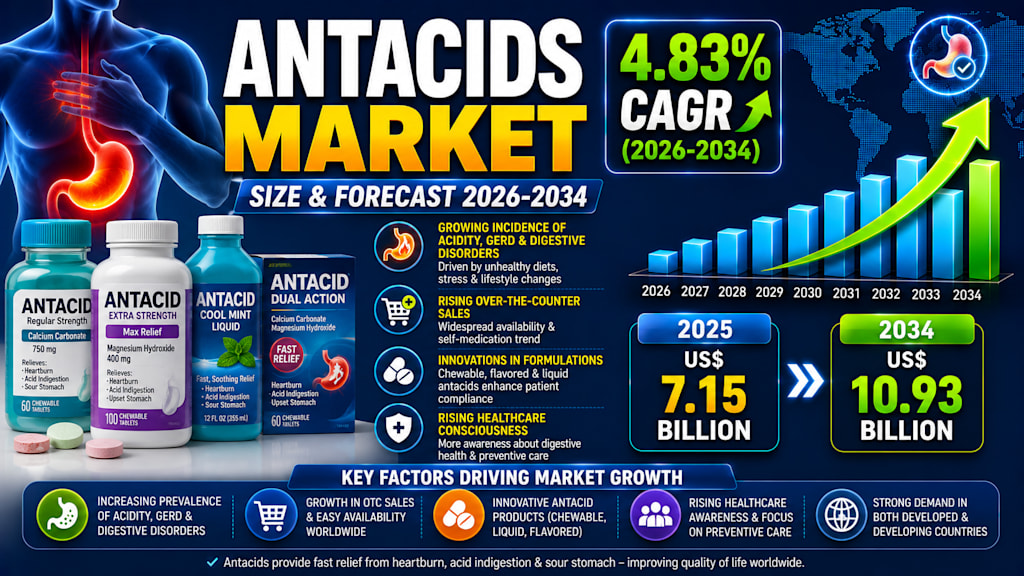
According to industry forecasts, the global Antacids Market is expected to grow from US$7.15 billion in 2025 to US$10.93 billion by 2034, registering a compound annual growth rate (CAGR) of 4.83% between 2026 and 2034. Rising prevalence of acidity, GERD, indigestion, and lifestyle-related digestive disorders is expected to continue driving demand throughout the forecast perio

Why Antacids Remain Essential in Everyday Healthcare
Antacids are medications designed to neutralize excess stomach acid and provide relief from symptoms such as:
- Heartburn
- Acid indigestion
- Sour stomach
- Mild gastroesophageal reflux disease (GERD)
- Acid-related digestive discomfort
- These medications work by balancing stomach pH levels, helping reduce irritation of the stomach and esophageal lining. Common active ingredients include calcium carbonate, magnesium hydroxide, aluminum hydroxide, and sodium bicarbonate.
Antacids are available in multiple formats including:
- Tablets
- Chewable tablets
- Liquids
- Powders
- Sachets
- Water-free formulations
Many consumers use antacids after meals, before bedtime, or whenever symptoms arise following consumption of spicy foods, fatty meals, alcohol, or caffeine.
Because they provide rapid symptom relief and are generally available without prescription, antacids have become one of the most widely used over-the-counter healthcare products globally.
Lifestyle Changes Are Fueling Digestive Problems
One of the strongest drivers behind market growth is the increasing prevalence of acid-related digestive disorders.
Modern lifestyles often involve:
- Irregular eating schedules
- Processed food consumption
- High-fat diets
- Increased caffeine intake
- Alcohol consumption
- Sedentary behavior
- Chronic stress
These factors contribute significantly to acid reflux, indigestion, and GERD. As a result, more consumers are seeking convenient and effective remedies to manage digestive discomfort.
The global burden of GERD continues to rise.
According to research referenced in industry analysis, approximately 783.95 million individuals worldwide were living with GERD in 2019, with prevalence and incidence increasing dramatically over recent decades.
The growing occurrence of gastrointestinal disorders among both younger and older populations is creating sustained demand for antacid products across multiple markets.
The Rise of Self-Medication Is Reshaping Healthcare
Consumer attitudes toward healthcare have changed significantly in recent years.
People increasingly prefer self-care solutions that allow them to manage minor health conditions without visiting a physician. Antacids fit perfectly within this trend because they provide fast relief, require no prescription in most countries, and are relatively inexpensive.
Several factors are contributing to the growth of self-medication:
- Rising healthcare costs
- Busy lifestyles
- Greater health awareness
- Easy access to pharmacies
- Online healthcare information
- Availability of trusted OTC brands
Consumers increasingly view digestive discomfort as a condition that can be managed independently through over-the-counter remedies.
This behavioral shift has expanded the customer base for antacids and encouraged manufacturers to develop more convenient and user-friendly product formats.
As self-care continues gaining popularity globally, OTC digestive health products are expected to remain a key growth category.
Product Innovation Is Driving Consumer Interest
Manufacturers are actively introducing innovative products designed to meet evolving consumer preferences.
One notable development occurred in July 2025 when Abbott Laboratories launched Digene Insta On The Go, a water-free stick-pack formulation designed to provide relief from acidity, heartburn, and indigestion within seconds.
Innovation is also evident in product formulation.
In August 2024, Haleon expanded its ENO portfolio in India by introducing 3-in-1 variants containing cumin, carom seeds, and black salt, targeting consumers seeking both digestive comfort and traditional flavor profiles.
Additional industry developments include:
- Flavored chewable tablets
- Vegan antacid formulations
- Sugar-free options
- Portable sachet packaging
- Natural ingredient integration
- Combination digestive relief products
Companies are increasingly focusing on convenience, taste, portability, and rapid action to differentiate products in a competitive marketplace.
Distribution Channels Continue Expanding
The growing availability of antacids through multiple retail channels has played a major role in market expansion.
Consumers can now purchase antacids through:
- Retail pharmacies
- Hospital pharmacies
- Supermarkets
- Convenience stores
- Online pharmacies
- E-commerce platforms
The expansion of pharmacy networks and digital retail infrastructure has improved product accessibility significantly.
Online pharmacies have become particularly important.
Consumers appreciate the convenience, privacy, and competitive pricing offered by digital platforms. This trend is especially evident among working professionals, elderly consumers, and individuals managing chronic digestive conditions.
Advancements in smartphone technology, logistics networks, and digital payment systems have further accelerated online antacid sales.
As healthcare retail continues digitizing, online distribution channels are expected to become increasingly important contributors to market growth.
Retail Pharmacies Remain the Dominant Sales Channel
Despite the growth of online platforms, retail pharmacies continue to play a central role in antacid distribution.
Pharmacists often influence purchasing decisions by recommending products based on symptom severity and consumer preferences. Their guidance remains particularly valuable for first-time buyers and individuals experiencing recurring digestive problems.
Retail pharmacies also benefit from:
- High consumer trust
- Immediate product availability
- Strong product visibility
- Convenience
- Brand recognition
In many countries, pharmacies remain the primary destination for over-the-counter digestive health products.
The continued expansion of pharmacy chains in both developed and emerging markets is expected to support ongoing demand.
H2 Antagonists Maintain a Strong Market Position
Among antacid-related therapies, H2 antagonists continue to occupy an important position.
Unlike traditional antacids that neutralize existing stomach acid, H2 antagonists reduce acid production by blocking histamine receptors within the stomach. This mechanism provides longer-lasting relief and is often used for recurring conditions such as GERD and peptic ulcers.
Consumers seeking alternatives to stronger acid-suppressing therapies frequently choose H2 antagonists because they offer a balance between effectiveness and safety.
Their widespread availability as prescription and over-the-counter products continues supporting demand globally.
Liquid Antacids Gain Popularity
Liquid antacids remain one of the most popular product categories due to their rapid onset of action.
Unlike tablets that require dissolution, liquid formulations provide immediate coating and soothing effects throughout the stomach and esophagus, making them especially effective for severe heartburn and acid irritation.
Liquid products are particularly popular among:
- Elderly patients
- Individuals with swallowing difficulties
- Pediatric populations
- Consumers seeking rapid relief
Many formulations now incorporate gas-relief ingredients and enhanced flavor profiles, further improving consumer acceptance.
As manufacturers continue innovating within this category, liquid antacids are expected to maintain strong market demand.
Powder-Based Products Continue to Serve Key Markets
Powder antacids remain widely used in many regions, particularly in emerging markets.
Their popularity stems from several advantages:
- Fast dissolution
- Flexible dosing
- Long shelf life
- Affordable production costs
- Portable packaging
Powder formulations are commonly packaged in sachets or bulk containers and are often favored by consumers who prefer customizable dosage options.
The category continues to maintain a strong presence, particularly in countries where traditional digestive remedies remain culturally familiar.
Country-Level Markets Highlight Global Opportunities
United States
The United States remains the world's largest antacids market.
High prevalence of GERD, obesity, acid reflux, and digestive disorders drives substantial demand. Consumers widely embrace self-medication practices, while major OTC brands maintain strong market visibility.
Growing awareness of digestive health and product innovation continue supporting long-term growth.
United Kingdom
The UK market benefits from widespread OTC medication adoption and strong consumer trust in pharmacy-based healthcare.
Busy lifestyles, dietary changes, and increased stress levels contribute to rising digestive complaints, encouraging antacid consumption. The expansion of online pharmacy services is also influencing purchasing behavior.
India
India represents one of the fastest-growing antacid markets globally.
A large population, widespread consumption of spicy foods, increasing urbanization, and high rates of self-medication create strong demand. Powder and liquid formulations remain particularly popular due to affordability and rapid relief.
India also serves as a major manufacturing hub for generic antacid products.
Saudi Arabia
Saudi Arabia's market continues expanding due to changing dietary habits, increasing obesity rates, and growing awareness of digestive health.
Consumption of fast food, carbonated beverages, and late-night meals has contributed to rising rates of acidity and heartburn, driving demand for antacid products.
The country's advanced healthcare infrastructure further supports market growth.
Challenges Facing the Industry
Despite positive growth prospects, the market faces several challenges.
Competition from Alternative Therapies
Consumers increasingly have access to a variety of digestive health solutions, including:
- Proton pump inhibitors (PPIs)
- H2 antagonists
- Natural remedies
- Dietary supplements
- Lifestyle interventions
These alternatives can reduce reliance on traditional antacid products in certain patient populations.
Overuse and Safety Concerns
Although generally safe when used appropriately, excessive antacid consumption can lead to complications such as electrolyte imbalances and medication interactions. Consumer education remains important for responsible use.
Regulatory Requirements
Manufacturers must comply with increasingly stringent regulations related to safety, labeling, formulation standards, and marketing practices across global markets.
Navigating diverse regulatory environments can increase development and compliance costs.
Looking Ahead
The future of the antacids market remains promising.
Growing digestive health concerns, rising self-medication trends, expanding retail and online distribution networks, and continuous product innovation are creating favorable conditions for long-term growth. Manufacturers are increasingly focusing on convenience, rapid action, improved taste, and natural ingredients to meet evolving consumer expectations.
With the market projected to grow from US$7.15 billion in 2025 to US$10.93 billion by 2034, antacids are expected to remain among the most widely used over-the-counter healthcare products worldwide.
Final Thoughts
The antacids market reflects broader shifts occurring within modern healthcare—greater emphasis on self-care, increased consumer awareness, and growing demand for convenient health solutions.
As digestive disorders become more common due to lifestyle changes and dietary habits, consumers continue seeking fast, affordable, and effective symptom relief. Advances in formulation technology, distribution channels, and product innovation are helping manufacturers meet these needs while expanding access across global markets.
For healthcare companies, retailers, and consumers alike, the antacids industry remains an important and evolving segment of the broader digestive health landscape, offering both significant commercial opportunities and meaningful benefits for millions of people seeking everyday relief.
About the Creator
Enjoyed the story? Support the Creator.
Subscribe for free to receive all their stories in your feed.
Comments
There are no comments for this story
Be the first to respond and start the conversation.