
Animal Parasiticides Market Expands as Pet Ownership and Livestock Demand Rise Globally
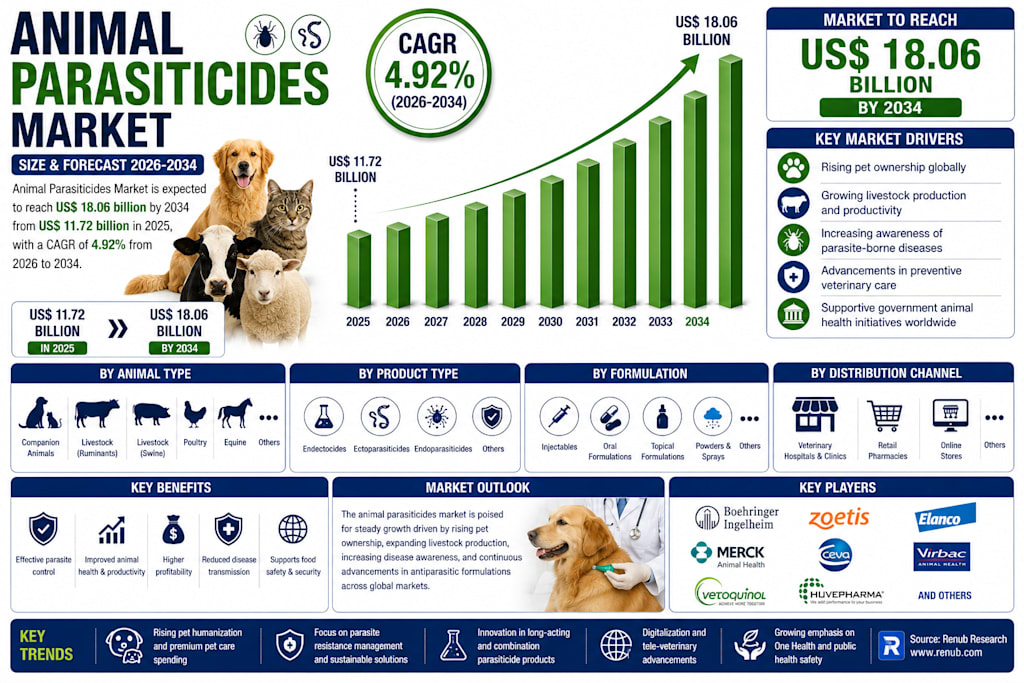
Driven by growing awareness of animal health, increasing pet adoption, and expanding livestock production, the animal parasiticides market is projected to reach US$ 18.06 billion by 2034, up from US$ 11.72 billion in 2025, growing at a CAGR of 4.92% from 2026 to 2034.

The global animal parasiticides market is steadily gaining importance as animal health becomes a central priority across both companion animal care and livestock management. From protecting pets against fleas and ticks to safeguarding livestock productivity against parasitic infections, parasiticides play a crucial role in maintaining animal welfare, food safety, and public health.
According to Renub Research, the market is expected to grow from US$ 11.72 billion in 2025 to US$ 18.06 billion by 2034, registering a CAGR of 4.92% during the forecast period from 2026 to 2034. This growth is supported by rising pet ownership, increasing awareness of parasite-borne diseases, and expanding global livestock production.
Animal parasiticides include a wide range of chemical and biological agents designed to prevent, control, and eliminate parasites such as fleas, ticks, mites, worms, and flies. These parasites can cause serious health issues in animals, including anemia, skin diseases, digestive problems, and even life-threatening infections. Parasiticides are available in multiple forms, including oral tablets, topical solutions, injectables, sprays, and feed additives, making them adaptable for both companion animals and large-scale livestock operations.
Rising Pet Ownership Driving Preventive Care
One of the strongest drivers of the animal parasiticides market is the rapid increase in global pet ownership. Pets are increasingly viewed as family members, leading to higher spending on preventive healthcare. Pet owners are becoming more proactive in protecting their animals from parasites that can cause discomfort, illness, and even transmission of diseases to humans.
A notable development occurred in April 2024 when Boehringer Ingelheim launched NexGard SPECTRA® in India after receiving regulatory approval, expanding access to comprehensive parasite protection. This reflects the growing demand for advanced and convenient treatments in emerging markets.
Urbanization is also contributing to higher parasite exposure risks. Pets frequently interact in shared environments such as parks, grooming centers, and daycare facilities, increasing the likelihood of infestation. As a result, routine parasite prevention has become a standard part of pet care.
Social media, veterinary awareness campaigns, and rising disposable incomes are further encouraging pet owners to invest in premium, long-acting parasiticides. These trends are transforming companion animal healthcare into a major growth segment within the market.
Expanding Livestock Production Boosting Demand
The global demand for meat, dairy, and other animal-derived products continues to rise, placing pressure on farmers to improve productivity and efficiency. Parasites are a major threat to livestock health, reducing feed efficiency, weight gain, fertility, and milk production.
To address these challenges, livestock producers are increasingly adopting parasiticides as part of routine herd management. Effective parasite control helps prevent economic losses and ensures compliance with food safety standards.
Government initiatives and international programs are also supporting parasite control efforts, particularly in developing regions. Integrated pest management strategies, combined with improved diagnostic tools, are enhancing treatment accuracy and reducing resistance risks.
As global food demand continues to grow, maintaining healthy livestock populations will remain a critical priority, further driving the adoption of parasiticides in the agricultural sector.
Technological Advancements Enhancing Treatment Efficiency
Innovation is playing a key role in shaping the animal parasiticides market. Advances in pharmaceutical formulations and delivery methods are improving both effectiveness and convenience.
Modern parasiticides now include long-acting formulations, combination therapies, and user-friendly delivery systems that simplify administration and improve compliance. For example, in January 2025, Elanco introduced Credelio Quattro, a six-in-one monthly oral treatment for dogs that protects against multiple parasites simultaneously.
Such innovations reflect a broader industry trend toward comprehensive, all-in-one solutions that reduce the need for multiple treatments. This not only improves animal health outcomes but also enhances convenience for pet owners and farmers.
In addition, digital tools and smart monitoring technologies are helping veterinarians detect infections earlier and tailor treatments more precisely. Pharmaceutical companies are also exploring eco-friendly formulations to address environmental concerns and reduce resistance.
These advancements are strengthening preventive care and supporting sustained market growth across both companion and livestock segments.
Challenges: Resistance and Regulatory Pressures
Despite its positive outlook, the animal parasiticides market faces several challenges. One of the most pressing issues is the growing resistance of parasites to commonly used treatments. Overuse and improper dosing have reduced the effectiveness of certain drugs, making it necessary to develop new formulations and strategies.
However, developing new parasiticides is a complex and costly process, often involving lengthy regulatory approval timelines. Without proper management and responsible usage, resistance could continue to increase, limiting treatment options.
Regulatory constraints also pose challenges. Strict safety standards require extensive testing to ensure that products are safe for animals, humans, and the environment. These requirements increase development costs and can delay product launches.
Environmental concerns are another important factor. Some parasiticides have been linked to ecological issues, such as chemical runoff affecting aquatic life. As a result, regulatory authorities are placing greater emphasis on sustainability, encouraging the development of eco-friendly alternatives.
Balancing effective parasite control with environmental responsibility will be a key challenge for the industry moving forward.
Regional Insights Highlight Market Diversity
The United States represents one of the largest markets for animal parasiticides, supported by high pet ownership rates, strong livestock industries, and advanced veterinary infrastructure. Preventive care is widely adopted, and awareness of parasite-borne diseases is high.
Germany is another important market, known for its strict regulatory standards and strong emphasis on animal welfare. The country promotes responsible use of parasiticides and supports sustainable product development.
India is emerging as a rapidly growing market, driven by rising pet ownership, expanding livestock production, and increasing awareness of animal health. Government initiatives and improved veterinary infrastructure are supporting market expansion, although challenges such as regional disparities and reliance on low-cost generics remain.
Saudi Arabia is also witnessing steady growth, supported by investments in livestock productivity and veterinary healthcare. Increasing awareness and modernization efforts are driving demand for advanced parasiticides in the region.
Competitive Landscape and Industry Developments
The animal parasiticides market is highly competitive, with major players focusing on innovation, product expansion, and strategic acquisitions. Key companies include Boehringer Ingelheim, Merck & Co., Zoetis, Elanco, Virbac, Vetoquinol, and Bimeda.
Recent developments highlight the dynamic nature of the industry. In April 2025, the FDA approved an expanded label for Simparica Trio, adding protection against flea tapeworm infections. In April 2025, Vetoquinol acquired rights to key parasiticide brands in Australia, strengthening its market presence. Meanwhile, Merck Animal Health continues to expand its BRAVECTO product line with new indications and formulations.
These developments reflect ongoing efforts to improve product efficacy, expand treatment coverage, and enhance market competitiveness.
Market Segmentation Reflects Broad Applications
The animal parasiticides market is segmented by type, animal category, and end users. Types include ectoparasiticides, endoparasiticides, and endectocides, each targeting different parasite categories.
Animal categories are divided into companion animals and livestock, both of which contribute significantly to market demand. End users include veterinary clinics, animal farms, and home care settings, reflecting the diverse application of parasiticides across different environments.
This segmentation highlights the versatility of parasiticides and their importance across multiple sectors, from household pet care to large-scale agricultural production.
Final Thoughts
The animal parasiticides market is evolving into a vital component of global animal health and agricultural sustainability. With rising pet ownership, increasing livestock production, and growing awareness of parasite-borne diseases, demand for effective parasiticides is expected to remain strong.
Renub Research’s forecast of US$ 18.06 billion by 2034 underscores the market’s steady growth and long-term potential.
About the Creator
Enjoyed the story? Support the Creator.
Subscribe for free to receive all their stories in your feed.
Comments
There are no comments for this story
Be the first to respond and start the conversation.