
Animal Parasiticides Market Expands as Pet Care and Livestock Health Become Global Priorities
Rising pet ownership, increasing livestock production, and growing awareness of parasite-borne diseases are driving sustained growth in the animal parasiticides industry worldwide.

The global animal health industry has undergone remarkable transformation over the past decade. As companion animals become increasingly integrated into family life and livestock producers focus on improving productivity and food security, animal healthcare has emerged as a critical area of investment worldwide.
Among the most important components of veterinary healthcare are animal parasiticides, products specifically designed to prevent, control, and eliminate parasites that can negatively affect the health and well-being of animals. These parasites include fleas, ticks, mites, worms, lice, and various other organisms capable of causing serious health complications in both companion animals and livestock.
The importance of parasite control extends beyond animal welfare. Many parasites can impact productivity in livestock operations, reduce food production efficiency, and even contribute to the transmission of zoonotic diseases that affect humans. As a result, effective parasite management has become an essential element of modern veterinary care and agricultural practices.
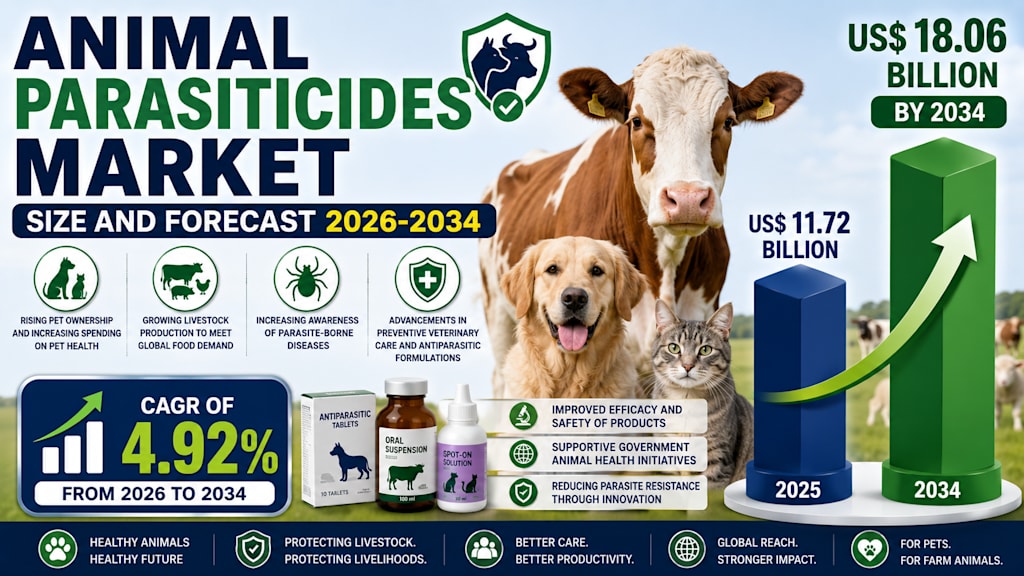
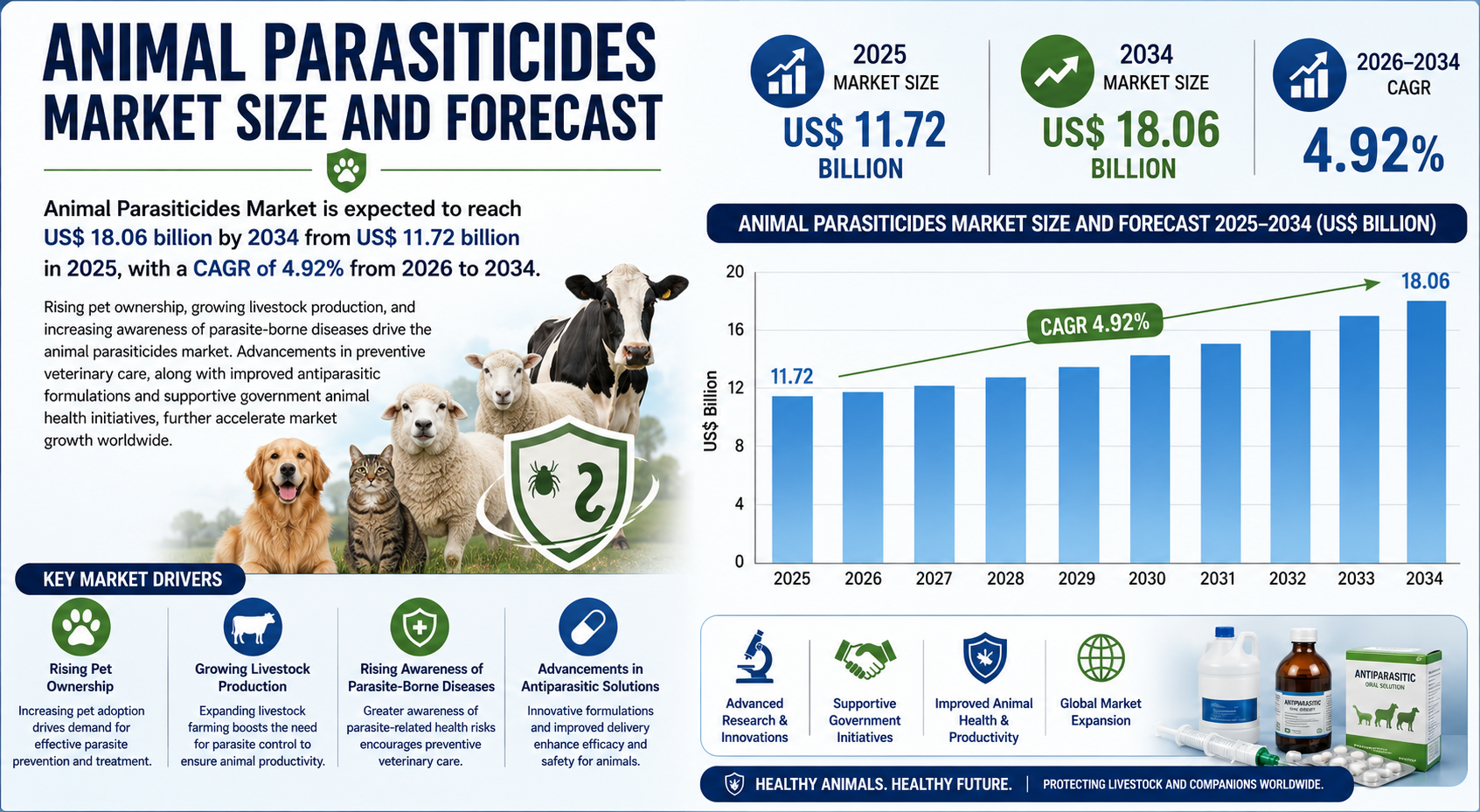
Reflecting these trends, the global animal parasiticides market is projected to grow from US$ 11.72 billion in 2025 to US$ 18.06 billion by 2034, registering a compound annual growth rate (CAGR) of 4.92% during the forecast period. Rising pet ownership, growing awareness of parasite-related diseases, expanding livestock industries, and continued advancements in veterinary medicine are supporting market expansion across multiple regions.
As animal health becomes increasingly important to consumers, farmers, veterinarians, and governments alike, demand for innovative parasite prevention and treatment solutions continues to strengthen.
Understanding the Importance of Animal Parasiticides
Animal parasiticides are chemical or biological agents used to prevent and treat parasite infestations in animals.
These products play a vital role in protecting companion animals such as dogs and cats, as well as livestock including cattle, sheep, goats, poultry, and swine. Parasites can cause a wide range of health issues, including skin irritation, anemia, digestive disorders, reduced weight gain, decreased milk production, reproductive complications, and severe systemic infections.
Parasiticides are available in numerous formats designed to meet different animal healthcare needs. Oral tablets, topical treatments, injectables, sprays, dips, collars, and feed additives all serve specific purposes depending on the target parasite and animal species.
Modern parasite control programs increasingly emphasize prevention rather than treatment alone. Regular administration of preventive products helps reduce infection risks while improving overall animal health and productivity.
This proactive approach is becoming increasingly common among both pet owners and livestock producers, supporting long-term market growth.
Growing Pet Ownership Is Driving Market Expansion
One of the most significant factors contributing to the growth of the animal parasiticides market is the continued rise in global pet ownership.
Across many countries, pets are increasingly viewed as family members rather than simply animals. This shift has encouraged greater spending on veterinary care, preventive healthcare products, grooming services, nutrition, and overall wellness.
Pet owners today are more aware of the health risks associated with parasites than ever before. Fleas, ticks, heartworms, intestinal worms, and other parasites can cause serious health complications if left untreated. As awareness increases, routine parasite prevention is becoming a standard aspect of responsible pet ownership.
The trend toward pet humanization has also encouraged demand for premium healthcare products. Consumers are increasingly seeking convenient, long-lasting, and highly effective solutions that provide comprehensive protection against multiple parasites.
Digital media, veterinary education campaigns, and social media platforms have further enhanced public understanding of parasite prevention, encouraging regular veterinary visits and preventive treatment adoption.
As pet populations continue to grow worldwide, the companion animal segment remains one of the strongest contributors to market expansion.
Livestock Production Creates Long-Term Demand
The livestock sector represents another major driver of growth within the animal parasiticides market.
Global demand for meat, dairy products, and other animal-derived foods continues to rise due to population growth, urbanization, and changing dietary preferences. To meet this demand, producers must maintain healthy and productive livestock populations.
Parasitic infections can significantly reduce productivity by affecting feed conversion efficiency, growth rates, fertility, milk production, and overall animal health. In severe cases, infestations can lead to substantial economic losses for farmers and agricultural operations.
As a result, parasite control programs have become an essential component of modern livestock management.
Farmers increasingly rely on veterinary parasiticides to protect herd health, improve production outcomes, and comply with food safety regulations. Integrated parasite management strategies, supported by veterinary guidance and diagnostic technologies, are helping producers optimize treatment effectiveness while minimizing resistance risks.
The continued expansion of livestock industries across developing economies is expected to create substantial opportunities for market growth throughout the forecast period.
Innovation Is Transforming Parasite Control
Technological advancement has become a major force shaping the future of the animal parasiticides market.
Manufacturers are investing heavily in research and development to create more effective, convenient, and comprehensive treatment solutions. New formulations are designed to provide broader protection, longer-lasting efficacy, and improved ease of administration.
Combination therapies are becoming increasingly popular because they allow pet owners and farmers to address multiple parasite threats using a single product. These solutions simplify treatment schedules while improving compliance and overall protection.
Long-acting formulations represent another important innovation. Products that provide protection for several months reduce the need for frequent dosing, making parasite prevention more convenient for both pet owners and livestock managers.
Advances in chewable tablets, injectable formulations, waterproof topical treatments, and sustained-release technologies are further enhancing treatment effectiveness and user experience.
The industry is also exploring environmentally responsible alternatives that reduce ecological impact while maintaining strong parasite control performance.
These innovations are helping manufacturers differentiate their offerings while supporting broader market adoption.
Rising Awareness of Zoonotic Diseases
Growing concern about zoonotic diseases has increased attention on parasite prevention programs worldwide.
Many parasites can be transmitted between animals and humans, creating public health risks that extend beyond veterinary care. Tick-borne diseases, certain intestinal parasites, and vector-borne infections can affect both animal and human populations.
Governments, veterinary organizations, and public health agencies are increasingly promoting preventive measures aimed at reducing transmission risks.
Educational campaigns encourage routine veterinary checkups, parasite screening, and preventive treatments for companion animals and livestock alike.
As awareness of zoonotic disease prevention continues to grow, demand for effective parasite control products is expected to increase correspondingly.
Challenges Facing the Market
Despite favorable growth prospects, the animal parasiticides industry faces several significant challenges.
One of the most pressing concerns is the growing resistance of parasites to existing treatments.
Overuse, incorrect dosing, and repeated reliance on the same active ingredients have contributed to resistance development among various parasite populations. As resistance increases, some treatments become less effective, creating challenges for veterinarians, farmers, and pet owners.
Addressing resistance requires ongoing research, development of new active ingredients, and implementation of responsible parasite management practices.
Regulatory complexity also presents challenges for manufacturers.
Animal healthcare products must undergo extensive testing to ensure safety for animals, humans, and the environment. Regulatory approval processes can be lengthy and expensive, increasing development costs and delaying market entry for new products.
Environmental concerns are also receiving increased attention. Some parasiticides may impact non-target organisms or contribute to environmental contamination if not used responsibly.
As sustainability becomes a greater priority, manufacturers are under pressure to develop safer and more environmentally friendly solutions.
Balancing efficacy, affordability, regulatory compliance, and environmental responsibility remains a critical challenge for industry participants.
Regional Markets Supporting Growth
The United States remains one of the largest animal parasiticides markets globally. Strong pet ownership rates, advanced veterinary infrastructure, and large-scale livestock production support substantial demand across both companion animal and agricultural segments.
Germany continues to play an important role within Europe. The country's emphasis on animal welfare, veterinary excellence, and sustainable farming practices supports widespread adoption of preventive healthcare products. Strict regulatory standards also encourage innovation in environmentally responsible formulations.
India is emerging as one of the fastest-growing markets in Asia. Rising pet ownership, increasing veterinary awareness, expanding livestock industries, and government initiatives focused on animal health are creating significant growth opportunities. Improved access to veterinary services and growing participation by international animal health companies further support market development.
Saudi Arabia is also experiencing steady growth as investments in livestock productivity, food security, and veterinary healthcare infrastructure continue to increase. Rising awareness of companion animal health is contributing additional momentum within the region.
Together, these markets demonstrate the broad global demand for effective parasite control solutions.
Recent Industry Developments Reflect Growing Innovation
The animal parasiticides market continues to witness significant innovation and strategic activity.
Manufacturers are launching increasingly sophisticated products that offer broader protection against multiple parasites while simplifying treatment protocols. Recent product introductions have focused on combination therapies capable of protecting animals against fleas, ticks, worms, heartworms, and other common parasites through a single treatment.
Strategic acquisitions, regulatory approvals, and geographic expansion initiatives are also reshaping the competitive landscape. Companies are investing heavily in research, product development, and market expansion to strengthen their positions within the rapidly evolving animal health sector.
These developments highlight the industry's commitment to improving animal health outcomes while addressing emerging challenges such as resistance and sustainability.
Looking Toward the Future
The future of the animal parasiticides market appears promising as awareness of animal health continues to increase worldwide.
Growing pet ownership, expanding livestock production, technological innovation, and heightened concern about parasite-borne diseases will continue to support long-term demand. The increasing focus on preventive healthcare and integrated parasite management strategies is expected to further strengthen market growth.
Advances in pharmaceutical science, digital veterinary technologies, and sustainable product development may create new opportunities for manufacturers seeking to address evolving customer needs.
Organizations that successfully combine innovation, safety, effectiveness, and environmental responsibility will be well-positioned to capitalize on future market opportunities.
Final Thoughts
Animal parasiticides have become indispensable tools for protecting both companion animals and livestock from a wide range of harmful parasites. Their role extends beyond individual animal welfare, contributing to food security, public health, and economic productivity across agricultural systems worldwide.
With the global animal parasiticides market expected to grow from US$ 11.72 billion in 2025 to US$ 18.06 billion by 2034, the industry is poised for steady expansion. Rising pet ownership, increased livestock production, growing awareness of parasite-borne diseases, and ongoing technological advancements will continue driving demand across global markets.
As veterinary healthcare evolves and preventive care becomes increasingly prioritized, animal parasiticides will remain a cornerstone of modern animal health management, supporting healthier animals, safer food systems, and stronger public health outcomes worldwide.
About the Creator
Enjoyed the story? Support the Creator.
Subscribe for free to receive all their stories in your feed.
Comments
There are no comments for this story
Be the first to respond and start the conversation.