
America’s Toy Industry Is Evolving Through Innovation, Education, and Digital Shopping Trends
Licensed Characters, STEM Learning, E-Commerce Growth, and Collectible Trends Are Driving the U.S. Toy Market Forward

The toy industry in the United States is undergoing a remarkable transformation as changing consumer preferences, digital innovation, and educational priorities reshape the way toys are designed, marketed, and purchased. Once dominated by traditional dolls, puzzles, and action figures, today's toy market includes smart toys, coding kits, interactive games, collectibles, and technology-enhanced learning experiences that appeal to both children and adults.
The United States remains one of the world's most influential toy markets, supported by strong consumer spending, powerful entertainment franchises, advanced retail infrastructure, and a culture that embraces innovation. Toy manufacturers are continuously adapting to changing trends, integrating technology into products while maintaining the core values of creativity, imagination, and learning that have always defined successful play experiences.
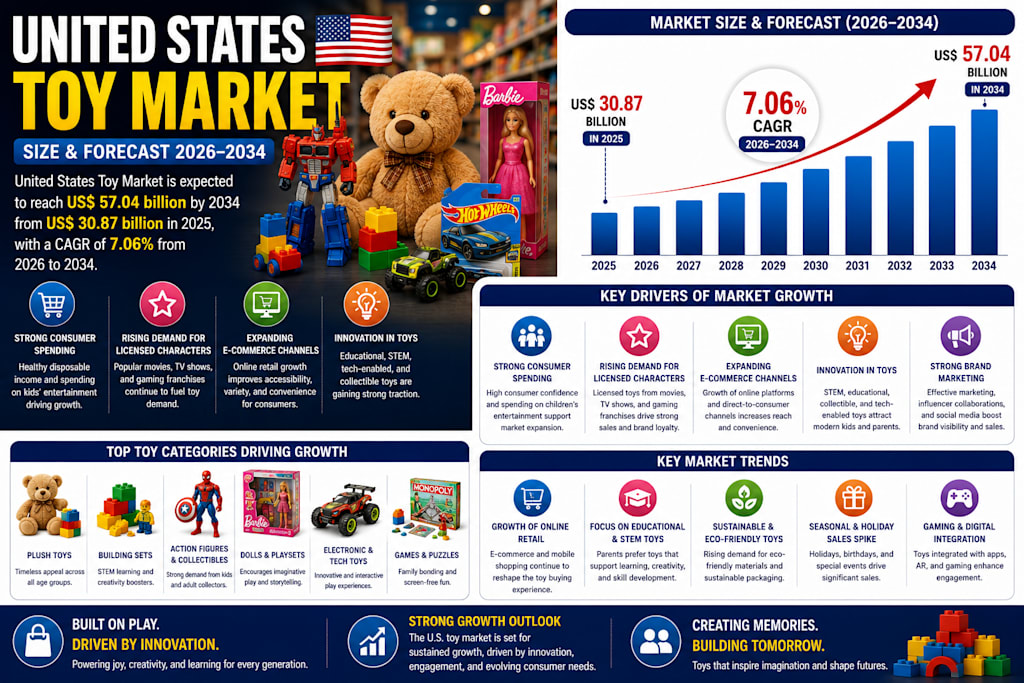
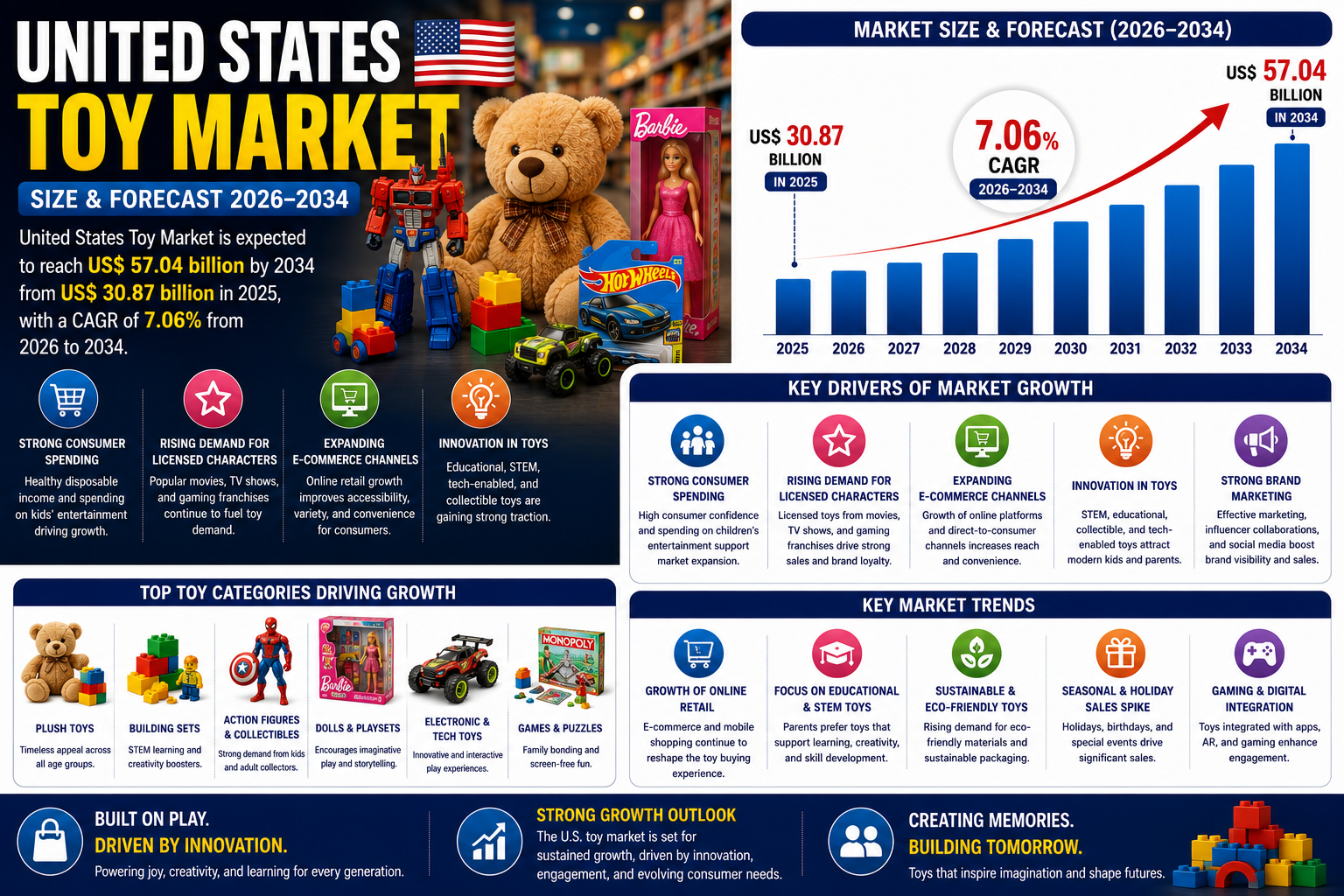
According to Renub Research, the United States Toy Market is projected to grow from US$ 30.87 billion in 2025 to US$ 57.04 billion by 2034, expanding at a CAGR of 7.06% between 2026 and 2034. Rising demand for licensed products, growing popularity of educational toys, expanding e-commerce platforms, and continuous product innovation are driving this impressive growth.
As technology, entertainment, and consumer expectations continue evolving, the toy industry is entering an exciting new era of growth and transformation.
Toys Continue to Play an Important Role in Childhood Development
Toys have always been more than simple entertainment products.
They help children develop cognitive abilities, creativity, motor skills, communication skills, and social interaction. Through play, children learn problem-solving techniques, explore their imaginations, and develop important life skills that contribute to personal growth.
The modern toy industry serves a broad audience. Traditional products such as dolls, building blocks, puzzles, vehicles, and plush toys remain highly popular. However, the market has expanded significantly to include educational toys, STEM learning kits, coding robots, interactive games, and augmented reality experiences.
Adult consumers have also become an increasingly important market segment through collectibles, hobby products, model kits, and nostalgia-driven merchandise.
This diversification has created new opportunities for manufacturers while expanding the overall reach of the industry.
Entertainment Franchises Are Driving Toy Sales
One of the most powerful growth drivers in the United States toy market is the ongoing influence of entertainment franchises.
Movies, television programs, streaming content, video games, and online media continue shaping consumer preferences and purchasing behavior.
Popular characters often generate strong emotional connections with audiences, particularly children. As a result, action figures, playsets, plush toys, collectibles, and themed merchandise linked to successful entertainment properties frequently become top-selling products.
The rise of streaming platforms has expanded opportunities for toy manufacturers by creating year-round demand for licensed products rather than limiting sales to major theatrical releases.
Franchise-driven marketing campaigns frequently extend across multiple platforms, including television, social media, gaming environments, and influencer partnerships.
Adult collectors also contribute significantly to this trend by purchasing limited-edition merchandise, retro products, and franchise memorabilia connected to favorite childhood brands.
This strong relationship between entertainment and toys continues to generate substantial revenue opportunities across the market.
Educational and STEM Toys Are Gaining Popularity
Educational toys have become one of the fastest-growing segments within the toy industry.
Parents increasingly seek products that combine entertainment with learning opportunities. Rather than viewing toys solely as recreational products, many families now prioritize play experiences that support skill development and academic growth.
STEM toys, which focus on science, technology, engineering, and mathematics, have become especially popular.
Coding kits, robotics sets, engineering challenges, chemistry experiments, and interactive learning systems help children develop critical thinking abilities while encouraging creativity and problem-solving.
Schools and educational organizations have also embraced many STEM-focused products, further expanding market demand.
Manufacturers continue investing in innovative educational solutions that incorporate digital learning tools, mobile applications, and guided instructional content.
In May 2025, Moose Toys announced an exclusive global partnership with CrunchLabs and engineer-content creator Mark Rober to develop a new STEM-focused toy line designed to inspire hands-on science and engineering learning among children. The products are expected to launch globally in 2026.
This growing emphasis on learning through play is expected to remain a major growth driver throughout the forecast period.
E-Commerce Is Transforming Toy Retail
The rapid expansion of e-commerce has fundamentally changed how consumers shop for toys.
Online platforms provide access to a wider range of products than traditional retail stores, allowing shoppers to compare prices, read reviews, and discover niche products with ease.
Parents increasingly rely on digital marketplaces to research products before making purchasing decisions.
Collectors benefit from access to exclusive releases, limited-edition items, and specialty products that may not be available locally.
Retailers have also improved customer experiences through personalized recommendations, targeted promotions, and loyalty programs.
The rise of fast delivery services, curbside pickup, and integrated online-to-offline shopping experiences has further strengthened consumer confidence in digital purchasing.
Social media platforms have become powerful sales drivers as influencers, toy reviewers, and unboxing creators generate excitement around new releases.
As online shopping habits continue strengthening, e-commerce is expected to remain one of the most important drivers of toy market growth.
Collectible Toys Are Attracting New Audiences
Collectible toys have evolved into a major market category with appeal extending well beyond children.
Limited-edition action figures, designer toys, licensed collectibles, and pop-culture merchandise attract consumers across multiple age groups.
Many adult collectors view certain products as hobby items, while others purchase collectibles for nostalgic reasons or investment potential.
The popularity of entertainment franchises has amplified this trend by creating highly desirable merchandise tied to movies, gaming properties, and television series.
Manufacturers frequently release exclusive editions and limited production runs to create scarcity and maintain consumer interest.
The collectible segment continues expanding as fan communities grow through social media, conventions, and online marketplaces.
Sustainability Is Influencing Product Development
Environmental awareness is becoming increasingly important within the toy industry.
Parents are paying closer attention to product materials, manufacturing practices, and packaging sustainability when making purchasing decisions.
Toy manufacturers are responding by introducing products made from recycled materials, biodegradable packaging, and environmentally responsible production processes.
Companies are also exploring ways to reduce plastic usage while maintaining product durability and safety.
Sustainability initiatives not only support environmental goals but also help strengthen brand reputation among environmentally conscious consumers.
As awareness regarding sustainability continues growing, eco-friendly toys are expected to become an increasingly important market segment.
Building Sets Continue to Inspire Creativity
Building sets remain among the most enduring and successful categories within the toy industry.
These products encourage creativity, spatial reasoning, engineering skills, and problem-solving abilities while providing highly engaging play experiences.
Modern building systems have expanded far beyond traditional construction blocks.
Manufacturers now offer themed kits, robotics integrations, programmable components, and advanced construction projects designed for various age groups.
The category's educational value and broad appeal continue supporting strong demand among both children and adult hobbyists.
Youth Electronics Are Expanding Rapidly
Technology has become deeply integrated into the toy industry.
Youth electronics now include interactive learning devices, gaming products, educational tablets, programmable robots, and smart toys that respond to voice commands and environmental stimuli.
These products blend entertainment with learning while helping children develop digital literacy skills.
Advancements in artificial intelligence, augmented reality, and connectivity are creating new opportunities for innovation.
As digital technologies continue evolving, youth electronics are expected to remain one of the fastest-growing toy categories.
California Leads the U.S. Toy Market
California represents one of the largest toy markets in the country.
The state's large population, strong purchasing power, and close connections to the entertainment industry create ideal conditions for market growth.
Many major film studios and content creators operate within California, strengthening demand for licensed products and entertainment-based merchandise.
Consumers in the state also demonstrate strong interest in educational toys, collectibles, and environmentally friendly products.
California's advanced e-commerce infrastructure further supports market expansion by facilitating rapid product distribution and online shopping adoption.
Texas Continues to Experience Strong Growth
Texas has emerged as one of the fastest-growing regional toy markets in the United States.
A large family population, expanding suburban communities, and rising household incomes contribute to consistent demand across multiple product categories.
Educational toys, outdoor play equipment, building sets, and licensed merchandise perform particularly well within the state.
The expansion of retail infrastructure and e-commerce fulfillment networks has also improved accessibility and convenience for consumers.
New York Remains a Major Retail Hub
New York continues to play a significant role in the national toy industry.
The state's diverse population, tourism sector, and concentration of flagship retail stores contribute to strong sales performance.
New York consumers demonstrate high demand for premium educational toys, collectibles, and licensed character merchandise.
The popularity of online shopping and fast delivery services further supports market growth throughout the region.
Florida Benefits from Tourism and Family Growth
Florida's strong tourism industry contributes significantly to toy sales, particularly through theme parks, entertainment attractions, and gift retailers.
Character-based merchandise, educational toys, outdoor products, and preschool toys remain especially popular.
Population growth and a strong family-oriented demographic profile continue supporting long-term market expansion throughout the state.
Challenges Facing the Industry
Despite positive growth prospects, the U.S. toy market faces several challenges.
One major concern involves supply chain disruptions and rising production costs.
The toy industry relies heavily on global manufacturing networks, making it vulnerable to shipping delays, raw material shortages, transportation challenges, and labor cost increases. These factors can impact inventory availability and profitability, particularly during peak shopping seasons.
Another challenge involves competition from digital entertainment alternatives.
Many children now divide their leisure time between traditional toys and screen-based activities such as video games, streaming content, mobile applications, and virtual experiences.
To remain relevant, toy manufacturers must continue integrating technology into products while preserving the value of physical play experiences.
Final Thoughts
The United States toy market continues evolving through innovation, educational advancement, entertainment partnerships, and digital transformation.
According to Renub Research, the United States Toy Market is projected to grow from US$ 30.87 billion in 2025 to US$ 57.04 billion by 2034, reflecting strong demand for educational toys, licensed merchandise, collectibles, and technology-enabled play experiences.
As manufacturers continue investing in creativity, sustainability, and interactive learning, the toy industry will remain an essential part of childhood development while also appealing to adult consumers through nostalgia and collecting culture.
The future of play is becoming more connected, educational, and personalized—and the U.S. toy market is leading that transformation.
About the Creator
Enjoyed the story? Support the Creator.
Subscribe for free to receive all their stories in your feed.
Comments
There are no comments for this story
Be the first to respond and start the conversation.