
America’s Pet Food Revolution: Why Premium Nutrition Is Reshaping a $74 Billion Industry
Human-grade ingredients, high-protein diets, personalized nutrition, and growing pet-parent relationships are transforming the United States pet food market like never before.

In homes across the United States, pets have evolved far beyond their traditional roles as household companions. Today, dogs, cats, and other pets are increasingly regarded as family members, influencing spending habits, lifestyle choices, and even healthcare decisions.
This emotional connection has fundamentally transformed the pet food industry. Modern pet owners are no longer satisfied with basic nutrition. Instead, they seek products that mirror the quality, transparency, and health benefits they expect from their own food choices.
As a result, the United States pet food market is experiencing remarkable growth driven by premiumization, product innovation, and increasing awareness of pet health and wellness.
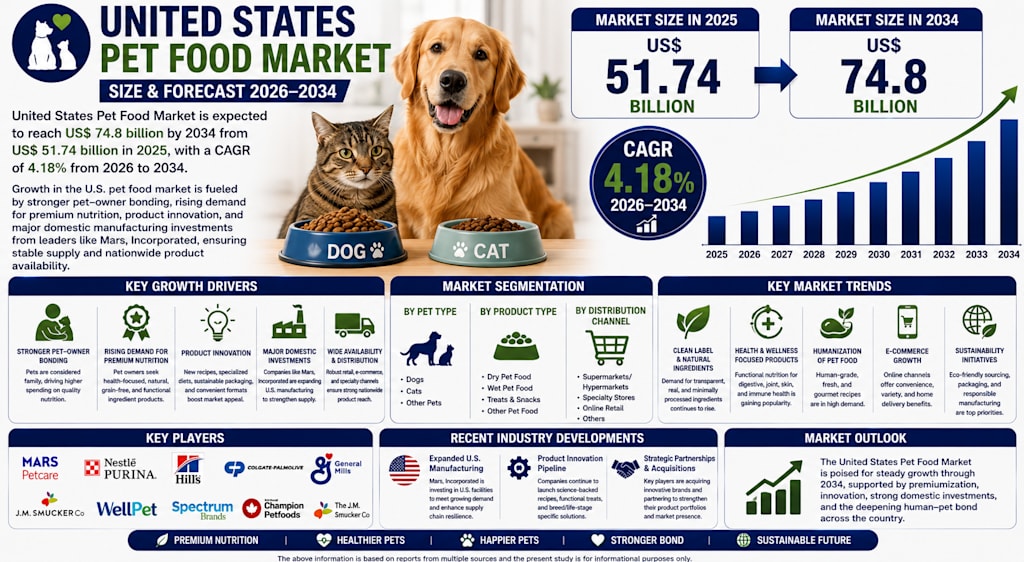
According to Renub Research, the United States Pet Food Market is projected to grow from US$ 51.74 billion in 2025 to US$ 74.8 billion by 2034, expanding at a compound annual growth rate (CAGR) of 4.18% between 2026 and 2034. Stronger pet-owner relationships, rising demand for premium nutrition, continuous product innovation, and substantial domestic manufacturing investments are among the key factors fueling market expansion.
As Americans continue treating pets as integral members of the family, the future of pet food is becoming increasingly sophisticated, personalized, and health focused.
Pets Are Becoming Family Members
One of the strongest drivers behind market growth is the changing relationship between pets and their owners.
Over the past decade, pets have increasingly become central members of households rather than simply animals kept for companionship.
This shift has significantly influenced purchasing behavior.
Pet owners now actively research ingredients, nutritional benefits, manufacturing standards, and scientific evidence before selecting products.
Many consumers seek foods that support long-term health, immunity, digestion, weight management, mobility, and healthy aging.
The emotional bond between owners and pets has encouraged spending on premium products that promise higher quality nutrition and improved well-being.
This trend continues to elevate expectations across every segment of the pet food market.
Premium Nutrition Is Driving Consumer Spending
Premiumization has become one of the most important trends shaping the industry.
Consumers increasingly prioritize ingredient quality, nutritional transparency, and functional health benefits when purchasing pet food.
Many pet owners now prefer products featuring:
Real meat proteins, natural ingredients, grain-free options, limited ingredient recipes, digestive support components, and scientifically formulated nutrition.
The demand for foods resembling human-grade quality standards continues to grow rapidly.
Manufacturers are responding by introducing premium recipes designed for specific life stages, breeds, activity levels, and health conditions.
These products often command higher prices while delivering enhanced nutritional value and greater consumer confidence.
The shift toward premium nutrition remains a major contributor to overall market growth.
Major Manufacturing Investments Are Strengthening Supply
Growing consumer demand has encouraged manufacturers to invest heavily in domestic production capacity.
Large-scale investments help improve supply reliability, reduce transportation challenges, and support the development of advanced nutritional products.
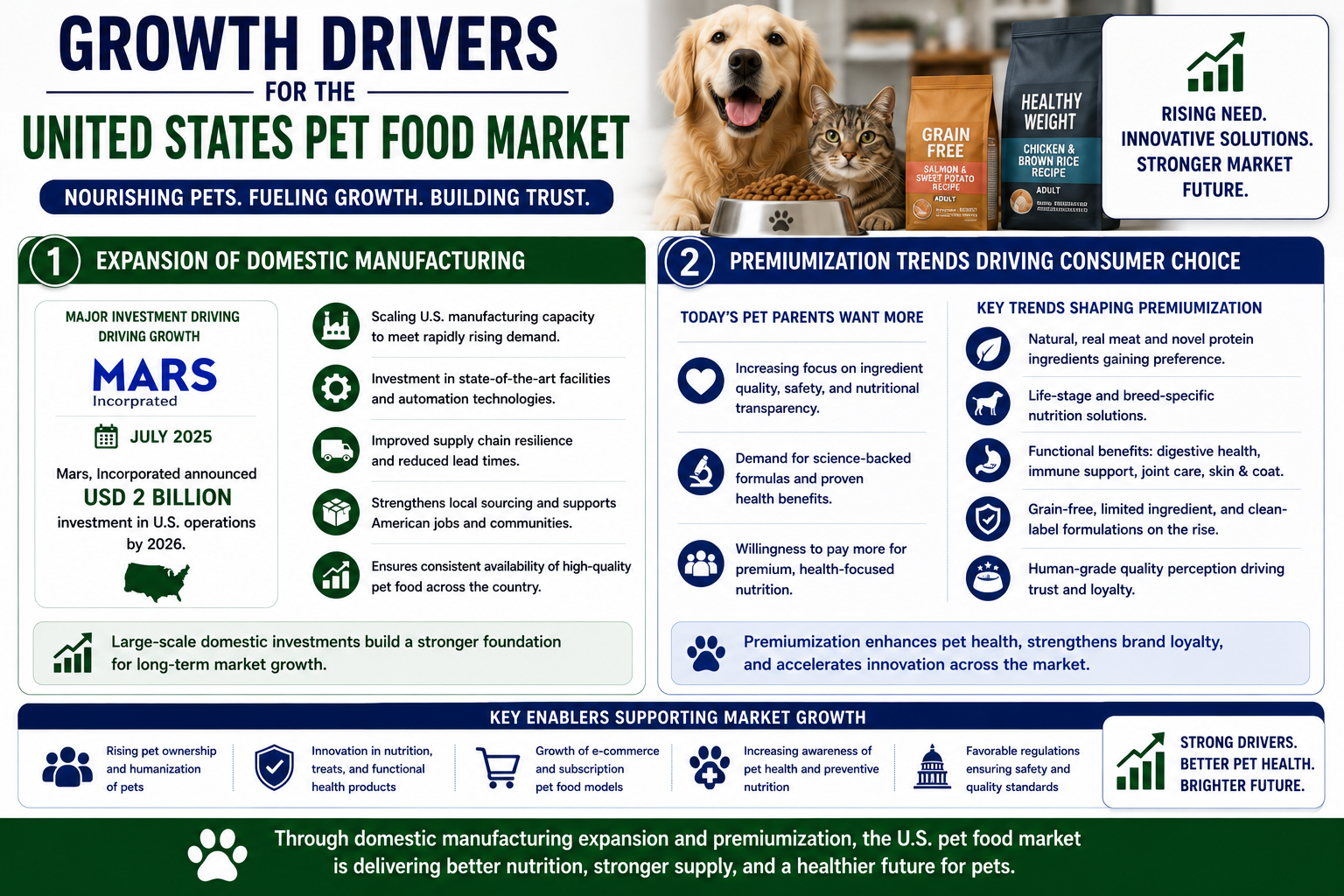
A notable example occurred in July 2025 when Mars, Incorporated announced plans to invest approximately US$ 2 billion in U.S. operations through 2026.
The investment aims to strengthen domestic production capabilities, improve supply chain resilience, and support increasing demand for premium pet food products.
Such investments allow companies to respond more efficiently to changing consumer preferences while ensuring consistent product availability nationwide.
As pet ownership remains strong and premium demand continues increasing, manufacturing expansion is expected to remain a key industry priority.
Treats Are Becoming a Major Growth Engine
Treats have evolved far beyond occasional rewards.
Today, pet owners frequently use treats for training, enrichment, bonding, and behavioral reinforcement.
This shift has transformed treats into one of the fastest-growing categories within the pet food market.
Manufacturers are introducing innovative products featuring unique flavors, textures, shapes, and health benefits.
Many modern treats are formulated to support:
Dental health, digestive wellness, weight management, skin and coat health, and joint mobility.
A significant example occurred in May 2023 when Nestlé Purina launched its Friskies Playfuls treats line featuring multiple flavor combinations designed to increase engagement and enjoyment for pets.
The growing popularity of treats is encouraging companies to invest heavily in research, product development, and packaging innovation.
As pet owners continue seeking engaging and nutritious rewards, the treats category is expected to remain a major growth driver.
High-Protein Diets Are Reshaping the Market
Health-conscious consumers are increasingly applying their own nutritional philosophies to pet feeding decisions.
Among the most influential trends is growing demand for high-protein diets.
Many pet owners believe diets rich in animal protein better reflect ancestral feeding patterns and support overall health.
As a result, manufacturers are introducing products that emphasize:
Real meat as the primary ingredient, protein-rich recipes, omega fatty acids, antioxidants, vitamins, and functional nutrients.
These diets are particularly popular among owners seeking to support active lifestyles, healthy weight management, muscle development, and long-term wellness.
A strong example emerged in March 2023 when Blue Buffalo introduced BLUE Wilderness Premier Blend, a premium protein-focused formula enriched with vitamins, minerals, and functional ingredients.
As awareness regarding pet nutrition continues increasing, demand for functional and protein-rich diets is expected to remain strong.
Humanization Trends Are Influencing Product Development
The humanization of pets has become one of the defining trends within the industry.
Consumers increasingly expect pet foods to meet standards similar to those applied to human foods.
This has fueled demand for:
Natural ingredients, clean-label recipes, minimally processed foods, transparent sourcing practices, and scientifically validated health claims.
Manufacturers are responding by developing products that mirror human dietary trends, including organic ingredients, limited ingredient diets, fresh food options, and customized meal plans.
Subscription-based services and personalized nutrition programs are becoming increasingly common.
As humanization trends continue evolving, pet food companies are expected to invest further in innovation and premium product development.
Fresh and Whole-Food Nutrition Is Gaining Momentum
Fresh pet food represents one of the most rapidly expanding categories within the market.
Consumers increasingly associate minimally processed ingredients with improved health outcomes.
In April 2025, JustFoodForDogs expanded its fresh-frozen dog food offerings to more than 900 PetSmart stores throughout the United States.
The products feature whole-food ingredients such as fresh meats and vegetables without artificial fillers or preservatives.
This expansion highlights growing consumer interest in cleaner, science-based nutrition that closely resembles human food standards.
Fresh food companies continue gaining popularity among pet owners seeking premium feeding solutions.
As refrigeration, logistics, and distribution capabilities improve, fresh food adoption is expected to increase further.
Product Innovation Continues Accelerating
Innovation remains a central component of market growth.
Manufacturers are continuously introducing new products designed to meet evolving consumer expectations.
Examples include:
Functional foods, breed-specific formulas, life-stage nutrition, microbiome-supporting diets, personalized meal plans, and alternative protein products.
A major example occurred in April 2024 when Purina PetCare introduced more than 100 new products across multiple categories while expanding microbiome-focused nutrition offerings within its Purina ONE True Instinct portfolio.
This commitment to innovation helps companies attract new customers while maintaining loyalty among existing pet owners.
As scientific understanding of pet nutrition advances, product development is expected to become even more specialized.
Online Sales Are Transforming Consumer Access
Digital commerce has significantly changed how Americans purchase pet food.
Online platforms provide access to a wider variety of products than many traditional retail stores.
Consumers increasingly appreciate the convenience of:
Subscription services, automatic deliveries, personalized recommendations, and direct-to-consumer purchasing options.
E-commerce also enables manufacturers to educate consumers more effectively through detailed product information, reviews, and nutritional guidance.
As digital adoption continues increasing, online channels are expected to capture a growing share of market sales.
This trend is especially important for premium and specialty products that may have limited availability through conventional retail outlets.
California Leads Premium Pet Nutrition Trends
California remains one of the most influential pet food markets in the United States.
The state's high pet ownership rates, strong purchasing power, and emphasis on wellness have made it a major hub for premium pet nutrition.
Consumers frequently seek:
Organic products, sustainable packaging, natural ingredients, and environmentally responsible sourcing practices.
California's thriving e-commerce ecosystem also supports rapid adoption of subscription-based and personalized nutrition services.
The state's role as an innovation center makes it an important testing ground for emerging pet food concepts.
Texas Continues Rapid Market Expansion
Texas represents one of the fastest-growing pet food markets in the country.
Population growth, rising incomes, and widespread pet ownership continue driving demand across urban and rural regions.
Major cities such as Houston, Dallas, Austin, and San Antonio support strong sales of premium nutrition products, treats, and functional diets.
The state's extensive logistics infrastructure also benefits manufacturers by facilitating efficient distribution throughout the southern United States.
As urbanization and pet ownership continue increasing, Texas is expected to remain a major contributor to market growth.
Challenges Facing the Industry
Despite strong growth prospects, several challenges continue affecting the market.
One of the most significant concerns involves rising ingredient costs.
Fluctuations in meat prices, grain costs, transportation expenses, and specialty ingredient availability can create financial pressure for manufacturers.
Global supply chain disruptions and climate-related agricultural challenges further contribute to pricing volatility.
Regulatory complexity also presents challenges.
Manufacturers must comply with nutritional standards, labeling requirements, safety testing protocols, and state-specific regulations.
At the same time, growing competition makes meaningful product differentiation increasingly difficult.
Consumers demand evidence-based claims, requiring companies to invest heavily in research, testing, and transparency.
Successfully navigating these challenges will be essential for sustaining long-term growth.
Final Thoughts
The United States pet food market is undergoing a remarkable transformation driven by stronger pet-owner relationships, premium nutrition trends, scientific innovation, and evolving consumer expectations.
Today's pet owners are more informed, more engaged, and more willing to invest in products that support their animals' health and well-being.
As manufacturers continue introducing personalized nutrition, functional ingredients, fresh food formats, and premium recipes, the market is becoming increasingly sophisticated.
With the industry projected to grow from US$ 51.74 billion in 2025 to US$ 74.8 billion by 2034, opportunities for innovation and expansion remain substantial.
The future of pet food will likely mirror broader health and wellness trends seen in human nutrition—focused on quality, transparency, personalization, and long-term health. For millions of American households, feeding pets is no longer simply about nourishment; it is about providing family members with the best possible care and quality of life.
About the Creator
Enjoyed the story? Support the Creator.
Subscribe for free to receive all their stories in your feed.
Comments
There are no comments for this story
Be the first to respond and start the conversation.