
America’s Pantry Revolution: Why the U.S. Canned Food Market Is Growing Faster Than You Think
From Emergency Staples to Everyday Essentials, Canned Foods Are Making a Modern Comeback

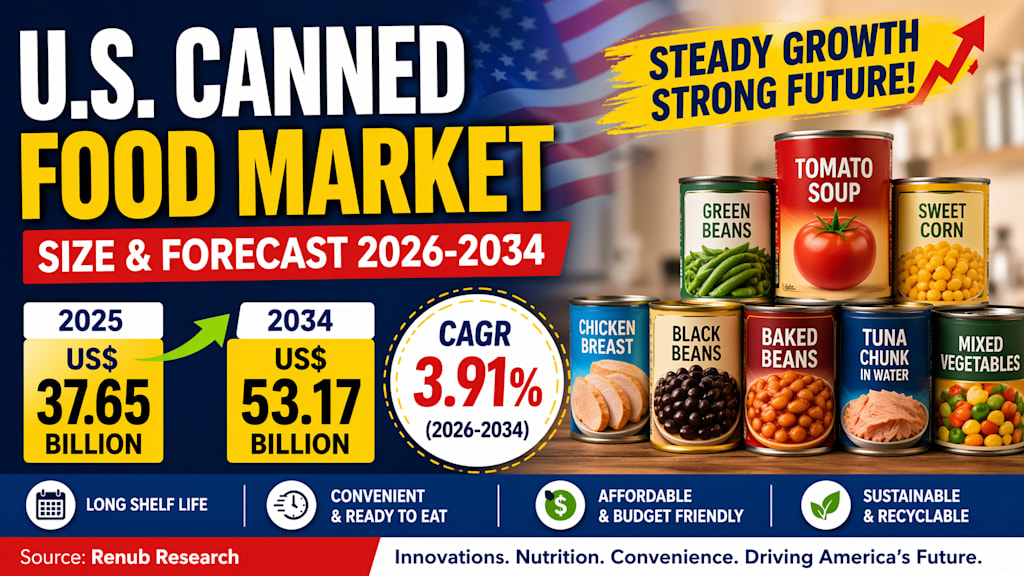
For years, canned foods were often viewed as simple pantry backups—something people bought for emergencies, budget meals, or occasional convenience. But in 2026, that image is rapidly changing. Across the United States, canned foods are experiencing renewed demand as consumers seek affordable, nutritious, long-lasting, and ready-to-use meal solutions.
According to Renub Research, the United States Canned Food Market is projected to rise from US$ 37.65 Billion in 2025 to US$ 53.17 Billion by 2034, expanding at a CAGR of 3.91% from 2026 to 2034.
That steady growth reflects a major shift in how Americans think about food. Today’s shoppers want value, convenience, and sustainability—and canned food checks every box.
Why Canned Food Is Winning Again
Modern life moves fast. Between work schedules, rising grocery bills, and busy households, people increasingly want foods that are easy to prepare and last longer.
Canned foods offer several clear benefits:
- Long shelf life
- Low food waste
- Easy storage
- Affordable pricing
- Fast meal preparation
- Reliable nutrition year-round
Whether it’s canned beans, soup, tuna, vegetables, fruit, or ready meals, consumers appreciate products that save both time and money.
Unlike fresh produce that may spoil quickly, canned goods remain usable for months or years, making them ideal for meal planning and budget-conscious shopping.

Convenience Is the Biggest Growth Driver
One of the strongest forces behind market expansion is the rising demand for convenience foods.
Busy professionals, students, working parents, and seniors all rely on quick meal options. Canned soups, pasta meals, vegetables, and protein products allow consumers to prepare meals in minutes.
This trend is especially strong in cities where time-saving products are in high demand.
Consumers are no longer buying canned goods only for emergencies—they’re using them daily for:
- Weeknight dinners
- Lunch prep
- Quick breakfasts
- Travel food storage
- On-the-go meals
- Backup pantry planning
As lifestyles become busier, convenience remains king.
Healthier Canned Foods Are Changing Consumer Perception
For decades, canned foods battled a reputation problem. Many consumers associated them with high sodium, preservatives, or lower freshness.
That perception is now changing.
Manufacturers are investing heavily in healthier product lines, including:
- Low-sodium soups
- Organic vegetables
- No-added-sugar fruits
- Preservative-free meals
- Plant-based canned proteins
- Sustainably sourced seafood
Improved canning technologies also help preserve flavor, texture, and nutrients more effectively than in the past.
Today’s canned foods are smarter, cleaner, and healthier than many people realize.
Affordability Matters More Than Ever
Food inflation has changed shopping habits across America.
Many households are searching for ways to reduce grocery spending without sacrificing quality. Canned foods often cost less than fresh or refrigerated alternatives while delivering similar nutritional benefits.
Products like canned beans, tomatoes, tuna, vegetables, and soups offer strong value per serving.
As consumers become more price-sensitive, canned goods remain one of the most economical categories in supermarkets.
That makes them especially attractive during uncertain economic periods.
Sustainability Is Becoming a Hidden Advantage
Sustainability is another reason canned foods are gaining popularity.
Metal cans are widely recyclable, and long shelf life reduces food waste significantly. Instead of throwing away spoiled produce or expired refrigerated meals, consumers can store canned goods for longer periods and use them when needed.
In a time when waste reduction and environmental awareness matter more than ever, canned foods fit well into responsible household planning.
Many brands are also investing in:
- Eco-friendly sourcing
- Recyclable packaging
- Cleaner labels
- Ethical seafood sourcing
- Reduced carbon supply chains
This is helping the industry attract younger, eco-conscious shoppers.
Meat and Seafood Categories Are Growing Fast
One of the strongest-performing segments is canned meat and seafood.
Americans continue to buy:
- Tuna
- Salmon
- Chicken
- Luncheon meat
- Sardines
- Ready protein meals
These products are popular because they are shelf-stable, protein-rich, and convenient.
Seafood products in particular are benefiting from rising awareness of omega-3 nutrition and high-protein diets.
As protein demand rises nationwide, canned meat and seafood remain highly relevant.
Ready Meals in Cans Are Quietly Expanding
The canned ready-meals segment is also growing steadily.
Products like canned chili, pasta meals, soups, stews, and one-bowl dinners appeal strongly to people seeking instant meal solutions.
This category is especially popular among:
- College students
- Busy professionals
- Seniors
- Single households
- Budget shoppers
New healthier varieties—such as reduced sodium and plant-based recipes—are helping the category stay fresh and competitive.
E-Commerce Is Reshaping the Industry
Online grocery shopping has changed the canned food business.
Consumers now regularly order pantry staples online because canned goods are easy to ship, durable, and practical for bulk purchases.
Popular e-commerce advantages include:
- Subscription reorders
- Bulk discounts
- Doorstep delivery
- Easy price comparison
- Broader product variety
Because canned products do not require refrigeration, they are ideal for digital grocery logistics.
As online grocery adoption rises, canned foods benefit naturally.
State-by-State Demand Trends
California
California consumers strongly favor healthy, natural, and sustainable canned products. Organic beans, vegetables, fruit, and ready meals are popular, especially in cities like Los Angeles and San Francisco.
Texas
Texas remains a high-volume market driven by demand for canned meat, beans, chili products, and bulk pantry purchases. Convenience and affordability are key drivers.
New York
Busy urban lifestyles support strong demand for canned soups, seafood, ready meals, and premium international canned foods. Online grocery adoption is also high.
Washington
Washington consumers show strong interest in sustainability, seafood products, organic foods, and recyclable packaging.
Challenges Still Exist
Despite growth, the industry faces several obstacles.
1. Fresh Food Competition
Fresh and frozen foods often market themselves as healthier and more premium alternatives.
2. Outdated Consumer Perceptions
Some shoppers still believe canned foods are overly processed or nutritionally weak.
3. Packaging Competition
Pouches, frozen ready meals, and refrigerated convenience foods are competing for the same customers.
To stay competitive, brands must continue innovating in nutrition, taste, packaging, and branding.
What the Future Looks Like
The future of canned food in America is more modern than many expect.
Growth opportunities include:
- Premium gourmet canned meals
- Organic pantry products
- Functional nutrition foods
- High-protein meal solutions
- Plant-based canned meals
- Sustainable seafood products
- Smart packaging innovations
Instead of fading away, canned foods are evolving into a smarter pantry category designed for modern lifestyles.
Final Thoughts
The U.S. canned food market is no longer just about emergency supplies or old-fashioned pantry staples. It has become a fast-growing sector shaped by convenience, affordability, nutrition, and sustainability.
With the market forecast to reach US$ 53.17 Billion by 2034, canned foods are proving they still have an important place in America’s kitchens.
As consumers continue to seek practical food choices that save money and time, canned products may become one of the smartest grocery purchases of the decade.
About the Creator
Enjoyed the story? Support the Creator.
Subscribe for free to receive all their stories in your feed.
Comments
There are no comments for this story
Be the first to respond and start the conversation.