
America’s Gluten-Free Baking Boom: Why the U.S. Market Could Reach US$ 291 Million by 2034
Health trends, home baking culture, and innovative flour blends are transforming the future of gluten-free baking mixes across the United States.

The United States is witnessing a major shift in the baking aisle. What was once a niche category reserved for people with celiac disease or severe food intolerances has now become a mainstream lifestyle movement. Gluten-free baking mixes are no longer seen as “special diet” products—they are rapidly becoming household staples.
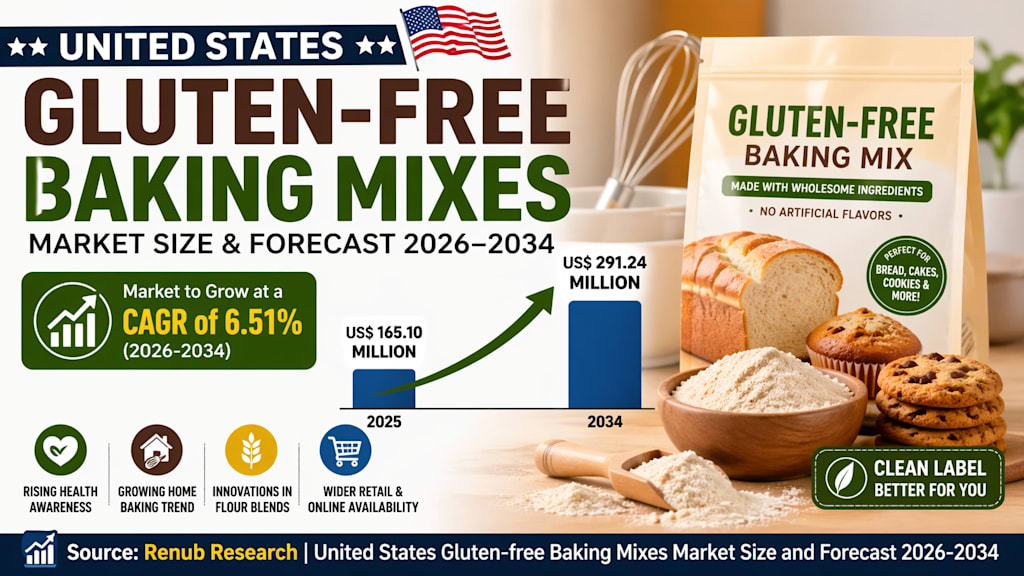
According to Renub Research, the United States Gluten-free Baking Mixes Market is projected to grow from US$ 165.10 Million in 2025 to US$ 291.24 Million by 2034, expanding at a CAGR of 6.51% from 2026 to 2034.
This growth is being fueled by rising health awareness, improved product quality, growing home-baking habits, and wider availability through supermarkets and online retail.
What Are Gluten-Free Baking Mixes?
Gluten-free baking mixes are pre-formulated blends made without wheat, rye, or barley. Instead, they use alternative ingredients such as:
- Rice flour
- Almond flour
- Tapioca starch
- Corn flour
- Sorghum flour
- Potato starch
These mixes are designed to help consumers easily prepare products like:
- Bread
- Muffins
- Pancakes
- Pizza crusts
- Cookies
- Cakes
- Brownies
Rather than purchasing multiple specialty ingredients separately, home bakers can use a single ready-made mix to save time while achieving better texture and consistency.
Why Americans Are Choosing Gluten-Free Products
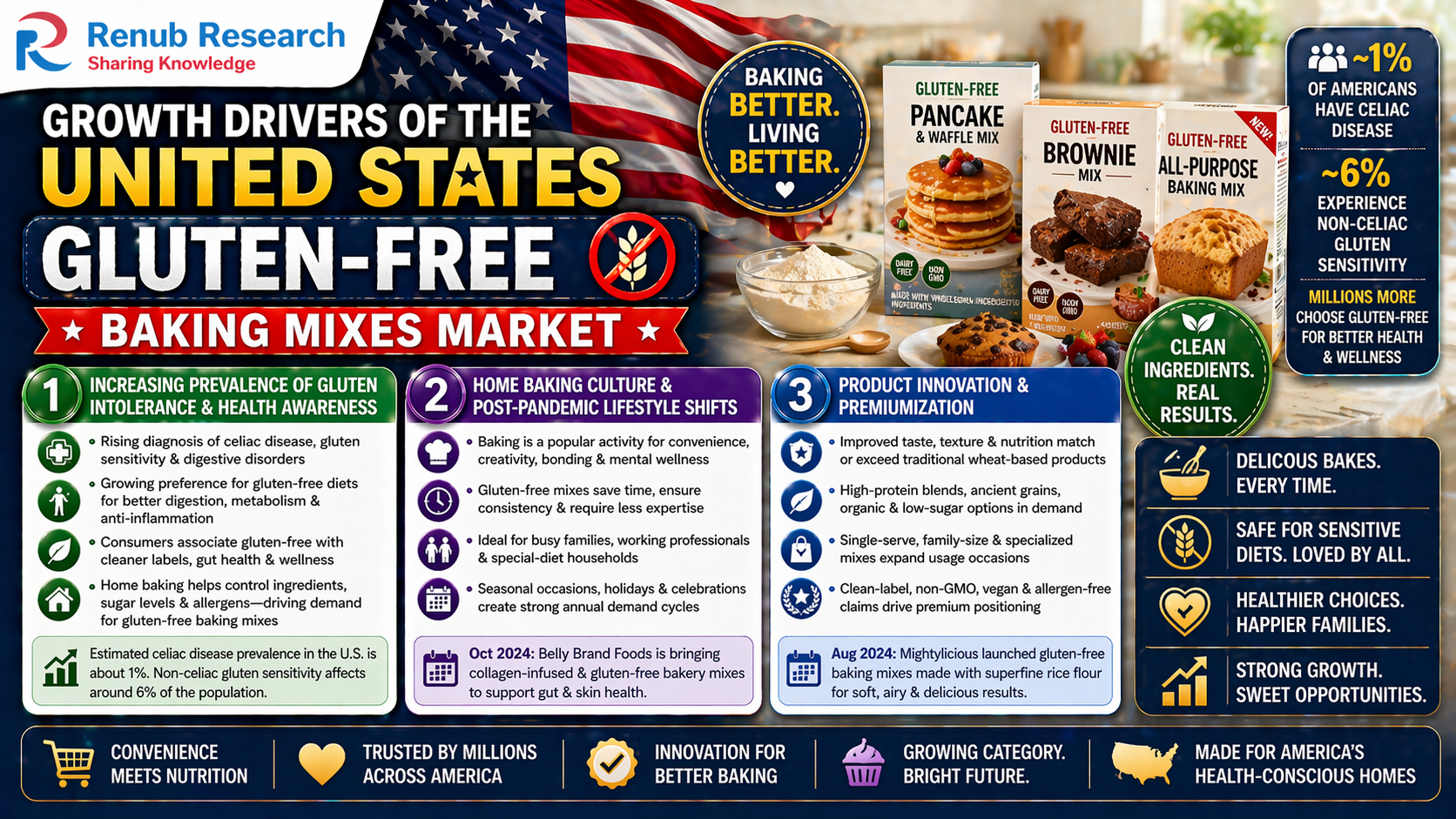
The demand for gluten-free foods is expanding beyond medical necessity. While people diagnosed with celiac disease still form an important customer base, many other consumers are voluntarily reducing gluten intake.
Reasons include:
- Digestive comfort
- Clean-label eating
- Weight management goals
- Reduced processed food consumption
- Wellness-focused lifestyles
Modern shoppers increasingly read labels and seek transparency. Gluten-free products often align with broader trends such as non-GMO, plant-based, allergen-friendly, and organic eating.
This has created a much wider audience for gluten-free baking mixes.
Home Baking Is Driving Market Growth
One of the strongest forces behind this market is the renewed popularity of home baking.
During recent years, many Americans rediscovered baking at home for comfort, creativity, and cost savings. That habit has remained strong. Busy families, working professionals, and parents now rely on convenient mixes that remove the complexity of measuring specialty ingredients.
Gluten-free mixes are especially attractive because gluten-free baking from scratch can be technically difficult. Consumers appreciate products that offer:
- Reliable taste
- Better texture
- Faster preparation
- Lower failure risk
- Kid-friendly convenience
Holiday baking, birthdays, family events, and weekend cooking trends continue to support repeat purchases year-round.
Innovation Is Making Products Better Than Ever
Earlier gluten-free products were often criticized for being dry, crumbly, or bland. That is changing quickly.
Manufacturers are investing in advanced formulations that improve softness, moisture retention, and flavor. Many brands now promote:
- High-protein recipes
- Ancient grain blends
- Organic ingredients
- Low sugar formulas
- Vegan options
- Clean-label mixes
Single-serve packs and family-size boxes are also becoming popular. These innovations are helping gluten-free baking mixes compete directly with traditional baking products.
Bread Leads the Market
Among all product categories, gluten-free bread remains the largest segment.
Bread is a daily staple in many American homes, making gluten-free alternatives essential for consumers avoiding wheat. Demand is rising for:
- Sandwich loaves
- Dinner rolls
- Artisan bread mixes
- Whole-grain gluten-free bread
Because bread is one of the hardest baked goods to perfect without gluten, brands that deliver quality are winning strong customer loyalty.
Cookies and Biscuits Are Fast-Growing
Cookies and biscuits represent one of the most exciting growth categories.
Unlike bread, cookies are easier to make without gluten while maintaining enjoyable texture. Consumers view them as indulgent but accessible treats.
Popular trends include:
- Chocolate chip mixes
- Seasonal holiday flavors
- Portion-controlled snacks
- Better-for-you cookie blends
- Family baking kits
This category appeals not only to gluten-sensitive shoppers but also to mainstream snack buyers.
Corn Flour vs Rice Flour: Key Ingredient Battle
Corn Flour Mixes
Corn flour remains highly popular because it is affordable, naturally gluten-free, and familiar to consumers. It is commonly used for:
- Cornbread
- Muffins
- Pancakes
- Tortillas
- Southern-style baking
Its price advantage makes it attractive during inflationary times.
Rice Flour Mixes
Rice flour is often used in premium gluten-free blends due to its neutral flavor and fine texture. It performs well in:
- Cakes
- Bread
- Waffles
- Cookies
- Multi-purpose baking mixes
Many first-time buyers prefer rice flour mixes because results are more predictable.
Online Retail Is Reshaping Distribution
E-commerce has become the fastest-growing sales channel for gluten-free baking mixes in the United States.
Consumers increasingly purchase online because they can access:
- More product choices
- Specialty dietary brands
- Certified allergen-free options
- Bulk discounts
- Subscription deliveries
- Reviews and recipe communities
For shoppers in smaller towns or limited retail areas, online platforms are often the easiest way to find quality gluten-free baking solutions.
Regional Leaders Across America
California
California remains the leading state market thanks to its wellness-driven population, premium grocery ecosystem, and strong food innovation culture.
New York
New York’s dense urban population and premium grocery infrastructure make it a high-value gluten-free market.
Texas
Texas offers major volume growth potential due to its large population, expanding suburbs, and rising health awareness.
Arizona
Arizona’s wellness-focused retirees and growing cities support steady demand for specialty baking products.
Challenges Still Facing the Industry
Despite strong growth, the market still faces hurdles.
Higher Prices
Gluten-free products often cost more because specialty ingredients and dedicated production systems are expensive.
Taste Expectations
Some shoppers still believe gluten-free foods lack the taste and texture of traditional baked goods.
Shelf Life Issues
Without gluten’s natural binding properties, some products dry out faster or crumble more easily.
Brands that solve these challenges will likely dominate the next decade.
Top Companies in the Market
Several established food companies and specialty brands are competing in the U.S. gluten-free baking mixes space, including:
- General Mills Inc.
- Conagra Brands, Inc.
- King Arthur Baking Company, Inc.
- Continental Mills, Inc.
- Williams-Sonoma Inc.
- Partake Foods
- Kinnikinnick Foods Inc.
These companies are investing in premium recipes, clean labels, and omnichannel distribution strategies.
Why This Market Matters
The rise of gluten-free baking mixes reflects a bigger transformation in American eating habits. Consumers no longer separate “healthy food” from “convenient food.” They expect both.
That means future winners in this category will combine:
- Nutrition
- Taste
- Simplicity
- Transparency
- Accessibility
As innovation continues, gluten-free baking may soon feel less like an alternative—and more like the new normal.
Final Thoughts
The U.S. gluten-free baking mixes market is entering a powerful growth phase. With forecasts showing expansion to US$ 291.24 Million by 2034, the category has moved far beyond its niche roots.
Driven by wellness trends, rising diagnoses of food sensitivities, home-baking culture, and smarter product development, gluten-free baking mixes are becoming a permanent feature in American kitchens.
About the Creator
Enjoyed the story? Support the Creator.
Subscribe for free to receive all their stories in your feed.
Comments
There are no comments for this story
Be the first to respond and start the conversation.