
Amazon’s AI Math: Sold Out Until 2028, Still Too Expensive to Use
Andy Jassy says demand is not the problem. The price of inference is. That is why Amazon keeps designing its own chips.
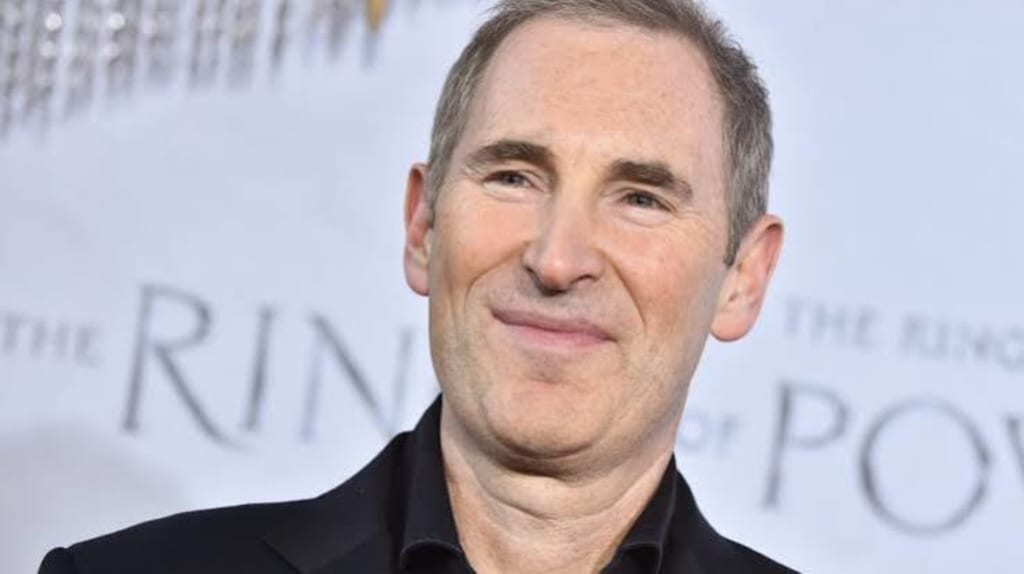
Amazon CEO Andy Jassy gave the a16z podcast a line that explains the company’s current spending spree: “Even if we spend $220 billion this year, we are still leaving a meaningful amount of demand on the table.”
He then listed the sold-out years. 2026 is clearly sold out. 2027 is basically sold out. A substantial part of 2028 is already locked up. Amazon usually keeps some capacity for on-demand service. Jassy says the big blocks are gone.
Wall Street worries that the tech giants are overbuilding. The sold-out timeline points the other way. Amazon is not building too much. It is building too slowly.
The useful question is what that demand looks like, where it gets stuck, and how Amazon plans to attack the bottleneck.
The barbell has two ends and a heavy middle
Jassy describes AI demand as a barbell.
One end is AI labs and a few hit applications. He says they are “consuming vast, vast amounts of compute,” more than he has seen before. This end sets the short-term shortage in data centers, power, and chips.
The other end is enterprises using AI to cut costs and improve efficiency. Customer service automation, fraud detection, and business process automation have clear ROI. Companies pay for those.
The middle is enterprises’ current production workloads. Many enterprise applications still run on CPUs. Some already use inference on AWS. Most have not adopted AI in a deep way. Jassy expects almost all existing enterprise applications to use inference deeply in five to seven years.
If he is right, the middle is the largest market in absolute terms. It will not open by itself.
The price is still an order of magnitude too high
Inference cost is the variable that blocks the middle market.
Jassy put it plainly: “Inference costs have come down a lot over the past few years, but in my view, it is still an order of magnitude too expensive.”
He explained why that gap matters. An enterprise that rewrites a CPU application to run on AI accelerators needs a large cost advantage to justify the work. Cut inference costs by another ten times, and the barrier drops.
That is the case for Amazon’s custom chips. Amazon does not need to replace every partner. It needs to pull compute price-performance to a new level.
Jassy calls the 2015 acquisition of chip design company Annapurna Labs “one of the best acquisitions we’ve made in Amazon’s history, if not the best.” The work started around EC2 servers. Amazon found that virtualization, networking, security, and storage were eating too many server resources. It worked with Annapurna to offload those components onto network cards. The team later built Graviton, a processor with about 40% better price-performance than other x86 processors. Today, 99% of Amazon’s top 1,000 EC2 customers use Graviton extensively.
Trainium followed the same path. Jassy says Trainium offers about 30% to 40% better price-performance than comparable processors.
Two numbers sit side by side: 40% and 30% to 40%. Amazon’s chip advantage will not flip the market overnight. It can tilt an enterprise rewrite decision toward AWS.
The $220 billion has a cash-cycle defense
Capital spending needs a cash-cycle answer, and Jassy gave one.
Data center buildings take about two years of lead time and last about 30 years. Servers and networking equipment take a few months, pay back in about three years, and last five to six years. Most server deals run five years.
His line: “If you find you don’t actually need to fill those data centers, you won’t buy the servers and networking equipment.”
Data centers are the upfront bet. Server purchases wait for demand confirmation. Free cash flow takes a hit in the early growth years. Once the data centers are online and monetizing, the return cycle becomes visible.
Jassy added that Amazon could have spent more without wasting capital. He expects component shortages to last beyond 2027.
Water, power, and taxes
Data center energy and water use have become a political fight in the United States. Jassy did not soften his answer.
He compared the buildout to the U.S. building highways and bridges in the 1950s. His macro claim: skipping data centers would let a country like China set the rules and take the lead.
On water, he gave numbers. Golf courses use 200 times more water than data centers. A golf course uses more water in two days than a data center uses in a year. Backup generators are permitted as if they run at full load all day. In practice, they run about 0.1% of the year for maintenance.
On electricity prices, he blamed underinvestment in the grid. AI pushed the problem to a tipping point. In most regions, he expects prices to flatten or fall once capacity is built. He also pointed to taxes paid to local communities and a plan to invest another $1 billion over five years in data center communities.
The response will not convince every critic. It does show Amazon will not slow construction because of the controversy.
Six engineers, 76 days
Compute and chips are the outside fight. Organization is the inside fight. Jassy is just as concrete here.
The Bedrock team rebuilt its inference engine with six engineers in 76 days. Jassy’s comparison: the work used to take 40 people a full year.
He expects fewer humans to do the same work in the future. Teams will shrink. People will work across functions. Models can handle 80% of the work.
The product rule is harsher. Alexa’s “brain” has to be rewired because generative AI changed the capability boundary. Retail, Prime Video, and music face the same demand. Every core consumer experience has to be rethought with AI in the next few years. His line: “If you only think about incremental improvement, you’ll be obsolete in three to five years.”
The conditional that matters
Jassy did not end with a speech about how AI will change the world. He gave a condition. The enterprise AI market opens when inference costs fall another ten times.
The $220 billion buys capacity. Custom chips bet on the cost curve. Reorganization bets on execution speed. All three depend on the same clock. That clock is set by inference costs, not by how many data centers Amazon can roof over.
About the Creator
Jin
Writer of reamstories
https://reamstories.com/jin
Enjoyed the story? Support the Creator.
Subscribe for free to receive all their stories in your feed. You could also become a paid subscriber, letting them know you appreciate their work.
Comments
There are no comments for this story
Be the first to respond and start the conversation.