
Allergic Conjunctivitis Market Expands as Rising Allergies, Pollution, and Advanced Eye Therapies Drive Global Demand
Increasing exposure to allergens, stronger awareness of ocular health, and innovation in antihistamine eye drops are reshaping the future of allergic conjunctivitis treatment worldwide.

Market Overview
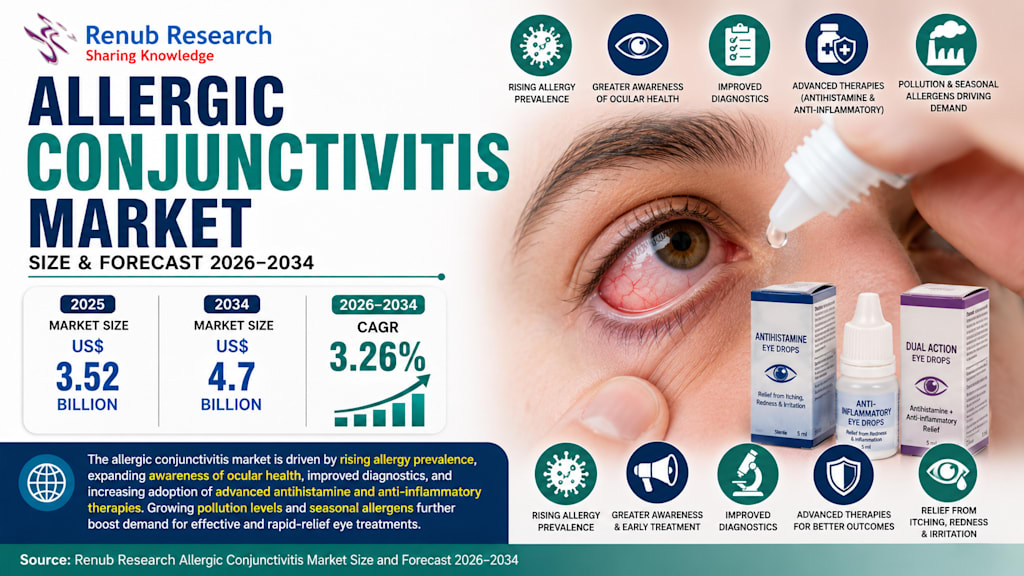
The global allergic conjunctivitis market is witnessing steady expansion as rising allergy prevalence, worsening environmental conditions, and growing awareness of eye health continue to increase demand for effective treatment solutions. Allergic conjunctivitis, commonly known as eye allergy, affects millions of individuals worldwide and has become one of the most common ophthalmic conditions associated with pollution, pollen exposure, dust, and climate-related allergens. According to Renub Research, the allergic conjunctivitis market is projected to grow from US$ 3.52 billion in 2025 to US$ 4.7 billion by 2034, expanding at a CAGR of 3.26% during 2026–2034.
The condition occurs when allergens such as pollen, mold spores, pet dander, or dust mites trigger inflammation in the conjunctiva, the thin membrane covering the eye surface. Common symptoms include itching, redness, watery eyes, burning sensations, and swollen eyelids. Although allergic conjunctivitis is generally not vision-threatening, it significantly impacts comfort, productivity, and quality of life. Seasonal allergies and pollution-related eye irritation are becoming increasingly common, pushing more patients to seek medical consultation and advanced treatment solutions.
The market is growing because patients today are more aware of the importance of early diagnosis and professional eye care. Improved access to ophthalmologists, allergy specialists, pharmacies, and telehealth services is helping patients identify symptoms earlier and adopt targeted therapies instead of relying only on temporary relief solutions. In addition, pharmaceutical companies are introducing advanced antihistamine eye drops, mast-cell stabilizers, preservative-free formulations, and dual-action therapies designed to provide faster and longer-lasting relief. These innovations are strengthening patient confidence and expanding the commercial potential of the market.
Another important factor supporting growth is the rising influence of environmental triggers. Climate change, urban pollution, prolonged pollen seasons, and poor indoor air quality are increasing the frequency and severity of allergic eye reactions worldwide. Urban populations in particular are experiencing higher exposure to irritants and airborne allergens, making allergic conjunctivitis a growing public health concern. As awareness of environmental health risks increases, demand for preventive and therapeutic eye-care products is expected to remain strong over the coming decade.
Growth Drivers
One of the strongest growth drivers in the allergic conjunctivitis market is the rising exposure to environmental allergens. Pollen, pollution particles, pet dander, and dust mites are becoming more widespread due to urbanization, climate variability, and changing weather patterns. Longer pollen seasons caused by climate change are increasing allergy incidence rates globally, while rising air pollution levels are aggravating eye irritation and histamine reactions. These factors are leading to a greater number of patients experiencing persistent or recurring symptoms, increasing demand for both over-the-counter and prescription treatments.
Growing awareness regarding eye health is also accelerating market expansion. Educational campaigns, online healthcare platforms, and specialist recommendations are encouraging consumers to recognize symptoms earlier and seek professional care. In the past, many patients ignored eye allergies or relied solely on lubricating drops for temporary comfort. Today, however, there is stronger understanding that untreated allergic conjunctivitis can significantly affect daily activities, workplace productivity, and overall comfort. Improved awareness is therefore encouraging higher treatment adoption rates across all age groups.
Pharmaceutical innovation represents another major growth catalyst. Drug manufacturers are increasingly focused on advanced formulations that provide rapid relief, longer duration of action, and improved patient comfort. Dual-action eye drops that combine antihistamine and mast-cell-stabilizing properties are becoming particularly popular because they help manage both immediate symptoms and long-term allergic responses. Preservative-free products are also gaining attention among patients sensitive to chemical additives, while single-dose packaging formats are improving convenience and treatment compliance.
The wider availability of over-the-counter medications is additionally supporting growth. Mild to moderate allergy sufferers can now access advanced treatments more easily through pharmacies and online platforms, reducing barriers to care. At the same time, tele-ophthalmology services and digital health consultations are making specialist advice more accessible, especially for urban populations and patients with recurring seasonal allergies. These developments are collectively strengthening long-term treatment uptake across the global market.
Market Challenges
Despite positive growth prospects, the allergic conjunctivitis market faces several important challenges. One of the most significant issues is the widespread tendency toward self-diagnosis and inappropriate self-medication. Many patients use basic lubricating drops or generic antihistamines without consulting healthcare professionals, leading to incomplete treatment or repeated flare-ups. In severe cases, unsupervised corticosteroid use can cause complications such as increased intraocular pressure or corneal problems. Confusion between allergic, viral, and bacterial conjunctivitis also results in incorrect treatment approaches, reducing the effectiveness of therapy.
Another major challenge is limited access to advanced treatments in developing regions. High-quality preservative-free eye drops, combination therapies, and premium prescription medications remain expensive for many patients in low- and middle-income countries. In addition, shortages of ophthalmologists and diagnostic infrastructure limit the ability to properly identify and manage ocular allergies. This imbalance between growing demand and limited healthcare access continues to restrict market expansion in several emerging economies.
Environmental conditions also intensify the burden of allergic conjunctivitis in many developing areas. Poor air quality, industrial pollution, and dust exposure increase allergy severity, yet treatment availability often remains inconsistent. Slow regulatory approvals and pricing pressures further delay the introduction of innovative therapies into these regions. As a result, many patients continue to rely on outdated or incomplete treatment methods despite increasing medical need.
United States Allergic Conjunctivitis Market
The United States represents one of the largest and most developed markets for allergic conjunctivitis treatment. High allergy prevalence, prolonged pollen seasons, and strong awareness regarding ocular health continue to support demand for prescription and OTC therapies. Consumers benefit from extensive access to ophthalmologists, allergy specialists, pharmacies, and telehealth services. Insurance coverage for advanced therapies and routine eye examinations further strengthens treatment adoption. Pharmaceutical companies frequently launch innovative ophthalmic formulations in the U.S., helping the country maintain its leadership position within the global market.
Germany Allergic Conjunctivitis Market
Germany’s allergic conjunctivitis market benefits from a robust healthcare system, strong diagnostic culture, and increasing allergy incidence linked to climate-related pollen changes. German consumers often prefer preservative-free and high-quality ophthalmic products, creating strong demand for advanced therapies. Pharmacies and specialists play a critical role in improving treatment adherence and patient education. Reimbursement support for prescription medications additionally encourages adoption of premium eye-care solutions. Sustainability trends and preference for gentle formulations are also influencing product development across the German market.
China Allergic Conjunctivitis Market
China is rapidly emerging as one of the fastest-growing markets for allergic conjunctivitis therapies due to rising urbanization, worsening pollution levels, and stronger healthcare awareness. Dense metropolitan environments contribute heavily to eye irritation and allergy symptoms, increasing the need for both OTC and prescription eye-care products. E-commerce platforms are also making allergy treatments more accessible to consumers across the country. International and domestic pharmaceutical companies are launching products specifically designed for local market requirements, helping expand treatment availability and improve consumer awareness regarding ocular health.
Saudi Arabia Allergic Conjunctivitis Market
Saudi Arabia’s allergic conjunctivitis market is strongly influenced by environmental factors such as dust storms, dry climate conditions, and airborne sand particles. These triggers contribute to frequent eye irritation and allergic reactions among the population. Growing healthcare investment, improved pharmacy infrastructure, and stronger awareness of allergy symptoms are supporting treatment adoption. Demand for antihistamine eye drops, mast-cell stabilizers, and anti-inflammatory therapies continues to rise as consumers increasingly seek professional eye care. Vision-related healthcare modernization initiatives are expected to further strengthen long-term market growth in the country.
Recent Developments in the Allergic Conjunctivitis Market
The allergic conjunctivitis market is witnessing growing pharmaceutical innovation and strategic expansion initiatives from major companies. In May 2024, Santen Pharmaceutical Co. and Mitsubishi Tanabe Pharma Corporation launched ALESION Eyelid Cream 0.5% in Japan, offering patients a new treatment option for allergic conjunctivitis. The product expands available therapeutic choices and supports better management of ocular allergy symptoms.
In July 2023, Harrow entered into an agreement with Santen Pharmaceutical Co., Ltd. to acquire the U.S. and Canadian commercial rights to six branded ophthalmic products. This acquisition significantly broadens Harrow’s eye-care portfolio and strengthens its competitive position in North America. The move reflects the growing strategic importance of ophthalmic healthcare products and the increasing commercial value of advanced eye-care therapies.
The market is also benefiting from broader pharmaceutical focus on user-friendly formulations, preservative-free options, and longer-lasting symptom relief. Companies are increasingly investing in specialized packaging, advanced delivery systems, and patient-centered innovations aimed at improving comfort, compliance, and treatment outcomes.
Recent Developments Companies in Vocal Format
Santen Pharmaceutical Co. launched ALESION Eyelid Cream 0.5% in Japan for allergic conjunctivitis treatment.
Mitsubishi Tanabe Pharma Corporation partnered in the launch of ALESION Eyelid Cream to expand ocular allergy therapy options.
Harrow acquired U.S. and Canadian commercial rights to six ophthalmic products from Santen Pharmaceutical.
Johnson & Johnson continues expanding its ophthalmic care presence through advanced eye-health solutions.
Novartis AG remains focused on strengthening anti-inflammatory and allergy-related eye-care treatments.
Sun Pharmaceutical Industries Ltd. continues expanding its ophthalmology portfolio across international markets.
Teva Pharmaceutical Industries Ltd. maintains strong involvement in affordable ophthalmic medication development.
Ajanta Pharma Limited continues strengthening its ophthalmic product offerings across emerging markets.
Alembic Pharmaceutical Ltd. remains active in expanding accessible prescription eye-care therapies.
Ocular Therapeutix, Inc. continues focusing on innovation in ophthalmic drug-delivery technologies.
Segment Outlook
The allergic conjunctivitis market is segmented by disease type into Seasonal Allergic Conjunctivitis (SAC) and Perennial Allergic Conjunctivitis (PAC). Seasonal allergic conjunctivitis remains the more common form due to pollen-related allergies, while perennial allergic conjunctivitis continues throughout the year because of ongoing exposure to indoor allergens such as dust mites and pet dander.
By drug class, the market includes Antihistamines & Mast Cell Stabilizers, Corticosteroids, and other supportive therapies. Antihistamines and dual-action formulations remain highly preferred because they provide rapid symptom relief while helping prevent future allergic responses. Corticosteroids are generally reserved for more severe cases requiring stronger anti-inflammatory action.
Distribution channels include hospital pharmacies, online pharmacies, retail pharmacies and drug stores, and other healthcare outlets. Online pharmacies are becoming increasingly important because they improve accessibility and convenience, especially for recurring allergy sufferers seeking regular medication refills.
Final Thoughts
The global allergic conjunctivitis market is steadily evolving as environmental allergens, urban pollution, and changing lifestyles continue to increase the prevalence of ocular allergies worldwide. Growing awareness regarding eye health, improved diagnostics, and pharmaceutical innovation are transforming how allergic conjunctivitis is managed across both developed and emerging markets. Renub Research’s projection of US$ 4.7 billion by 2034 highlights the long-term potential of the sector as patients increasingly seek faster, safer, and more effective treatment solutions. Companies that focus on advanced formulations, affordability, accessibility, and patient-friendly innovation are expected to lead the next phase of growth in the global allergic conjunctivitis market.
About the Creator
Enjoyed the story? Support the Creator.
Subscribe for free to receive all their stories in your feed.
Comments
There are no comments for this story
Be the first to respond and start the conversation.