
After an historic mission to the Moon, NASA's Artemis II returns to Earth.
The record-breaking lunar flyby carried out by four astronauts paves the way for future lunar landings.
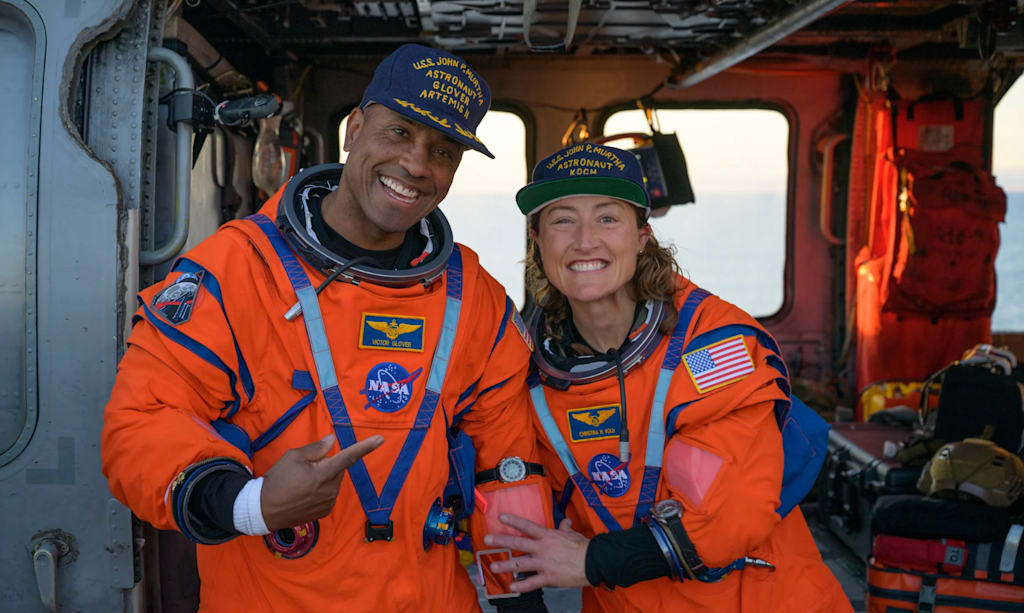
The safe return of four astronauts from NASA's Artemis II mission is a significant step forward in humanity's new mission to the Moon. On April 10, 2026, the mission, which saw humans circle the Moon for the first time in more than five decades, came to an exact stop in the Pacific Ocean off the coast of California. During their nearly ten-day mission, the crew—Red Wiseman, Victor Glover, Christina Koch, and Canadian astronaut Jeremy Hansen—traveled farther from Earth than any other human beings before them.
They reached a distance of approximately 252,756 miles. As the first crewed lunar flyby since Apollo, their journey signifies a significant return to deep space exploration. The spacecraft, NASA’s Orion capsule, re-entered Earth’s atmosphere at extremely high speeds, enduring intense heat and pressure before deploying parachutes for a controlled descent. The capsule ultimately achieved a near-perfect landing, described by NASA officials as a “bullseye” splashdown. Recovery teams, including the U.S. Navy quickly secured the spacecraft and transported the astronauts for post-mission medical evaluations.
Beyond its dramatic return, Artemis II stands out for its historic achievements. Victor Glover became the first African-American astronaut to reach the Moon, and Christina Koch became the first woman to do so. Jeremy Hansen also made history as the first non-American astronaut to participate in a lunar mission. These milestones highlight the mission’s significance not only in scientific terms but also in advancing diversity and international collaboration in space exploration.
During their journey, the astronauts completed a wide range of objectives, including testing life-support systems, navigation capabilities, and communication technologies essential for future lunar missions. The crew also captured stunning images of Earth and the Moon, offering a perspective not seen by humans since 1972. The mission followed a complex trajectory, looping around the Moon before returning to Earth, and included critical maneuvers that validated NASA’s deep-space exploration systems.
Importantly, Artemis II was designed as a test flight to prepare future missions for lunar landing attempts. NASA plans to follow this mission with Artemis III, which aims to land astronauts on the Moon later this decade. Artemis II's success demonstrates that the Space Launch System and the Orion spacecraft are capable of safely transporting humans into deep space and back. Despite the mission's success, there are still obstacles. Reports indicate that NASA faces potential budget constraints that could impact future missions and long-term goals, including establishing a sustained human presence on the Moon.
These worries show how difficult it is to strike a balance between technological ambition and the realities of politics and money. However, the Artemis II mission has rekindled worldwide enthusiasm for space exploration. Millions of people around the world followed the mission’s progress, particularly its dramatic return to Earth. The mission not only demonstrated technological excellence but also inspired a new generation to look toward the stars.
In many ways, Artemis II is both a beginning and a conclusion. It builds on the legacy of the Apollo missions while paving the way for future exploration, including potential missions to Mars. The successful return of these astronauts serves as a powerful reminder of what humanity can accomplish through innovation, collaboration, and determination as NASA continues its Artemis program. The way to a long-term human presence on the Moon and beyond seems closer than ever before with the completion of Artemis II.
About the Creator
Enjoyed the story? Support the Creator.
Subscribe for free to receive all their stories in your feed.
Comments
There are no comments for this story
Be the first to respond and start the conversation.