
What Do People in Clacton Think of Farage’s By-Election Win?
Nigel Farage has secured another decisive victory in Clacton, but reactions among residents reveal a community divided between strong political loyalty, frustration with Westminster and concerns about the purpose of the by-election.
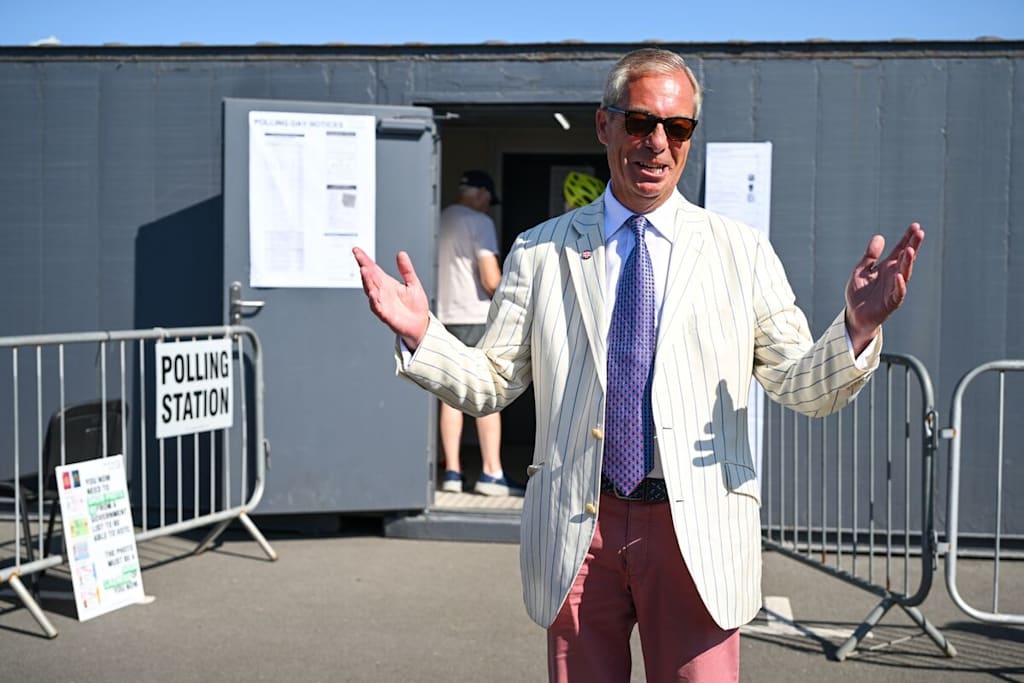
Nigel Farage has won the latest Clacton by-election, but the result tells a more complicated story than a straightforward endorsement of Reform UK. While Farage secured a commanding share of the vote, reactions from people in the Essex coastal constituency reveal a mixture of loyalty, frustration, political protest and scepticism.
The by-election was held after Farage resigned his Clacton parliamentary seat, triggering a contest that attracted unusual attention. Major political parties chose not to field candidates, while a large number of fringe and independent candidates entered the race. The unusual circumstances turned the election into a national political spectacle as well as a local contest.
A Strong Result for Farage
Farage won the contest with 22,239 votes, or 63.34%, according to the reported result. The most surprising performance came from satirical candidate Count Binface, who received around 9,455 votes.
The numbers give Farage a clear victory, but interpreting the result requires some caution. The principal established parties did not contest the election, meaning voters who normally support Labour, the Conservatives or the Liberal Democrats had fewer conventional choices.
That makes the result different from a normal general election. It demonstrates that Farage continues to have substantial support in Clacton, but it does not necessarily provide a direct comparison with a full multi-party contest.
Why Clacton Has Supported Farage
Clacton has developed a reputation as one of Britain's strongest areas of support for Brexit and right-wing populist politics.
The constituency previously elected a UK Independence Party MP, Douglas Carswell, in a 2014 by-election. Farage later successfully contested the seat at the 2024 general election, winning more than 21,000 votes.
For many local voters, the attraction of Farage is connected to issues including immigration, national sovereignty, the cost of living and dissatisfaction with traditional political parties.
Previous reporting from Clacton found residents expressing frustration with the political establishment and a feeling that their communities had been neglected.
Not Everyone Is Impressed
Despite Farage's popularity, Clacton is far from politically unanimous.
During previous campaigns, residents have expressed strong opposition to his politics as well as enthusiasm for his message. Some voters have praised his charisma and willingness to challenge established parties, while others have accused him of creating division and relying heavily on provocative rhetoric.
That division remains important because Clacton is not simply a constituency of enthusiastic Reform supporters. It contains people with different priorities, including residents concerned about housing, employment, public services, tourism and the future of coastal communities.
For some voters, national political arguments are less important than whether their MP can deliver improvements locally.
The Cost of Political Disillusionment
One of the most significant themes surrounding the by-election has been political frustration.
The contest was triggered by Farage's resignation and was widely criticised by opponents who argued that the election created unnecessary expense and political disruption. The by-election reportedly cost taxpayers around £250,000.
Some voters saw the contest as an unnecessary political exercise. Others viewed it as an opportunity to reaffirm their support for Farage.
This difference highlights a broader problem facing British politics: voters can agree that established political institutions are failing while disagreeing strongly about what should replace them.
Count Binface and the Protest Vote
The unexpectedly strong performance of Count Binface added another unusual dimension to the result.
The satirical candidate won almost 9,500 votes, a figure far beyond what would normally be expected from a novelty candidate. His performance can be interpreted partly as a protest against the unusual nature of the election and dissatisfaction with conventional politics.
It would be misleading to assume that every Binface voter supported the same political position. Protest votes can represent frustration, humour, rejection of the political establishment or dissatisfaction with the available candidates.
Nevertheless, the result indicates that a significant number of voters wanted to send a message beyond simply choosing between mainstream political parties.
Local Issues Still Matter
Clacton is a coastal community facing challenges that are familiar across many parts of England.
Tourism remains important to the local economy, while residents have concerns about employment opportunities, housing affordability, public services and the condition of local infrastructure.
Some people who vote for Reform may do so because they believe national political decisions have failed their communities. For these voters, supporting Farage can be a way of demanding political attention.
The challenge for Farage is converting that support into tangible local results.
Can Farage Maintain Local Support?
Winning an election is only the beginning of an MP's relationship with constituents.
Farage now faces the challenge of demonstrating that his political influence can translate into meaningful representation for Clacton. Residents who supported him may expect progress on the issues that influenced their decisions.
At the same time, opponents will continue to scrutinise his attendance, policy priorities and involvement in national politics.
There are also questions about Farage's wider political position. His recent political controversies and financial scrutiny have created additional pressure around Reform UK. The parliamentary investigation into financial matters is continuing despite his election victory.
What the Result Really Means
The Clacton by-election does not provide a simple answer about Britain's political future.
It clearly demonstrates that Farage retains powerful support in the constituency. However, the unusually high number of candidates, the absence of major parties and the strong performance of a satirical candidate make the result difficult to compare directly with a conventional general election.
The bigger message may be that political dissatisfaction remains extremely strong.
Many voters appear tired of traditional political promises and increasingly willing to use elections to express frustration. Some choose Reform, while others turn to independent, minor-party or protest candidates.
Conclusion
Nigel Farage's victory in Clacton confirms that he remains a powerful political force in the constituency. His 63.34% share of the vote represents a significant electoral achievement, particularly in a contest surrounded by controversy and unusual circumstances.
But the mood in Clacton is more complicated than the headline result suggests. Supporters see Farage as a politician willing to challenge Westminster and speak about issues they believe traditional parties have ignored. Critics remain concerned about his divisive rhetoric and question whether his national political ambitions always match the needs of local residents.
The strong protest vote for Count Binface adds another layer to the story, suggesting that some voters were frustrated with the political spectacle itself.
Ultimately, Farage's latest victory gives him another mandate, but it also creates a responsibility. The people of Clacton will now judge him not simply by his speeches or national profile, but by whether he can turn electoral support into meaningful representation for the community he has chosen to lead.
About the Creator
Enjoyed the story? Support the Creator.
Subscribe for free to receive all their stories in your feed.
Comments
There are no comments for this story
Be the first to respond and start the conversation.