
US 7,900-Ton Nuclear-Powered Submarine Returns After 41,400-Mile Europe Mission
Strategic deployment highlights the U.S. Navy’s global reach, NATO cooperation, and the growing importance of undersea deterrence in European waters.
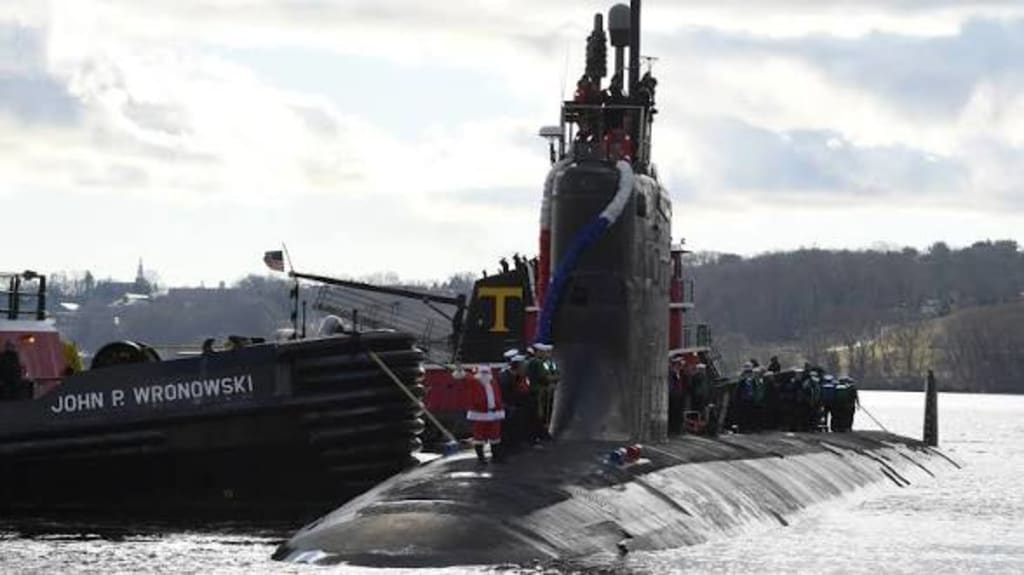
The United States Navy has successfully completed another major strategic deployment with the return of one of its 7,900-ton nuclear-powered attack submarines after an extraordinary 41,400-mile mission across Europe and the Atlantic. The months-long operation demonstrated the submarine's ability to conduct long-range patrols, participate in multinational exercises, and support NATO allies amid an increasingly complex security environment.
The submarine's return marks the end of a deployment that showcased the endurance, flexibility, and technological superiority of the U.S. Navy’s nuclear-powered fleet. Operating silently beneath the waves, the vessel completed a wide range of missions while remaining largely undetected, reinforcing the strategic value of submarines in modern naval warfare.
A Mission Covering Thousands of Miles
The submarine traveled approximately 41,400 miles during its deployment, navigating the Atlantic Ocean, European waters, and several strategically significant maritime regions. Throughout the mission, the vessel participated in joint exercises, intelligence-gathering operations, maritime security patrols, and coordinated activities with allied naval forces.
Unlike conventional submarines that must periodically surface or snorkel for air, nuclear-powered submarines can remain submerged for months at a time. Their virtually unlimited range enables them to respond rapidly to emerging crises while maintaining a persistent presence in contested waters.
The deployment demonstrated how submarines remain among the most effective platforms for surveillance, deterrence, and rapid-response operations.
Importance of the European Deployment
Europe has become an increasingly important theater for naval operations as geopolitical tensions continue to influence regional security. The North Atlantic, Baltic Sea, Mediterranean, and Arctic have all witnessed heightened military activity in recent years.
The submarine’s mission supported ongoing efforts to reassure NATO allies and strengthen collective maritime defense. Joint patrols and multinational exercises improve interoperability among allied navies while ensuring readiness to respond to potential threats.
The deployment also underscored the United States' long-standing commitment to maintaining stability across Europe and protecting critical sea lines of communication.
Advanced Capabilities Beneath the Surface
At approximately 7,900 tons, the nuclear-powered attack submarine represents one of the most sophisticated underwater combat platforms in the world.
Its advanced capabilities include:
High-speed submerged operations.
Long-endurance nuclear propulsion.
Sophisticated sonar and surveillance systems.
Precision strike capabilities.
Anti-submarine warfare.
Anti-surface warfare missions.
Intelligence, surveillance, and reconnaissance (ISR).
These capabilities enable the submarine to perform diverse missions ranging from covert intelligence collection to escorting carrier strike groups and protecting strategic assets.
Modern submarines are designed to operate in highly contested environments where stealth is essential. Their ability to remain undetected makes them valuable assets during both peacetime and conflict.
Strengthening NATO Cooperation
Throughout its deployment, the submarine worked closely with allied naval forces from several NATO member states. Combined exercises allowed crews to practice anti-submarine warfare tactics, communication procedures, maritime interception operations, and coordinated fleet maneuvers.
These multinational exercises improve operational compatibility among allied forces while enhancing collective security.
Regular deployments also strengthen diplomatic relationships by demonstrating shared commitment to regional defense and international maritime law.
Supporting Maritime Security
Beyond military exercises, the submarine contributed to broader maritime security objectives.
Its operations helped monitor key shipping routes, observe naval activity in strategically important regions, and maintain awareness of underwater environments that are increasingly important to national security.
Submarines provide valuable intelligence without revealing their location, allowing commanders to better understand developments across vast ocean areas.
Their presence serves as both a deterrent and an early-warning capability for allied forces.
The Role of Nuclear Propulsion
One of the defining advantages of nuclear-powered submarines is endurance.
Unlike diesel-electric submarines, nuclear vessels do not require frequent refueling and can remain deployed for extended periods. Food supplies generally become the primary limiting factor rather than fuel.
This endurance enables submarines to:
Conduct lengthy patrols.
Respond quickly to emerging threats.
Operate far from home ports.
Maintain continuous strategic presence.
For global naval operations, these advantages provide unmatched operational flexibility.
Crew Performance and Readiness
Long deployments require exceptional professionalism from submarine crews.
Life aboard a submarine involves working in confined spaces under demanding conditions while maintaining continuous operational readiness. Crew members perform maintenance, navigation, engineering, intelligence, communications, and combat-system operations around the clock.
The successful completion of a 41,400-mile deployment reflects months of careful planning, disciplined execution, and teamwork.
Upon returning home, sailors typically undergo maintenance periods, debriefings, and training before preparing for future missions.
Strategic Message
The completion of this deployment sends a broader strategic message about the United States' commitment to maintaining freedom of navigation, supporting allies, and preserving regional stability.
Submarines remain one of the most difficult military platforms to detect or counter, making them an essential element of strategic deterrence.
Their ability to operate quietly in contested environments provides decision-makers with flexible response options during periods of heightened international tension.
Looking Ahead
As maritime competition continues to evolve, nuclear-powered submarines are expected to remain central to U.S. naval strategy. Advances in sonar, artificial intelligence, autonomous underwater systems, and next-generation weapons will further expand submarine capabilities in the coming years.
Future deployments will likely continue focusing on Europe, the Arctic, and the Indo-Pacific, where undersea operations are becoming increasingly significant.
The successful return of this 7,900-ton nuclear-powered submarine after a 41,400-mile mission demonstrates not only the endurance of modern naval technology but also the professionalism of the sailors who operate these complex vessels. Through sustained deployments, multinational cooperation, and advanced undersea capabilities, the U.S. Navy continues to strengthen maritime security and reinforce its commitment to protecting allied interests across strategically important regions.
About the Creator
Enjoyed the story? Support the Creator.
Subscribe for free to receive all their stories in your feed.
Comments
There are no comments for this story
Be the first to respond and start the conversation.