
US’ 7,800-Ton Nuclear-Powered Submarine Reaches 95% Completion Milestone Ahead of Schedule
USS John Warner’s accelerated maintenance and hot-operations testing mark a major step toward returning the 7,800-ton Virginia-class nuclear-powered submarine to active fleet service.
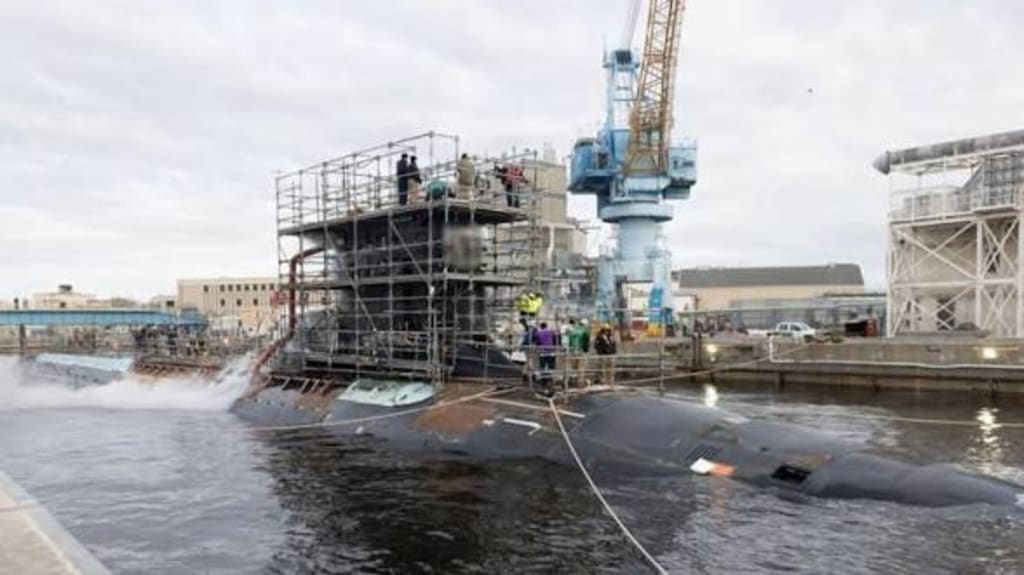
The U.S. Navy has reached an important milestone in its efforts to return the nuclear-powered attack submarine USS John Warner (SSN-785) to the fleet, with its maintenance and testing program progressing ahead of schedule. The 7,800-ton Virginia-class submarine recently completed a major phase of “hot operations” testing approximately two and a half weeks earlier than planned, marking a significant step toward completing its wider maintenance availability.
The development has attracted attention because submarine maintenance is among the most technically demanding activities undertaken by the U.S. Navy. Unlike conventional ships, nuclear-powered submarines require extensive inspection and testing of their propulsion plants, supporting systems and safety equipment before they can safely resume normal operations. The successful early completion of the testing phase demonstrates the importance of detailed planning, engineering coordination and crew preparation.
What the 95% milestone means
The widely reported 95% completion figure should be understood in the context of the submarine’s overall maintenance and modernization effort rather than as a statement that a newly built submarine is 95% complete. USS John Warner is an operational Virginia-class submarine that entered service in 2015 and has been undergoing an extensive Extended Drydocking Selected Restricted Availability (EDSRA) at Norfolk Naval Shipyard.
During such an availability, shipyard specialists conduct inspections, repairs and upgrades designed to maintain the submarine’s performance and extend its useful service life. The current work includes attention to propulsion-related systems and other equipment needed for the vessel to return to operational duties.
The early completion of hot operations is therefore an important schedule achievement. It does not mean that every remaining maintenance task has disappeared, but it indicates that a major and safety-critical portion of the program has progressed successfully.
Why hot operations testing matters
“Hot operations” involve operating and checking systems associated with the submarine’s nuclear propulsion plant. These tests are particularly important because the propulsion system is central to a nuclear-powered submarine’s ability to operate underwater for extended periods.
According to the U.S. Navy’s public information, inspections and checks are conducted on both nuclear and non-nuclear propulsion plant systems before the submarine proceeds toward resuming plant operations. The John Warner project team completed this testing roughly two and a half weeks earlier than planned after intensive cooperation between engineering and planning organizations at Norfolk Naval Shipyard.
The achievement is especially significant because the work involves strict safety procedures. Navy personnel said extensive training and coordination with the submarine’s crew were necessary to ensure the testing was performed safely.
A proven Virginia-class platform
USS John Warner is the 12th Virginia-class attack submarine and was commissioned on August 1, 2015. The submarine was named after former U.S. Senator and Secretary of the Navy John Warner. It was built through cooperation between General Dynamics Electric Boat and Newport News Shipbuilding.
The Virginia class was developed to provide the U.S. Navy with highly capable nuclear-powered attack submarines able to perform a broad range of missions. The official Navy description identifies missions including open-ocean and littoral operations, while the class is also associated with anti-submarine warfare, intelligence, surveillance and reconnaissance, special operations support and strike missions.
The submarines are designed around stealth. Their nuclear propulsion allows them to remain submerged for long periods, with endurance constrained primarily by crew requirements, supplies and maintenance rather than conventional fuel limitations.
Stealth remains a major advantage
One of the most important characteristics of Virginia-class submarines is their ability to operate discreetly beneath the ocean. Undersea stealth gives the U.S. Navy an important capability for monitoring maritime activity, gathering intelligence and responding to potential threats without exposing the submarine’s location.
USS John Warner also belongs to a class equipped with advanced sensors and weapons systems. Earlier Virginia-class submarines were designed around Virginia Payload Tubes and torpedo systems, while later versions introduced the larger Virginia Payload Module to increase weapons capacity.
These capabilities make the maintenance of every Virginia-class submarine strategically important. Returning an existing boat to service can help the Navy sustain its undersea force while newer submarines continue moving through the construction pipeline.
Importance for U.S. submarine readiness
The early completion of USS John Warner’s hot operations is also significant because the U.S. Navy is working to maintain the availability of its submarine fleet while managing complex maintenance schedules. Nuclear submarines require highly specialized shipyards, engineers, technicians and trained crews, making delays difficult to recover from.
Norfolk Naval Shipyard described the early testing achievement as an important step toward the submarine’s return to the fleet. The project teams worked continuously to support the testing schedule, emphasizing coordination and technical preparation.
The development therefore represents more than a simple maintenance milestone. It demonstrates how careful scheduling and engineering cooperation can reduce delays in a highly complex naval program.
What happens next?
Although the successful hot-operations testing represents major progress, USS John Warner still has additional work to complete before the entire maintenance program is finished. Further inspections, repairs, system checks and certification activities may be required before the submarine returns fully to operational status.
The Navy’s public reporting does not reveal sensitive operational details, and claims about classified capabilities should not be inferred from the milestone. What is publicly established is that the submarine has completed a significant testing phase ahead of schedule.
For the U.S. Navy, the achievement provides a positive signal for submarine readiness. For the broader defense community, it highlights the complexity of maintaining nuclear-powered warships and the importance of keeping established Virginia-class submarines available while the next generation of undersea capabilities is developed.
Editor’s note: This article is based on publicly available U.S. Navy and defense reporting. It does not contain or claim access to confidential or classified information.
About the Creator
Enjoyed the story? Support the Creator.
Subscribe for free to receive all their stories in your feed.
Comments
There are no comments for this story
Be the first to respond and start the conversation.