
Ukraine Hits Russian Starlink-Style Network as Moscow Tracks Potential Arms Package
Ukraine’s long-range strike campaign targets Russia’s emerging satellite communications infrastructure as Moscow raises concerns over a potential new Western weapons package for Kyiv.
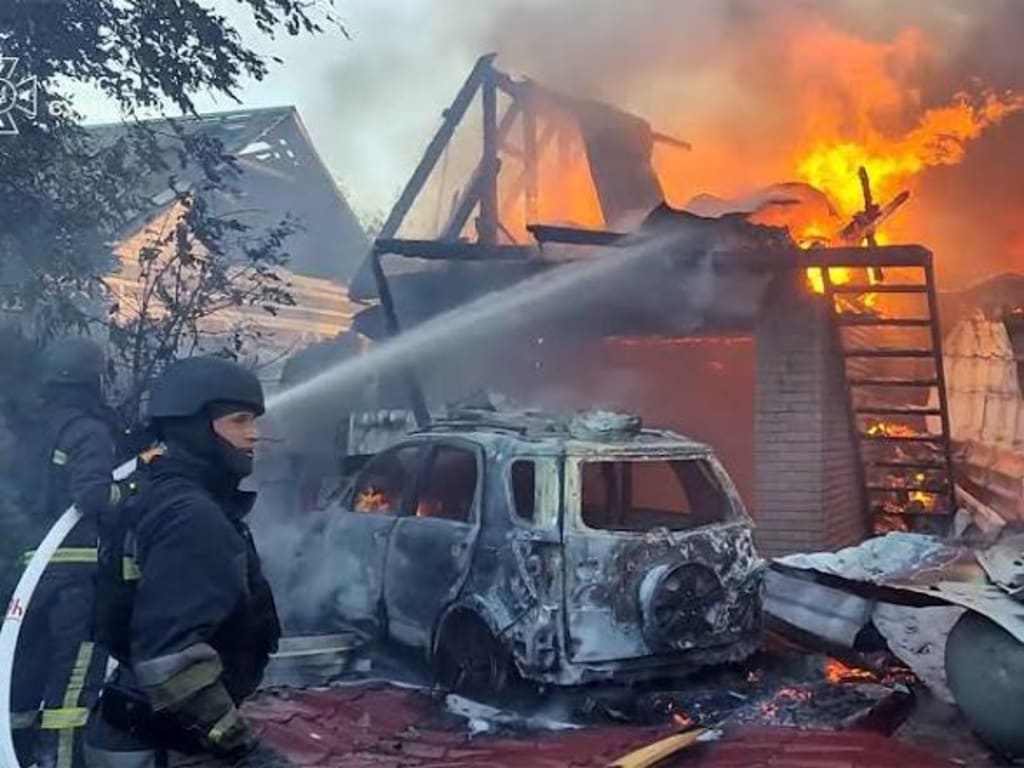
Long-Range Strikes and a New Satellite Race Add Pressure to the Russia-Ukraine War
The Russia-Ukraine war entered another tense phase on August 15, 2026, as Ukraine reported long-range strikes against strategic facilities deep inside Russian territory while Moscow sought clarification over a potential new weapons package for Kyiv. The developments highlight how the conflict is increasingly extending beyond traditional battlefields, involving missile technology, satellite communications, military logistics and international diplomacy.
According to reports, Ukrainian forces used domestically produced Flamingo cruise missiles against targets in Russia's southwestern Samara region. One of the main targets was the Progress Rocket and Space Centre, a facility associated with Russia's space industry and the development of technologies supporting its emerging low-Earth-orbit satellite communications network. Ukrainian President Volodymyr Zelenskyy said the strike was intended to reduce Russia's military capabilities and demonstrate that the consequences of the war could reach deep inside Russian territory.
Why Russia's Starlink-Style Network Matters
Satellite communications have become an increasingly important part of modern warfare. Ukraine's battlefield communications and drone operations have benefited significantly from Starlink, while Russia has been working on an alternative system known as Rassvet.
Ukrainian intelligence officials recently said Russia's satellite programme was developing faster than previously expected. Reports indicate that Russia had 16 Rassvet satellites in orbit and was aiming for a constellation of hundreds of satellites in the coming years. The objective is to establish a more independent communications network that could support military communications and other applications.
That makes facilities involved in Russia's rocket and satellite programmes strategically significant. The Progress centre produces rocket technology, including launch vehicles used to place satellites into orbit. Disrupting such infrastructure could potentially slow the expansion of Russia's satellite capabilities, although the full effect of the latest strike cannot yet be independently established.
The importance of the attack therefore extends beyond the physical damage reported at one industrial facility. It reflects a broader contest over communications infrastructure, space technology and the ability of armed forces to maintain reliable links over large distances.
Ukraine's Expanding Long-Range Strike Capability
The reported strike also demonstrates the growing reach of Ukraine's domestically produced weapons. The Progress facility is approximately 900 kilometres from Ukraine's border, while the Savasleyka air base targeted in the same campaign is about 700 kilometres away, according to Ukrainian officials.
Zelenskyy described the campaign as part of a strategy designed to reduce Russia's war-making capacity. Russian officials, meanwhile, said air defences had responded to what they described as a massive Ukrainian attack and acknowledged damage at industrial sites.
The competing accounts underline the difficulty of independently verifying battlefield claims during an active war. Damage assessments, the number of weapons intercepted and the strategic consequences of individual strikes can take days or weeks to establish.
Nevertheless, long-range attacks have become an increasingly important element of Kyiv's military strategy. Instead of limiting operations to the immediate front line, Ukraine has increasingly sought to target military infrastructure, airfields, industrial facilities and logistics networks located far inside Russia.
Moscow Watches a Potential Weapons Transfer
At the same time, Moscow is closely monitoring reports of a possible weapons transfer to Ukraine involving the United States and Türkiye.
Russia's Foreign Ministry said it wanted clarification about reports that a substantial quantity of US weapons and ammunition held by Türkiye could potentially be transferred to Kyiv. Russian Foreign Ministry spokeswoman Maria Zakharova warned that such a move could seriously damage relations between Moscow and both Washington and Ankara.
The reported package has not been presented as a completed transfer, making it important to distinguish between a potential arrangement and confirmed deliveries. Nevertheless, Moscow's reaction shows how sensitive the Kremlin remains to developments involving Ukraine's access to Western military equipment.
For Kyiv, additional weapons and ammunition could help sustain military operations at a time when the war continues to place heavy demands on personnel, air defence systems, artillery and long-range strike capabilities. For Moscow, increased Western support represents a continuing challenge to its effort to maintain military pressure on Ukraine.
The Wider Human Cost
While the strategic competition continues, civilians remain exposed to the consequences of the conflict. Reports on August 15 said Russian attacks struck areas of Ukraine, including the southeastern town of Marhanets, where local officials reported that a three-month-old baby was killed. A Ukrainian drone strike in Russia's Moscow region also reportedly injured two people, including a nine-year-old child.
These incidents demonstrate that the geographical expansion of military operations increases risks for communities far from the main front lines.
The war is consequently becoming a contest not only over territory but also over industrial capacity, technology, supply chains and communications. Satellite networks are particularly important because modern militaries depend on resilient communications for coordination, intelligence and unmanned systems.
What Comes Next?
The latest developments suggest that the conflict is entering an increasingly technological phase. Ukraine's ability to manufacture and deploy long-range missiles gives Kyiv additional options for striking Russian infrastructure, while Russia's development of Rassvet indicates Moscow's determination to reduce its dependence on foreign communications systems.
The potential weapons package involving US equipment held by Türkiye adds another layer to the diplomatic contest. Whether such a transfer actually occurs, and what equipment it might include, remains subject to political and logistical decisions.
For now, the reported strike on the Progress facility is significant because it connects two major dimensions of the modern war: long-range precision weapons and space-based communications. As both sides invest in technologies that can operate farther from traditional battlefields, the strategic boundaries of the Russia-Ukraine conflict continue to expand.
The immediate impact of the Samara strike will depend on the extent of damage to the facility and how quickly Russia can restore or replace affected capabilities. More broadly, however, the attack signals that Ukraine intends to continue targeting infrastructure it believes contributes to Russia's military power, while Moscow remains focused on limiting Ukraine's access to additional weapons and advanced technology.
About the Creator
Enjoyed the story? Support the Creator.
Subscribe for free to receive all their stories in your feed.
Comments
There are no comments for this story
Be the first to respond and start the conversation.