
Ukraine dismisses Iranian threats as Caspian Sea strike directly links wars
Kyiv argues that Tehran’s reaction exposes the growing military and strategic links between Russia and Iran. The Caspian Sea incident highlights how regional conflicts are increasingly merging into a wider geopolitical confrontation. Ukraine rejects Iranian accusations, saying the dispute reveals the interconnected nature of modern warfare and alliances. As tensions rise in the Caspian Sea, Kyiv claims Moscow and Tehran’s partnership is becoming impossible to ignore. The maritime strike has transformed a local incident into a symbol of the expanding Russia-Iran security relationship.
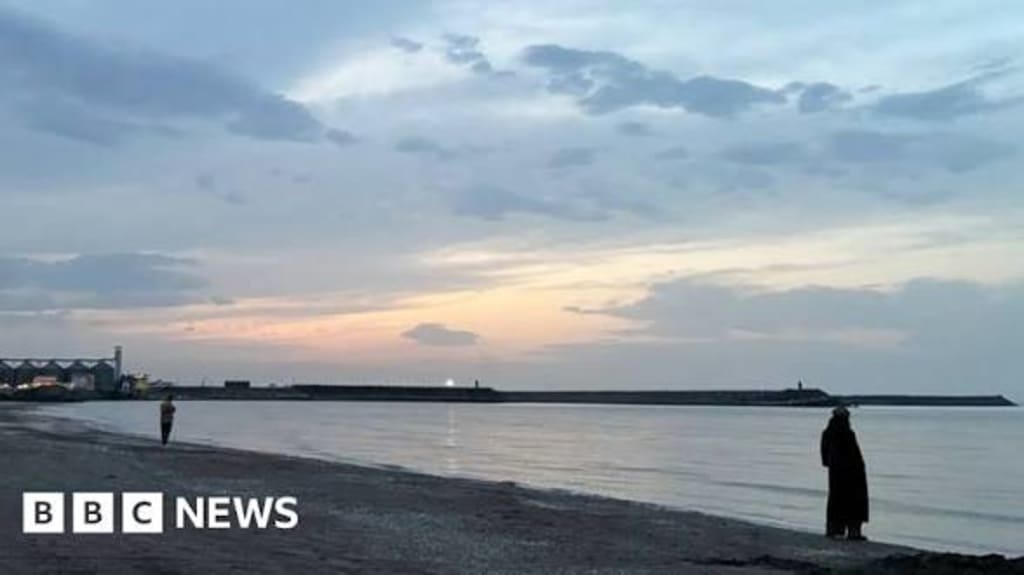
Ukraine has rejected Iranian accusations and threats following a controversial strike on a vessel in the Caspian Sea, arguing that the incident highlights the increasingly visible connection between the war in Ukraine and broader conflicts involving Iran in the Middle East. The dispute has rapidly evolved from a maritime security incident into a geopolitical confrontation, exposing the strategic partnership that has developed between Moscow and Tehran over the course of the war.
The controversy began after Iran accused Ukraine of carrying out an attack against an Iranian-linked vessel operating in the Caspian Sea. Tehran described the strike as a violation of international law and demanded accountability, while Iranian officials warned that Ukraine would face consequences for its actions. According to Iranian statements, the attack resulted in casualties among crew members and represented a dangerous escalation beyond the traditional battlefield of Eastern Europe.
Kyiv, however, firmly rejected the accusations and characterized Iran’s response as politically motivated. Ukrainian officials stated that Iran’s complaints are “groundless” and argued that Tehran cannot portray itself as an innocent party while continuing its strategic cooperation with Russia. Ukraine’s Foreign Ministry emphasized that Iranian-made drones and military technology have played a significant role in Russia’s campaign against Ukrainian cities and infrastructure.
For Ukrainian leaders, the Caspian Sea incident represents more than a single military operation. It symbolizes what Kyiv describes as the merging of two conflicts that were once viewed separately. Since the beginning of Russia’s invasion, Ukraine has repeatedly accused Iran of supplying drones, components, and technical expertise that have strengthened Russian military capabilities. While Tehran has denied extensive military support, Western governments and Ukrainian intelligence agencies have consistently pointed to evidence of cooperation between the two countries.
President Volodymyr Zelenskyy has argued that the strike demonstrates the existence of a logistical corridor connecting Iran and Russia through the Caspian Sea. According to Ukrainian claims, vessels operating in the region have been used to transport military-related cargo and equipment. If accurate, such operations would transform the Caspian Sea from a relatively isolated body of water into a strategically important supply route supporting Russia’s war effort.
The significance of the Caspian Sea lies in its geography. Surrounded by Russia, Iran, Kazakhstan, Turkmenistan, and Azerbaijan, it has traditionally remained outside the spotlight compared with the Black Sea or the Persian Gulf. Yet analysts increasingly view the region as a critical logistical bridge connecting Russian and Iranian interests. The latest confrontation suggests that Ukraine is willing to challenge supply networks far beyond the front lines, extending the reach of the conflict into areas once considered relatively secure.
Iran’s reaction has been notably forceful. Senior Iranian officials condemned the attack and accused Ukraine of attempting to widen the conflict. Some statements suggested that external actors were encouraging Kyiv to target Iranian interests, while others warned that Tehran would not ignore what it regards as aggression. The rhetoric reflects growing frustration within Iran as regional tensions continue to rise amid broader confrontations involving Middle Eastern security and international shipping routes.
From Ukraine’s perspective, however, the dispute reinforces a long-standing argument that Russia and Iran have become strategic partners whose actions cannot be separated. Ukrainian officials have repeatedly described Iran as a direct contributor to Russian military operations. They argue that countries supplying weapons, technology, or intelligence to Moscow inevitably become part of the wider conflict. This position has gained attention among some Western policymakers who increasingly view cooperation between Russia, Iran, and other aligned states as a challenge extending beyond Europe.
The incident also carries broader implications for international security. If military operations continue to target logistical networks across wider geographic regions, the distinction between regional conflicts may become increasingly blurred. The Caspian Sea strike illustrates how modern warfare often extends beyond conventional battlefields, involving supply chains, transportation routes, intelligence sharing, and strategic partnerships. Analysts warn that such developments increase the risk of escalation and miscalculation among states already facing significant geopolitical tensions.
Despite the heated exchanges, neither side appears willing to back down. Iran continues to demand accountability and insists that international law was violated. Ukraine, meanwhile, maintains that its actions are justified within the broader context of defending itself against Russian aggression and disrupting military support networks linked to Moscow. The diplomatic confrontation is therefore likely to continue, adding another layer of complexity to an already volatile international environment.
Ultimately, the Caspian Sea episode underscores a growing reality of contemporary geopolitics: conflicts that begin in one region rarely remain confined there. As alliances deepen and supply networks stretch across continents, events in distant waters can influence wars hundreds or even thousands of kilometers away. Whether the latest confrontation remains a diplomatic dispute or evolves into a more serious crisis, it has already revealed the increasingly interconnected nature of the conflicts involving Ukraine, Russia, and Iran. The strike has become a symbol of how regional wars are converging into broader strategic contests, with consequences that extend far beyond any single battlef
About the Creator
Enjoyed the story? Support the Creator.
Subscribe for free to receive all their stories in your feed.
Comments
There are no comments for this story
Be the first to respond and start the conversation.