
UK announces £8 billion investment in nuclear submarines
"Funding Package Aims to Strengthen National Security, Support Skilled Jobs, and Advance Next-Generation Naval Capabilities."
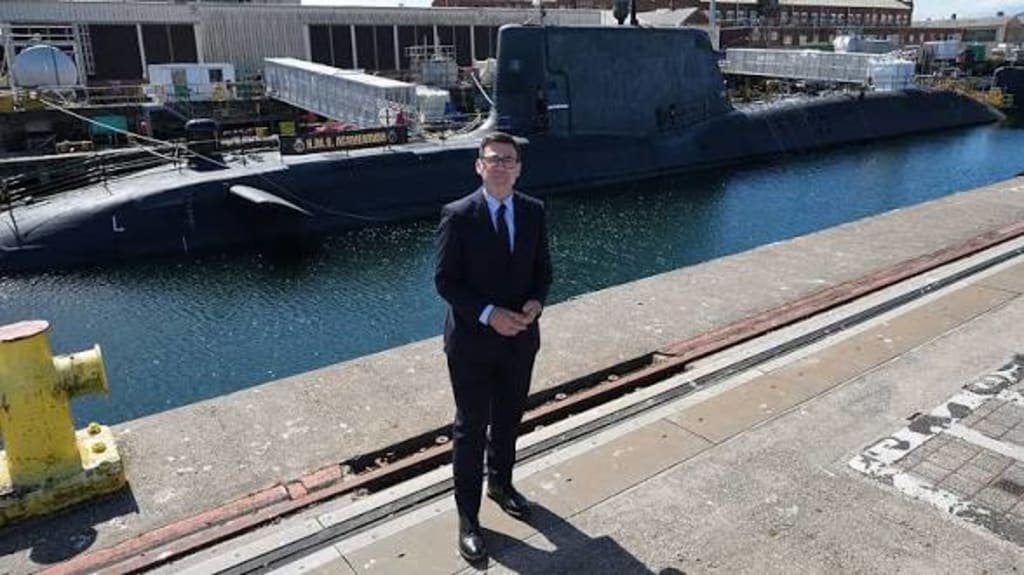
Government says major funding package will strengthen national security, support thousands of jobs, and modernize the country's naval capabilities
The United Kingdom has announced an £8 billion investment in its nuclear submarine program, marking one of the most significant defense commitments in recent years. Government officials say the funding will be used to expand submarine production capacity, strengthen the nation's defense infrastructure, and support the development of next-generation nuclear-powered vessels designed to operate in an increasingly complex global security environment.
The investment forms part of the UK's broader defense strategy, which aims to maintain the country's position as a leading military power while addressing emerging threats in Europe, the Indo-Pacific region, and other strategically important areas. Officials have emphasized that the funding will not only enhance national security but also create economic opportunities through job creation, industrial development, and technological innovation.
According to government statements, the investment will support the construction and maintenance of the Royal Navy's nuclear-powered submarine fleet. The funding is expected to be directed toward shipbuilding facilities, supply-chain improvements, advanced engineering projects, and workforce training programs. Defense leaders argue that these measures are essential to ensuring the long-term effectiveness of Britain's underwater deterrent capabilities.
Prime Minister and defense officials described the investment as a critical step in adapting the country's military capabilities to modern security challenges. They noted that submarine fleets play a vital role in intelligence gathering, deterrence operations, surveillance missions, and the protection of national interests both at home and abroad.
Nuclear-powered submarines are widely regarded as among the most advanced military assets in the world. Unlike conventional submarines, they can remain underwater for extended periods without needing to surface for fuel, allowing them to operate with greater stealth and endurance. These capabilities make them particularly valuable in strategic defense operations and international security missions.
The funding announcement comes amid heightened geopolitical tensions and growing concerns about global security. Defense analysts have pointed to ongoing conflicts, military modernization programs in several countries, and increased competition in key maritime regions as factors driving greater investment in naval capabilities. British officials argue that maintaining a strong submarine fleet is necessary to respond effectively to these evolving challenges.
A significant portion of the investment is expected to benefit communities involved in defense manufacturing. Shipyards, engineering firms, research institutions, and technology companies across the country are likely to play a role in the submarine program. Industry representatives welcomed the announcement, describing it as a major boost for the UK's defense sector and advanced manufacturing industries.
Economic experts estimate that the investment could support thousands of skilled jobs over the coming years. Positions in engineering, design, project management, construction, cybersecurity, and nuclear technology are expected to benefit from increased government spending. Supporters argue that the program will help develop a new generation of highly skilled workers while strengthening the country's industrial base.
The investment is also linked to international defense partnerships. The United Kingdom is a key participant in the AUKUS security partnership alongside the United States and Australia. The agreement focuses on cooperation in defense technologies, including the development of advanced submarine capabilities. Analysts suggest that continued investment in submarine infrastructure will support Britain's role within the partnership and enhance collaboration with allied nations.
Military experts note that modern submarine programs require long-term planning and substantial financial commitments. The design, construction, testing, and deployment of nuclear-powered vessels can take many years, involving complex engineering challenges and strict safety standards. Government officials have stated that the new funding will help ensure that critical projects remain on schedule while supporting future capability development.
While supporters have praised the announcement, some critics have raised questions about defense spending priorities. Opponents argue that large-scale military investments should be balanced against funding needs in areas such as healthcare, education, housing, and public services. They contend that governments must carefully evaluate spending decisions to ensure
About the Creator
Enjoyed the story? Support the Creator.
Subscribe for free to receive all their stories in your feed.
Comments
There are no comments for this story
Be the first to respond and start the conversation.