
Trump’s reflecting pool saga: a timeline of failure and finger-pointing
The controversy surrounding a major White House renovation project, political criticism, and questions over responsibility
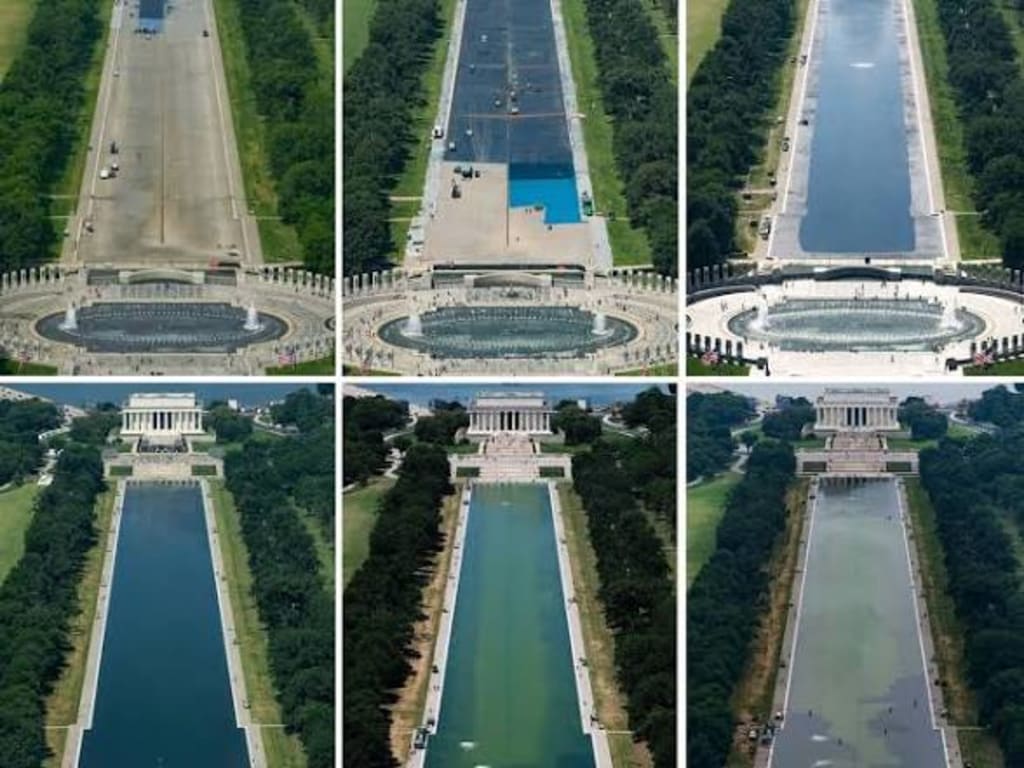
The story of Donald Trump’s reflecting pool project has become a notable example of how large-scale public projects can become the center of political debate, criticism, and competing explanations. What began as an ambitious improvement effort connected to one of America’s most recognizable government spaces evolved into a controversy involving delays, construction problems, public frustration, and disagreements over accountability.
Reflecting pools in Washington, D.C., have long carried symbolic importance. They are associated with national history, public gatherings, and some of the most recognizable landmarks in the United States. Any major change involving such a location naturally attracts public attention. When a project linked to Donald Trump became associated with problems and criticism, the debate quickly expanded beyond construction issues into questions about leadership, planning, and political responsibility.
The origins of the controversy can be traced to plans for transforming and improving the area. Supporters argued that upgrades were necessary to modernize infrastructure, improve visitor experiences, and create a more impressive public space. They presented the project as part of a broader vision of restoring and enhancing important national sites.
However, as the project moved forward, difficulties began to emerge. Construction challenges, changing plans, and concerns about execution created growing criticism. Opponents argued that the problems reflected poor planning and insufficient oversight, while supporters maintained that complex public projects often face unexpected obstacles.
One of the central issues surrounding the reflecting pool saga was the question of responsibility. Political opponents pointed toward Trump and his administration, arguing that leadership decisions and public statements contributed to unrealistic expectations. They claimed that the project represented a pattern of announcing ambitious plans without adequate preparation for implementation.
Supporters of Trump offered a different explanation. They argued that many construction difficulties were the result of bureaucratic processes, contractor challenges, and external complications rather than direct decisions by Trump himself. They suggested that critics were using the project as another way to attack his leadership style and political agenda.
The disagreement reflected a broader pattern seen during Trump’s political career. Large projects connected to his name often became part of wider debates about branding, management, and government efficiency. His supporters viewed his involvement as evidence of ambition and willingness to challenge traditional approaches, while critics frequently questioned whether his projects delivered the results promised.
As criticism increased, public attention focused on the timeline of events. Initial announcements created expectations of rapid progress and visible transformation. However, delays and complications changed the public perception of the project. What was originally presented as a symbol of improvement became associated by critics with setbacks and controversy.
Media coverage played a major role in shaping the narrative. Different outlets emphasized different aspects of the story, with some focusing on alleged failures and others highlighting political opposition. The debate demonstrated how modern infrastructure projects can become political symbols, especially when they involve high-profile leaders.
The reflecting pool controversy also raised broader questions about government project management. Large public works require coordination between designers, engineers, contractors, government agencies, and officials. Even small changes can create significant delays and additional costs. The saga highlighted the challenges of balancing ambitious goals with realistic planning.
Another important aspect of the debate was the issue of public expectations. Political leaders often promote major projects as examples of progress and achievement. However, when results do not match promises, public confidence can decline. The reflecting pool controversy became a case study in how expectations, communication, and accountability influence public opinion.
The political impact of the issue extended beyond the project itself. For Trump’s critics, it reinforced arguments about his leadership approach and management decisions. For his supporters, it represented another example of what they viewed as unfair scrutiny from political opponents and the media.
Beyond the political arguments, the saga reflects a larger challenge facing leaders: turning ideas into successful outcomes. Vision and ambition are important, but successful projects also depend on careful planning, realistic timelines, financial management, and effective coordination.
The controversy surrounding Trump’s reflecting pool project demonstrates how even a construction effort can become part of a much larger political conversation. Public projects are rarely judged only by their physical results; they are also evaluated through the lens of leadership, trust, and public perception.
In conclusion, the reflecting pool saga represents more than a dispute over a renovation project. It highlights the complicated relationship between politics, public expectations, and government action. The timeline of events shows how ambitious plans can face unexpected challenges and how responsibility becomes a central issue when things go wrong. Whether viewed as a failure of planning or an example of political opposition, the controversy remains a reminder that major public projects require not only vision but also careful execution and accountability.
About the Creator
Enjoyed the story? Support the Creator.
Subscribe for free to receive all their stories in your feed.
Comments
There are no comments for this story
Be the first to respond and start the conversation.