
Trump's Farewell Post Signals More Than Satisfaction With the Xi Summit
After Xi Jinping left Washington, Trump described the meeting as a success and immediately pointed to two more presidential encounters before the end of the year, suggesting that the White House sees continued high-level engagement as part of the relationship's next phase.
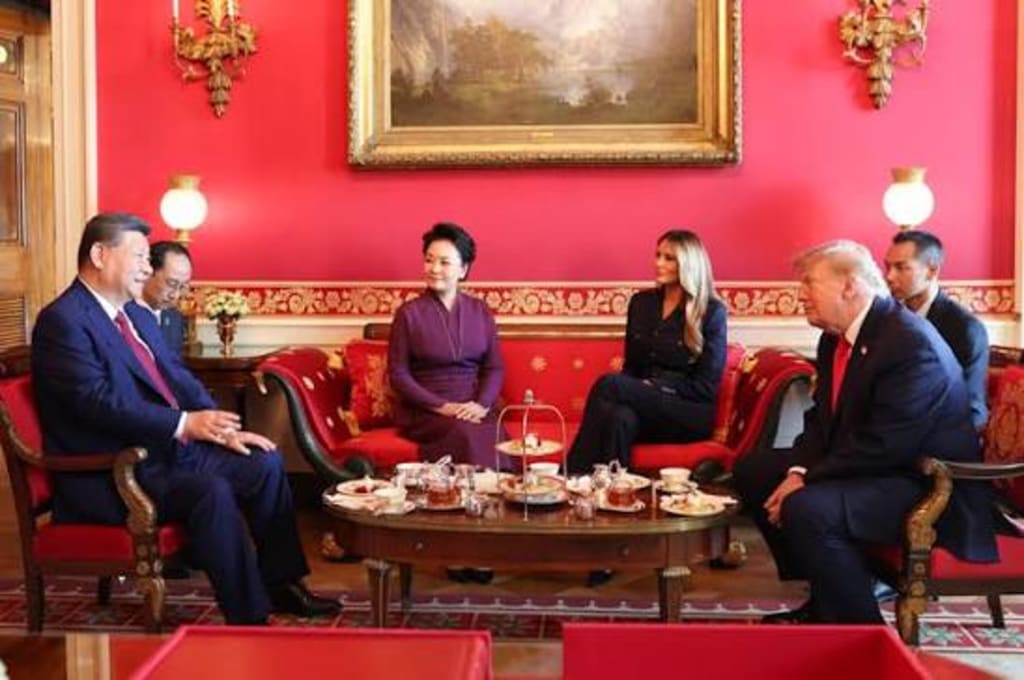
WASHINGTON, Sept. 25, 2026 — Minutes after Chinese President Xi Jinping and his wife, Peng Liyuan, left Washington for China on Friday, President Donald Trump turned to Truth Social to offer his public assessment of the summit.
He called the meeting one of "Friendship, Strength, and Success" for both countries and said more work would be accomplished. More importantly, he immediately put another two meetings on the calendar: another encounter with Xi in China in November, followed by the G20 summit in Miami in December.
The wording matters because it places the September summit inside a continuing diplomatic cycle rather than treating it as a stand-alone event.
Trump was already signaling satisfaction before Xi left
Friday's farewell message was consistent with Trump's earlier comments.
On the morning of Sept. 25, Trump described his talks with Xi as "very productive" and said major developments were coming. The White House later characterized the state visit as productive and highlighted agreements and mechanisms covering trade, counternarcotics cooperation, artificial intelligence and future high-level exchanges.
At a White House tea gathering, Trump again described the visit in strongly positive terms, saying the two sides had made substantial progress. The White House's official account said the visit produced a series of understandings and described the two leaders as having held productive bilateral discussions.
The tone was therefore consistent throughout the final day: Trump was not presenting the meeting as an inconclusive encounter that merely kept negotiations alive. He was presenting it as a meeting that had produced enough progress to justify another round of presidential diplomacy.
The next two meetings are part of the message
Trump's Truth Social post contained a detail that could easily be overlooked.
He did not simply say that he hoped to see Xi again.
He specified two occasions.
The first is expected to be in China in November. The second is the G20 summit in Miami in December. Trump therefore publicly framed the relationship in terms of repeated presidential contact over the remaining months of 2026.
That fits the broader structure announced during the summit. China and the United States agreed to support each other's hosting of the APEC and G20 meetings, with both leaders intending to attend the other side's summit.
In other words, the diplomatic calendar itself has become part of the outcome.
From one summit to a continuing channel
The September meeting was already the second face-to-face encounter between Xi and Trump within six months. Reuters noted before the visit that both governments were approaching the summit with a strong interest in preserving stability in the bilateral relationship, particularly around trade, even as major disagreements remained.
The new schedule suggests that the leaders are trying to maintain that direct channel.
This is significant because the most difficult U.S.-China issues cannot be resolved through a single summit. Trade can produce negotiated figures. AI can produce a dialogue mechanism. Counternarcotics cooperation can produce specific enforcement measures. But questions involving security, Taiwan, Iran and the broader strategic relationship require repeated communication.
The summit's published outcomes therefore included not only economic arrangements but also mechanisms designed to keep officials talking. The White House said the two countries would establish a bilateral dialogue on super intelligence and create a channel for incidents involving the technology.
The language is political, but the schedule is concrete
Trump's description of the summit as one of "Friendship, Strength, and Success" is political language. It is not itself evidence that the two governments have resolved their underlying disputes.
The more concrete signal is the schedule that accompanied it.
A November meeting in China and another meeting at the December G20 summit mean that Washington and Beijing are already planning to carry the presidential dialogue forward.
That distinction matters.
Positive rhetoric can change quickly.
A diplomatic calendar is harder to dismiss because it creates an expectation of continued engagement.
What Trump was signaling
Read as a whole, Trump's Friday message contained three separate signals.
First, he judged the Washington summit positively.
Second, he associated that positive assessment with future work rather than closure.
Third, he placed Xi's next appearances on the U.S.-China diplomatic calendar before the year is over.
None of this means that the strategic differences between Washington and Beijing have disappeared. Reuters' pre-summit reporting emphasized that Taiwan, trade and other geopolitical issues remained contentious even as both governments sought to stabilize ties.
What the post does show is that Trump wants the relationship to remain in motion.
That may ultimately be more important than the superlatives.
A summit lasts a day.
A scheduled follow-up creates a channel.
And Trump's farewell message made clear that, from his public presentation of the relationship, the channel is intended to remain open.
About the Creator
Jin
Writer of reamstories
https://reamstories.com/jin
Enjoyed the story? Support the Creator.
Subscribe for free to receive all their stories in your feed. You could also become a paid subscriber, letting them know you appreciate their work.
Comments
There are no comments for this story
Be the first to respond and start the conversation.