
Trump Stopped Israel’s $4 Billion Check on Election Day. Jerusalem Heard It on TV.
A phone call meant to shield Republicans from a Democratic attack landed first in an Israeli defense office with no memo, no cabinet paper, and no warning. The Gulf heard something else: a U.S. promise can be compressed on a live microphone.
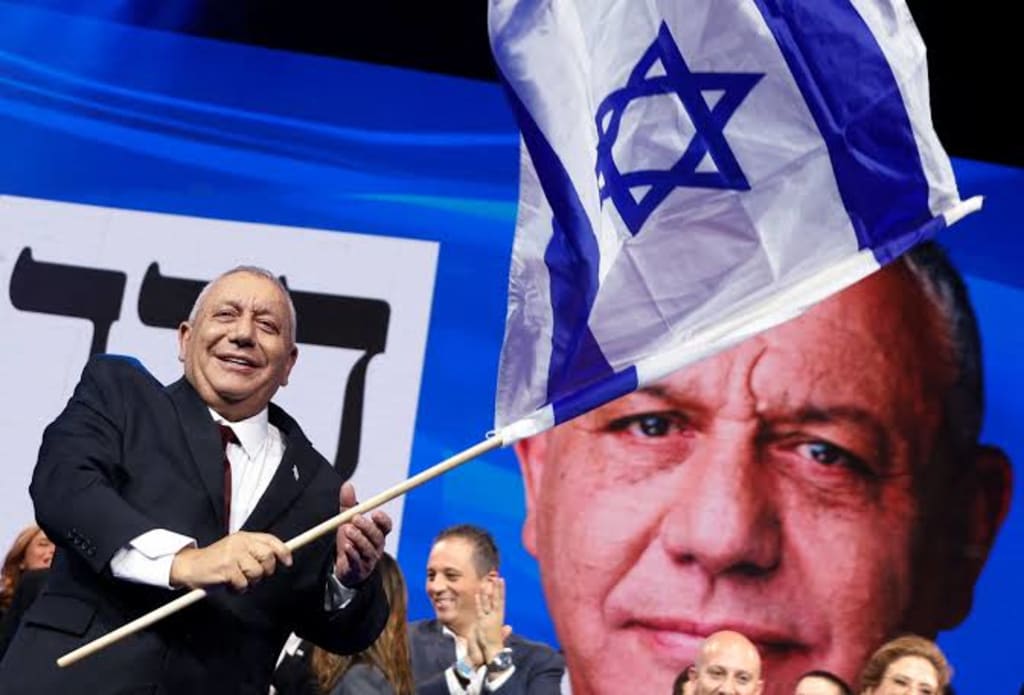
On the morning of November 3, 2026, with U.S. midterm polls just opening, Trump told Fox News that Washington would stop sending Israel about $4 billion a year in military aid by the end of the year. He said he and Netanyahu had settled the matter months earlier. He said Israel no longer needed the money.
If that were true, the decision would have arrived in Jerusalem as a policy paper, a cabinet discussion, or at least a phone call. Israeli defense officials said they were surprised. Finance Ministry officials said the prime minister’s office had not submitted any formal document. Opposition politicians asked why Israelis learned about a change in the U.S.-Israel security relationship from a U.S. television interview.
An ally was described as having requested the cut. The ally found out from cable news. That gap matters more than the headline.
Why the voting day mattered
The announcement landed on a date chosen for domestic politics. In May 2026, a New York Times/Siena poll found that 74% of Democratic voters opposed continued U.S. military and economic aid to Israel. Three years earlier, that number was 45%. A June Quinnipiac poll found that 48% of all voters thought the United States supported Israel too much. Among Democratic voters, the figure was 66%. In 2017, those numbers were 16% and 20%.
Those shifts have a face in the 2026 campaign: Abdel Saeed, the Democratic Senate candidate in Michigan, whose platform included ending unconditional military aid to Israel. Trump named him in the interview. “If Israel doesn’t need the money,” he said, “why should we take stones from a lunatic like Saeed because of this aid?” He described the cut as removing a bad talking point from the Democratic left.
Trump’s calculation was not about whether Israel needs the United States. It was about whether Republicans still need to absorb attacks over Israel. Announcing on voting day did two things at once. It took a Democratic attack line off the table before the votes were counted. It also sent a signal to Republican voters who dislike foreign entanglement. The Associated Press noted that day that some Trump supporters see continued Middle East involvement as a contradiction of his promise to reduce overseas military commitments.
The claim that Netanyahu agreed months ago works as political cover, not as a factual description. Netanyahu did say in December 2025 and again in May 2026 that he wanted to move Israel away from U.S. military aid. He talked about a ten-year timeline. Israel’s Channel 12 reported that the two sides were still negotiating a new ten-year security cooperation agreement, with joint research and co-production replacing direct grants. The talks were slow. No agreement was near. Trump took a long-term adjustment and compressed it into a single election-day announcement.
The legal gap and the Congress problem
Trump could make the announcement partly because the 2016 memorandum of understanding is not a treaty. The $38 billion, ten-year agreement was signed by the Obama administration. A June 2026 Congressional Research Service report said the memorandum “does not have the legal force of a treaty.” Under international law, early termination would not be a straightforward breach.
U.S. law is less flexible. Military aid still requires annual appropriations. The fiscal 2021 National Defense Authorization Act confirmed the funding levels with bipartisan support. In July 2026, Congress rejected an amendment to stop military aid to Israel by 314 votes to 104. Four months before Trump’s interview, both parties voted overwhelmingly against the direction he announced. A president can request budget changes and apply diplomatic pressure. A television interview cannot cancel signed arms orders or appropriated funds.
The money also has a U.S. constituency. Of the $3.8 billion a year, about $3.3 billion is Foreign Military Financing, which Israel uses to buy American weapons. Another $500 million goes to missile defense cooperation. By 2026 and 2027, 92% of Foreign Military Financing must be spent on U.S. equipment. By 2028, all of it must. In Washington, that aid is also an order book for Lockheed Martin, Raytheon, and Boeing. Cutting it early would hit Israel’s defense budget and create industrial and employment pressure inside the United States.
The announcement was clear as a political signal. It was uncertain as policy. It set an agenda. It did not complete a legal act.
What Netanyahu wanted, and what Trump said
Netanyahu does want to move away from U.S. military aid. What he wants to escape is not the money alone. It is the structure attached to the money.
The 2016 agreement has been contested inside Israel because it phased out Israel’s ability to spend part of the aid on its own defense industry. The old share was 26.3%. The agreement pushed almost all the money back into the U.S. defense system. It also restricted Israel’s use of aid for domestic military fuel. And it left a president’s discretion under the Arms Export Control Act in place. That discretion means major Israeli military operations sit under Washington’s shadow in legal terms. For Israeli security officials who want military autonomy, the aid came with a partial surrender of decision space.
Netanyahu put it plainly in a May 2026 CBS interview: “We’re adults now.” His government approved a ten-year military expansion worth about $119 billion. One goal is domestic ammunition production, so Israel depends less on imported finished weapons. In his plan, direct grants would go to zero over ten years, replaced by joint research and local production. The trade is short-term fiscal pain for long-term freedom of action.
Trump’s end-of-year deadline breaks that gradual path. The Jerusalem Post reported that Israel’s defense establishment planned to use about $8 billion in U.S. funds over the next two years for F-35s, new F-15s, helicopters, defense interceptors, and joint weapons research. If the money stops at the end of the year, Israel must either add billions of shekels to its budget or delay key purchases. Israel is fighting on several fronts. Interceptor and precision-weapon stocks are a live constraint.
One Israeli official offered a telling guess: they hoped Trump had said 2026 when he meant 2028, that he had gone too far, and that no one wanted to correct him on voting day. That hope captures the distance between Netanyahu’s “we asked for this” and Trump’s “it ends in December.”
What Gulf capitals heard
Reading this only as a U.S.-Israel friction story misses the wider signal.
The Gulf is the key audience. The 2026 U.S.-Israel war with Iran had already deepened doubts in Riyadh and Abu Dhabi about U.S. security guarantees. The International Institute for Strategic Studies, in a report before the Manama Dialogue, said Gulf states “harbor doubts about U.S. assurances for Gulf security” and are “diversifying strategic and defense relationships to balance dependence on the United States.” In August 2026, Saudi Arabia, Turkey, and Pakistan signed the Mecca Joint Defense Agreement. Ding Long of Shanghai International Studies University read it as a clear signal that regional states want to reduce reliance on a single U.S. security protector.
Against that background, Trump’s treatment of Israel matters beyond the bilateral relationship. Israel is Washington’s closest and most institutionalized security partner in the Middle East. The cut was unilateral, uncoordinated, and staged on a domestic election day. Gulf decision-makers will ask a simple question: if Washington can compress its commitment to Israel during a television interview, how compressible are Gulf security guarantees?
The signal does not need to appear as “America abandons allies.” It will look slower. Regional partners will hedge faster. They will seek alternative arms and defense partners. They will keep more diplomatic room in conflicts that touch U.S. interests. The IISS report already found Gulf states diversifying defense ties and debating the value of relations with Israel, which some now see as a disruptive force. Trump’s announcement will not change the Middle East military balance overnight. It will enter the risk calculations of regional actors as another data point for one judgment: do not put all security in American hands.
The gap
The useful story here is not that the U.S.-Israel alliance broke. It did not. Military cooperation continues. Washington will still sell Israel weapons. Congress rejected the cut four months earlier by a lopsided margin. The useful story is how a political system handles a commitment it no longer wants to carry.
Trump turned the cut into an election-day symbol. “Israel doesn’t need it” softened “America won’t give it.” “Netanyahu asked first” softened “Washington acted alone.” Netanyahu’s silence and the Israeli defense establishment’s surprise show the distance between symbolic politics and actual security. That distance does not disappear because a spokesman says the right words.
The political base of U.S. aid to Israel has moved. The policy machinery, congressional appropriations, arms contracts, and the ten-year memorandum, still runs on the old rhythm. Trump tried to catch policy up with politics through an executive announcement. He moved faster than the beneficiary could confirm it was ready.
That gap is the story.
About the Creator
Jin
Writer of reamstories
https://reamstories.com/jin
Enjoyed the story? Support the Creator.
Subscribe for free to receive all their stories in your feed. You could also become a paid subscriber, letting them know you appreciate their work.
Comments
There are no comments for this story
Be the first to respond and start the conversation.