
Trump orders Pentagon to cut back military exercises with South Korea
The surprise decision raises questions about U.S. military readiness, Washington-Seoul relations and Trump's effort to reopen dialogue with North Korea
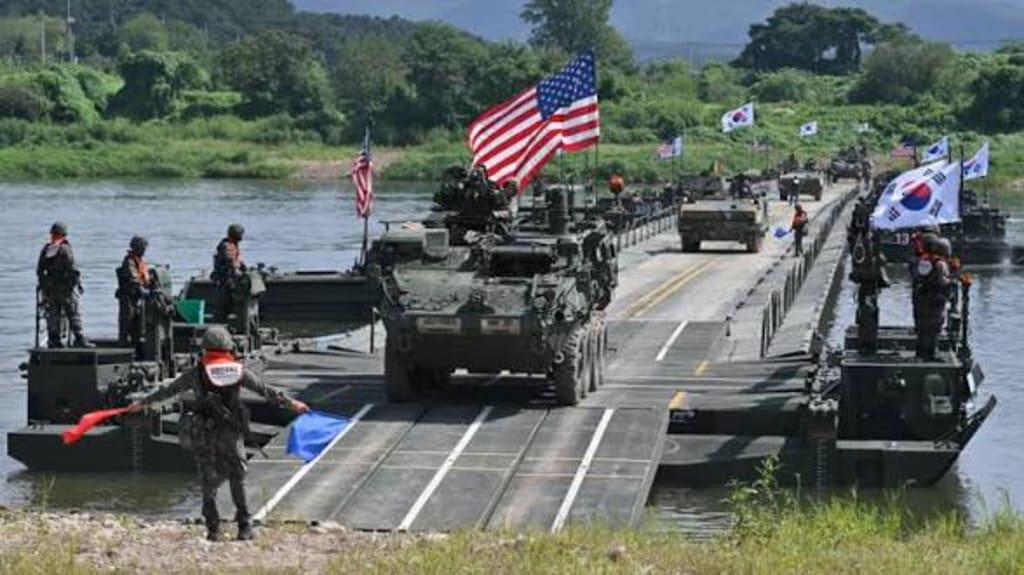
President Donald Trump has ordered the Pentagon to substantially reduce joint military exercises with South Korea, creating fresh uncertainty around the future of one of Washington's most important security partnerships in Asia.
Trump announced the decision shortly before the annual Ulchi Freedom Shield exercises were scheduled to begin. He argued that the drills are expensive and described them as an unnecessarily hostile signal toward North Korea. He also pointed to his relationship with North Korean leader Kim Jong Un as part of the reasoning behind his decision.
The move immediately attracted attention in Seoul and Washington because the military exercises are designed to strengthen the ability of U.S. and South Korean forces to respond to a potential crisis on the Korean Peninsula.
What Are the Ulchi Freedom Shield Exercises?
Ulchi Freedom Shield is a major annual military exercise involving the United States and South Korea.
The training is designed to improve coordination between the two allies and prepare their forces for a range of possible security situations. This year's exercise was scheduled to continue through August 27, with approximately 18,000 South Korean military personnel involved.
Despite Trump's order, the exercises began as scheduled on Monday. South Korea's military confirmed that the training had started, although it was not immediately clear which portions would ultimately be reduced.
That uncertainty has become an important part of the story because military planners need predictable training schedules to maintain readiness.
Why Did Trump Order the Reduction?
Trump gave several reasons for his decision.
He criticised the cost of the exercises and argued that the United States carries too much of the financial burden.
He also said that the drills send an inappropriate and hostile message to North Korea. Trump highlighted his positive personal relationship with Kim Jong Un, suggesting that reducing military exercises could help create an environment for renewed diplomatic engagement.
The decision also came amid broader disagreements between Washington and Seoul.
Trump said South Korea had declined to participate in U.S. efforts connected to Iran, a position that he clearly viewed as another source of frustration. Seoul has said it is discussing possible military contributions while considering its own defence requirements and legal procedures.
South Korea Responds Carefully
South Korea has reacted cautiously rather than openly confronting Washington.
The country's government said it hopes Trump's relationship with Kim can eventually lead to meaningful dialogue between the United States and North Korea.
At the same time, Seoul has emphasised that the U.S.-South Korean alliance remains important and that both countries will continue coordinating their combined defence posture.
That balance reflects the difficult position facing South Korea.
Seoul wants to preserve its close alliance with Washington while also supporting efforts to reduce tensions with North Korea.
Military Readiness Is a Major Concern
Critics of reducing the exercises argue that military drills are not simply political demonstrations.
They provide an opportunity for American and South Korean forces to practise communication, logistics and coordination under realistic conditions.
A reduction in training could therefore raise questions about readiness, particularly if North Korea continues developing its nuclear and missile capabilities.
The concern is especially significant because North Korea has continued to expand its military capabilities and has gained additional battlefield experience through its involvement in Russia's war against Ukraine, according to analysts cited by Reuters.
The challenge for military planners is finding the right balance between diplomatic objectives and operational preparedness.
North Korea Has Long Opposed the Drills
North Korea has traditionally condemned U.S.-South Korean military exercises, describing them as preparations for an invasion.
Pyongyang has repeatedly demanded an end to the exercises as part of its broader objections to the U.S. military presence in South Korea.
From Washington and Seoul's perspective, however, the drills are intended primarily to maintain defensive readiness.
That fundamental disagreement has existed for decades.
Trump's decision represents an attempt to address the political side of the problem by reducing an activity that North Korea considers provocative.
Trump's Relationship With Kim Jong Un
Trump and Kim have a complicated diplomatic history.
During Trump's first presidency, the two leaders moved from extremely hostile rhetoric to unprecedented face-to-face meetings.
They held three summits, raising hopes that negotiations could eventually lead to progress on North Korea's nuclear programme.
However, those diplomatic efforts failed to produce a lasting agreement over nuclear weapons and sanctions.
Trump's latest decision to reduce military exercises suggests that he may again believe personal diplomacy with Kim could provide a pathway toward negotiations. Analysts quoted by Reuters, however, caution that North Korea's strategic position has changed significantly since the earlier Trump-Kim meetings.
North Korea Is Stronger Than Before
One of the biggest differences today is North Korea's growing military capability.
The country has continued developing ballistic missiles and expanding its nuclear programme.
Its growing military cooperation with Russia has also created new concerns among the United States and its Asian allies.
That means any effort to reduce military exercises must be considered against a more challenging security environment.
Some analysts therefore question whether a reduction in drills will encourage diplomacy or instead reduce deterrence.
The U.S.-South Korea Alliance Faces Broader Pressure
The military exercise dispute is also part of a wider conversation about the future of the U.S.-South Korea alliance.
Trump has repeatedly argued that American allies should contribute more to their own defence.
South Korea has increased defence spending and remains an important U.S. security partner in Asia, but disagreements over financial contributions and broader economic issues continue.
The two countries also face complex trade and investment negotiations.
These issues mean that military cooperation cannot be viewed separately from the wider political and economic relationship.
What Happens Next?
The immediate question is how much the Pentagon will reduce the exercises and whether future drills will be redesigned.
The training has already shifted in recent years toward computer simulations and other forms of command-and-control preparation rather than relying entirely on large live-fire exercises.
That could provide room for Washington to reduce the visible scale of exercises without completely eliminating military coordination.
The larger question is whether North Korea responds positively.
If Pyongyang sees the decision as an opportunity for diplomacy, Trump could gain an opening for renewed negotiations.
If North Korea instead interprets the reduction as a sign of weakening U.S. commitment, it could have the opposite effect.
A Delicate Strategic Gamble
Trump's decision is therefore more than a change to a military exercise.
It represents a strategic gamble involving diplomacy, deterrence and alliance management.
Reducing exercises could help create political space for talks with North Korea and lower tensions on the Korean Peninsula.
But maintaining military readiness is also essential when facing a nuclear-armed state with expanding missile capabilities.
For South Korea, the challenge is equally difficult: supporting diplomacy while ensuring that its defence capabilities remain credible.
Conclusion
President Trump's order to cut back U.S.-South Korean military exercises has opened a new chapter in the complicated security environment of East Asia.
The decision reflects Trump's preference for reducing what he considers unnecessary costs and provocative military activity while seeking to use his relationship with Kim Jong Un to encourage diplomacy.
However, the security environment has changed significantly. North Korea has strengthened its nuclear and missile capabilities, while its military ties with Russia have deepened.
The coming months will show whether reduced exercises can create a genuine diplomatic opportunity or whether they create new concerns about military readiness.
For now, the Ulchi Freedom Shield drills are continuing, but Trump's decision has made their future—and the wider U.S.-South Korea security relationship—a major international issue.
About the Creator
Enjoyed the story? Support the Creator.
Subscribe for free to receive all their stories in your feed.
Comments
There are no comments for this story
Be the first to respond and start the conversation.