
Trump & Musk Alliance: A Political Partnership Rebuilt After a Bitter Public Feud
Trump and Musk Rebuild Their Political Partnership as Money, Technology, and Republican Strategy Converge Ahead of the 2026 Midterm Elections
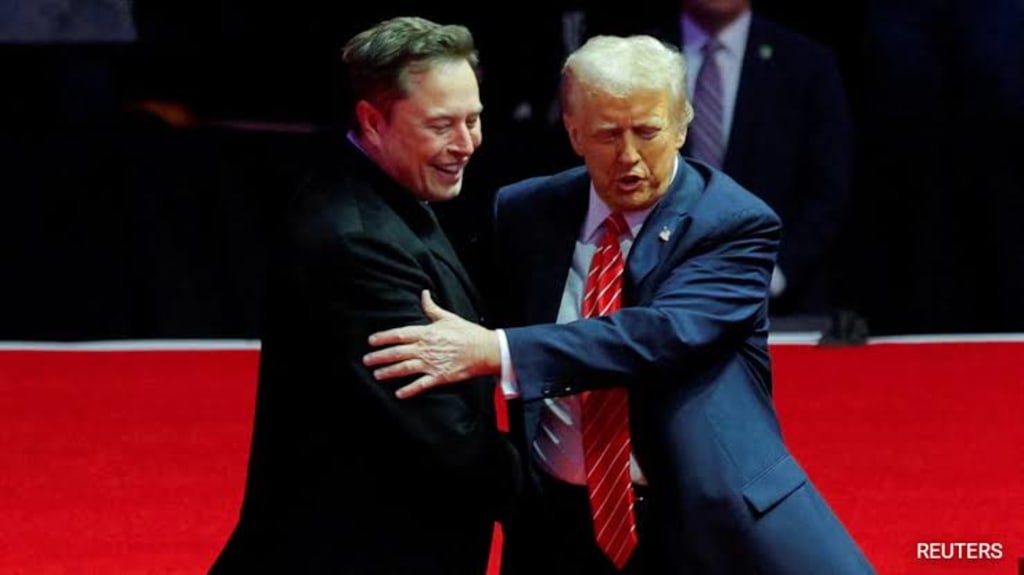
The relationship between Donald Trump and Elon Musk has become one of the most unusual political partnerships in modern American politics. The two high-profile figures moved from close allies to bitter public opponents and are now rebuilding communication around shared political interests. Their renewed cooperation could have important consequences for the Republican Party, the 2026 midterm elections, technology policy, government spending, and the future of political campaigning in the United States.
Recent reporting indicates that Trump and Musk have re-established ties after their dramatic disagreement in 2025. Although their relationship is reportedly not as close as it once was, both sides have reasons to cooperate. Musk has returned to supporting Republican political efforts, while Trump continues to benefit from Musk's enormous financial resources, technological influence, and reach among voters.
From Political Allies to Public Rivals
Trump and Musk's alliance became particularly visible during Trump's return to the White House. Musk became a prominent supporter of Trump's 2024 presidential campaign and later took a major role in the administration's government-efficiency initiative.
Their partnership appeared to combine political power with technological and financial influence. Trump gained support from one of the world's most recognizable technology entrepreneurs, while Musk gained an unusually close connection to the federal government.
However, the partnership eventually collapsed into a highly public dispute. Differences over government spending, legislation, political strategy, and other issues contributed to the breakdown. The disagreement became personal, with both men criticizing each other publicly.
The fallout demonstrated how quickly an alliance built around shared interests can become unstable when powerful personalities disagree.
Why the Relationship Is Improving
The renewed relationship appears to be driven partly by mutual interests. Musk has abandoned the idea of forming a separate political party and is again focusing significant resources on Republican candidates and voter turnout efforts.
According to recent reporting, Musk plans to spend at least $100 million supporting Republican turnout efforts during the 2026 midterm elections. His America PAC is expected to focus on activities such as digital advertising, direct mail, and voter mobilization.
For Trump and Republicans, Musk's involvement could provide a major financial and technological advantage. For Musk, maintaining communication with the administration and Republican political leaders could help advance issues that matter to him, including technology, artificial intelligence, space exploration, regulation, and government efficiency.
Money and Political Influence
One of the most important aspects of the Trump-Musk alliance is the role of political spending. Musk became one of Trump's most significant financial supporters during the 2024 election cycle.
His political influence goes beyond donations. Musk controls a major social media platform, has an enormous online following, and can communicate directly with millions of people. This gives him a powerful ability to shape political conversations and promote particular candidates or issues.
The 2026 midterms will provide an important test of how effectively that influence can be converted into votes. Midterm elections traditionally attract fewer voters than presidential elections, meaning targeted voter mobilization can become particularly important.
Technology Meets Politics
The partnership also represents the growing connection between technology and American politics. Musk's companies operate in areas that have major national-security and economic importance, including space transportation, satellite communications, artificial intelligence, and electric vehicles.
SpaceX, for example, has become an important contractor for the U.S. government. That makes the relationship between Musk and Washington more significant than a conventional political friendship.
Government decisions involving technology regulation, artificial intelligence, telecommunications, defense contracts, and space policy can have enormous consequences for Musk's businesses and the broader technology industry.
This creates both opportunities and questions about the appropriate relationship between powerful business leaders and government officials.
A Different Alliance Than Before
Despite the renewed cooperation, the current Trump-Musk relationship should not necessarily be viewed as a complete return to their earlier partnership.
Recent reporting suggests the two now communicate only periodically, reportedly around once a month, rather than maintaining the constant relationship seen during Musk's time in Trump's political orbit. Their reconciliation therefore appears more practical and limited than their earlier alliance.
That distinction is important. Political partnerships can change as circumstances change. Both men have strong independent interests and large personal platforms, meaning neither is completely dependent on the other.
The experience of their previous feud may also encourage both sides to maintain greater distance while cooperating on areas where their interests overlap.
Implications for the Republican Party
Musk's return to Republican politics could influence the party's campaign strategy. His financial resources can support candidates, while his technology background may help political organizations experiment with digital outreach and data-driven voter engagement.
However, his involvement could also create challenges. Musk remains a polarizing figure, and his political statements frequently generate controversy. Republican candidates may therefore have to balance the benefits of his support against the possibility of alienating voters who disagree with him.
The same challenge applies to Trump. A close association with Musk could strengthen Trump's technology and business connections while simultaneously exposing the administration to additional political controversy.
Impact on Technology Policy
The renewed relationship may also influence debates surrounding artificial intelligence, social media regulation, electric vehicles, space exploration, and government oversight of technology companies.
Musk has repeatedly argued for lighter regulation in several technology-related areas, while governments around the world are increasingly developing rules for artificial intelligence, digital platforms, autonomous systems, and emerging technologies.
The Trump administration's approach to these issues could affect not only Musk's companies but the entire American technology sector.
What the Future Could Bring
The future of the Trump-Musk alliance will likely depend on whether their shared political interests remain stronger than their personal disagreements.
The 2026 midterm elections are an important test. If Musk's political spending and voter-mobilization efforts help Republican candidates, his influence inside conservative politics could increase. If the strategy produces limited results, questions may emerge about how much political power his financial resources actually provide.
Another major factor will be the relationship between Musk's businesses and the federal government. Space, artificial intelligence, communications, and defense contracts create areas where government policy and private-sector interests overlap.
Conclusion
The Trump-Musk alliance is no longer simply a story about two famous personalities. It represents a broader transformation in American politics, where billionaires, technology platforms, social media, business interests, and political campaigns increasingly intersect.
Their journey from close allies to public rivals and back toward cooperation demonstrates the practical nature of modern political alliances. Both Trump and Musk have powerful independent platforms, but they can gain advantages by working together when their interests align.
Whether their renewed partnership becomes a durable political force or another temporary arrangement remains uncertain. What is clear is that their combined influence will continue to attract attention as America approaches the 2026 midterm elections. Their decisions could shape political fundraising, voter engagement, technology policy, and the wider relationship between Silicon Valley and Washington.
About the Creator
Enjoyed the story? Support the Creator.
Subscribe for free to receive all their stories in your feed.
Comments
There are no comments for this story
Be the first to respond and start the conversation.