
Trump Has Landed in China — And the Fate of the World’s Oil Supply, a Nuclear Deal, and a Global Trade War May All Be Decided in the Next 48 Hours
Air Force One touched down at Beijing Capital International Airport on Wednesday morning, and the stakes sitting on board that plane were almost impossible to overstate. President Donald Trump has arrived in China for a face-to-face summit with President Xi Jinping — his first visit to the country since 2017 — and the agenda is so packed with life-or-death issues that analysts are calling it the most consequential U.S.-China meeting in a generation.
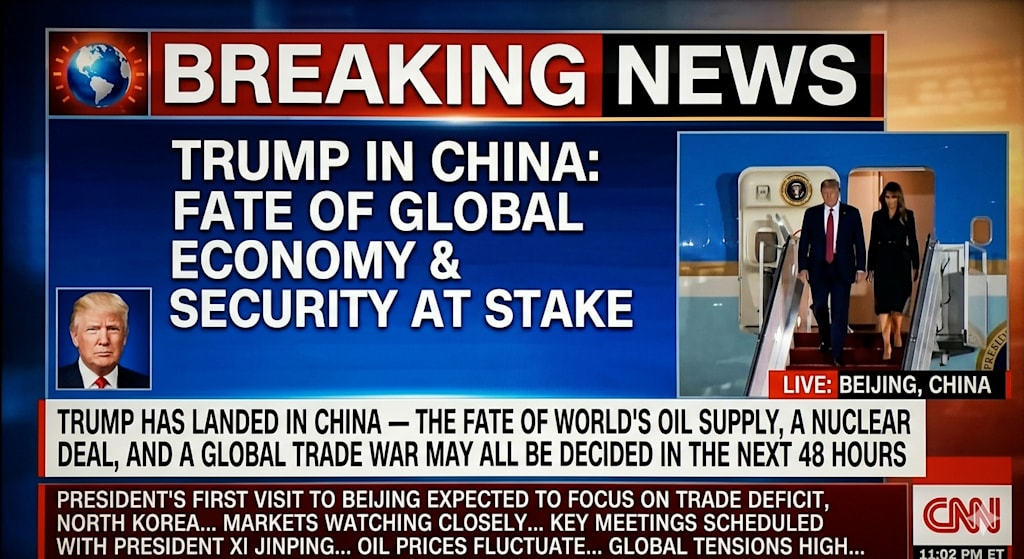
Air Force One touched down at Beijing Capital International Airport on Wednesday morning, and the stakes sitting on board that plane were almost impossible to overstate. President Donald Trump has arrived in China for a face-to-face summit with President Xi Jinping — his first visit to the country since 2017 — and the agenda is so packed with life-or-death issues that analysts are calling it the most consequential U.S.-China meeting in a generation.
The summit was not supposed to happen this week. It was originally scheduled for March, before the U.S. and Israel launched military strikes against Iran on February 28, killing Iran’s Supreme Leader Ali Khamenei and triggering the most serious global oil crisis in decades. Trump delayed the Beijing trip, confident the war would wrap up quickly. Instead, more than two months later, the conflict is dragging on, the ceasefire is in Trump’s own words “on massive life support,” and oil prices have climbed to around $106 a barrel — up from roughly $70 before the war started. The Strait of Hormuz, through which about one-fifth of the world’s daily oil supply once flowed, remains effectively closed.
That crisis now looms over every conversation Trump and Xi will have.
The single biggest thing Trump needs from Xi is cooperation on Iran. China is Iran’s largest customer for oil, buying more than 80 percent of Iran’s crude exports. Beijing also shields Tehran at the UN Security Council, giving China enormous leverage over whether Iran feels enough economic pressure to agree to a real peace deal. Trump is expected to ask Xi directly to use that leverage — to push Iran to reopen the strait and agree to a nuclear deal. Xi, for his part, has already demonstrated a degree of willingness, having played a role in convincing Iran to accept the initial ceasefire. But China’s foreign minister has also reaffirmed Iran’s right to nuclear energy, which is a significant qualification that limits how hard Beijing will push.
Trade is the other giant issue. Trump came into office promising to take a hard line against China’s trade practices, and the fragile truce struck last year has held but has not resolved the deep structural tensions. China wants fewer restrictions on semiconductor exports. The U.S. wants China to resume shipments of rare earth minerals, which are essential for replacing the missile interceptors the American military has been burning through at a rapid pace during the Iran war. Traveling with Trump is a delegation of more than a dozen top American corporate executives, including Apple’s Tim Cook, Tesla’s Elon Musk, and Nvidia CEO Jensen Huang — a signal that the trip has a major business dimension. China is both a manufacturing hub and a massive consumer market for all three companies, and their presence on the trip reflects the complicated reality that U.S. and Chinese economic interests are deeply intertwined even as the two governments compete aggressively on technology and national security.
Taiwan and artificial intelligence round out the agenda. The two leaders are reportedly considering establishing an AI safety dialogue, which both countries have said is a shared priority given the extraordinary pace of AI development globally. On Taiwan, there are no expected breakthroughs, but any signals of movement or tension will be watched closely by markets and governments across Asia.
The Council on Foreign Relations published a blunt assessment this week: at this summit, China has the upper hand. The Iran war, which Trump believed would take four to six weeks, has instead stretched past ten weeks and counting, draining American resources — the war has cost $29 billion so far, a figure higher than what the Pentagon told Congress two weeks ago — and creating leverage for Xi that he would not have had at the start of the year. Trump arrives in Beijing needing things from China. Xi arrives knowing that.
Whether the next 48 hours produce a historic breakthrough on Iran, a trade deal, and a new framework for managing the world’s most important bilateral relationship — or whether they produce photo opportunities and limited agreements — will shape the world for years to come.
About the Creator
Enjoyed the story? Support the Creator.
Subscribe for free to receive all their stories in your feed.
Comments
There are no comments for this story
Be the first to respond and start the conversation.