
Trump Administration Citizenship Crackdown: A Supreme Court Battle That Could Reshape Immigration in America
How Supreme Court decisions on immigration powers could determine the fate of hundreds of thousands of migrants and redefine the limits of presidential authority in America

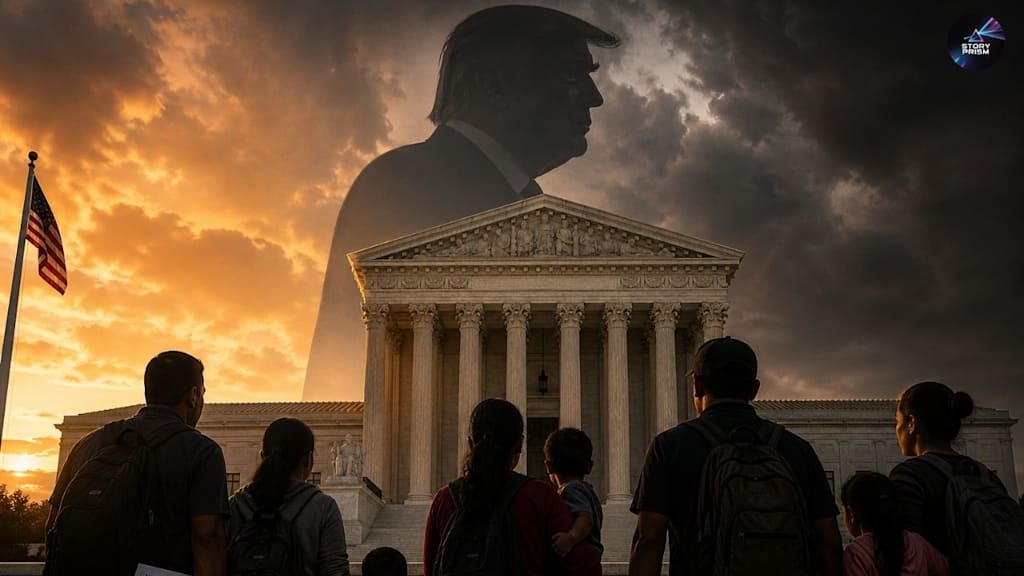
The debate over immigration in the United States has entered a critical new phase, as policies introduced during the administration of Donald Trump continue to face intense legal scrutiny. At the center of this controversy is a growing “citizenship crackdown”—a broader effort to tighten immigration controls, reduce humanitarian protections, and redefine the limits of executive power. Now, with the U.S. Supreme Court reviewing key cases, the outcome could reshape not only immigration policy but also the balance of power in American government.
The Core of the Crackdown
One of the most significant elements of this crackdown involves the attempt to revoke Temporary Protected Status (TPS) for migrants from countries facing war, disaster, or instability. TPS has long allowed individuals from nations like Syria, Haiti, and El Salvador to live and work legally in the U.S. without fear of deportation.
During the Trump administration, officials argued that conditions in some of these countries had improved enough to justify ending protections. Critics, however, claimed the decisions were rushed, politically motivated, and ignored ongoing dangers in those regions.
This disagreement sparked a series of legal battles that have now reached the Supreme Court. The key question is not just whether TPS should end—but whether courts even have the authority to review such decisions.
A Question of Power
At the heart of the case is a constitutional issue: How much power does the president have over immigration policy?
The Trump administration has argued that decisions about TPS fall under executive authority, particularly in areas involving foreign policy and national security. From this perspective, courts should not interfere.
Opponents strongly disagree. They argue that while the executive branch has broad powers, it must still follow the law. That includes properly evaluating country conditions, avoiding discriminatory practices, and adhering to administrative procedures.
If the Supreme Court sides with the administration, it could significantly limit the ability of courts to challenge immigration decisions in the future. If it rules the other way, it would reinforce judicial oversight and potentially protect thousands of migrants from losing their legal status.
Human Impact Behind the Policy
While the legal arguments are complex, the human consequences are straightforward—and profound.
Hundreds of thousands of people rely on TPS to remain in the United States. Many have lived in the country for decades, built careers, started businesses, and raised families. For them, losing TPS would not simply mean a policy change; it could mean deportation to countries they barely remember.
For example, Salvadoran migrants—many of whom received protection after devastating earthquakes in 2001—are closely watching the case. Although they are not directly involved, a ruling against TPS holders from Syria and Haiti could set a precedent that affects them next.
Families could be separated. Communities could lose long-standing members. Economies, both in the U.S. and in migrants’ home countries, could feel the impact.
International and Political Dimensions
The issue also extends beyond U.S. borders. Cooperation between the United States and countries like El Salvador has made deportations more feasible, adding urgency to the situation.
Leaders such as Nayib Bukele have worked with U.S. officials on migration and deportation policies, creating a system where changes in American law can have immediate international consequences.
This dynamic highlights how immigration policy is not just a domestic issue—it is deeply tied to global relationships, economic stability, and humanitarian concerns.
A Defining Supreme Court Moment
The Supreme Court’s decision in this case could become one of the most important immigration rulings in recent years. It will determine:
• Whether TPS protections can be ended without meaningful judicial review
• How far presidential authority extends in immigration matters
• The future legal pathway for challenging similar policies
Importantly, the court’s ruling will not only affect current TPS holders but also shape how future administrations approach immigration reform.
What Comes Next?
As arguments unfold, TPS protections remain in place for now. But the uncertainty surrounding the case has already created anxiety among affected communities.
A decision is expected by mid-2026, and its impact will likely extend far beyond the individuals directly involved. It could influence debates on asylum, deportation, and even broader questions about citizenship and national identity.
Final Thoughts
The “citizenship crackdown” associated with the Trump era represents more than a set of policies—it reflects a deeper struggle over who gets to belong in the United States and under what conditions.
With the Supreme Court now weighing in, the nation stands at a crossroads. The outcome will help define not only immigration law but also the limits of executive power and the role of the judiciary in protecting vulnerable populations.
About the Creator
Enjoyed the story? Support the Creator.
Subscribe for free to receive all their stories in your feed.
Comments
There are no comments for this story
Be the first to respond and start the conversation.