
The U.S. and Iran on the Brink of a Deal: What Lies Behind the Memorandum
Why a one-page U.S.–Iran memorandum matters far beyond diplomacy, touching oil, sanctions, uranium, and the risk of a wider war.
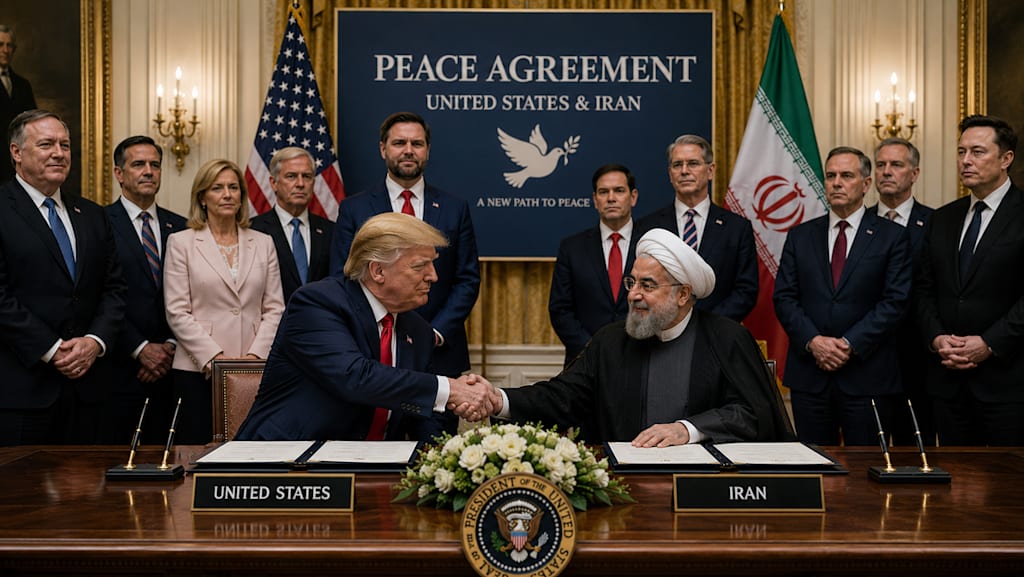
The United States and Iran appear to have reached the closest point in negotiations since the start of the current conflict. According to Axios, the two sides are discussing a short memorandum just one page long, intended to stop the war and launch separate talks on Tehran’s nuclear program. Reuters also reports that the draft under discussion consists of 14 points.
At first glance, this may look like just another diplomatic document. In reality, the significance is much broader. The issue is not only whether Washington and Tehran can pause the fighting. The issue is whether both sides are ready to exchange immediate military restraint for a narrow window of political bargaining. That makes the memorandum important not only for the two capitals, but also for oil markets, regional security, sanctions policy, and the wider balance of power in the Middle East.
What is the core idea?
The central idea is simple: first stop the fighting, and only after that begin addressing the most difficult questions. In its current form, the memorandum would formalize a halt to the war and give the parties 30 days to prepare a more detailed agreement. That larger framework could include the reopening of the Strait of Hormuz, partial sanctions relief, and new limitations on Iran’s nuclear program.
This sequencing matters. A full agreement on all issues at once would be politically difficult and technically slow. A short interim document lowers the threshold. It does not try to solve everything immediately. Instead, it creates a temporary mechanism: stop escalation, reduce the risk of immediate breakdown, and buy time for more serious talks.
That is often how fragile diplomacy works in wartime. The first document is not meant to settle the whole conflict. It is meant to prevent the next round of escalation from closing the negotiating space altogether.
Why uranium remains the hardest issue
The key dispute still centers on uranium. The United States wants a long pause in enrichment. Axios reports that Washington had pushed for 20 years, Iran had proposed 5, and a compromise is now being sought somewhere in the range of 12 to 15 years. The export of highly enriched uranium out of Iran is also under discussion — for Washington, this is one of the most important points.
This is the heart of the matter because enrichment capacity is not just a technical issue. It is the part of the nuclear question that most directly affects trust. From the American point of view, a shorter pause leaves too much room for Tehran to rebuild leverage quickly. From the Iranian point of view, a very long freeze looks like a demand to surrender strategic autonomy under pressure.
That is why the numbers matter so much. Five years is short enough to look reversible. Twenty years is long enough to look like strategic rollback. The search for a compromise in the 12-to-15-year range suggests that both sides are no longer arguing only over principle, but over the political price of an actual formula.
What Iran wants in return
For Tehran, the main price of concessions is sanctions relief. According to Reuters, the draft includes discussion of lifting restrictions, unfreezing Iranian assets, and gradually easing measures linked to shipping in the Strait of Hormuz.
This is not secondary for Iran. Sanctions are not simply an external inconvenience. They shape the country’s room for maneuver, access to international finance, oil exports, shipping costs, and domestic economic pressure. If Tehran accepts long-term constraints on part of its nuclear activity, it will want something visible and economically meaningful in exchange.
That is why the question is not just whether sanctions are lifted, but how fast, in what sequence, and under what verification. Iran will want relief that is real enough to show at home. The United States will want a structure that does not front-load concessions before compliance can be tested.
Why Hormuz makes this a global story
The Strait of Hormuz is what turns this from a regional negotiation into a world economic issue. Huge volumes of oil and liquefied natural gas pass through this narrow corridor. Any military tension there quickly affects shipping risk, insurance, and global energy prices.
That is why even a narrow memorandum matters to markets. It is not only about diplomacy between Washington and Tehran. It is about whether traders, insurers, governments, and energy importers believe that a major supply shock is becoming less likely.
If the memorandum reduces the immediate danger around Hormuz, the effect goes far beyond the Gulf. It changes expectations across the entire energy chain.
How the markets reacted
Markets have already responded to the leaks. After the Axios reports, stocks and bonds rose, the dollar weakened, and oil prices fell. For investors, even the possibility of a ceasefire was enough to matter. Less risk of a wider war means less fear of disrupted oil flows and less urgency around safe-haven positioning.
That reaction is important because it shows what markets think the real issue is. Investors are not reacting mainly to legal language or diplomatic ceremony. They are reacting to the possibility that one of the world’s most dangerous geopolitical flashpoints might move, even temporarily, away from open escalation.
In that sense, the memorandum is already functioning as a market signal before becoming a formal agreement.
Why this is still far from a guaranteed breakthrough
But the agreement has not been signed. Reuters reports that Iran is reviewing the new U.S. proposal, and as of publication there had been no official comment from the White House, the State Department, or Iranian authorities. That means the process remains highly provisional.
There is also another problem: a draft can exist even when political trust does not. A memorandum may look workable on paper and still fail because one side doubts implementation, timing, or enforcement. In conflicts of this kind, the document is often the easy part. The hard part is whether both sides believe that the other side will actually deliver the next step.
This is especially true when military pressure and diplomatic bargaining are unfolding at the same time. Each side wants to negotiate from strength. That makes even temporary restraint feel risky.
The Israeli factor
An Israeli source cited by Reuters also said that Israel had not been informed of how close the deal might be and was instead preparing for possible escalation. That detail matters.
Any U.S.–Iran arrangement affects not just the two direct participants, but also Israel, the Gulf states, and other regional actors. If one major player believes that diplomacy is moving too fast, or moving in a direction that harms its security interests, that creates a new layer of instability.
In practice, this means the memorandum is not only a bilateral test between Washington and Tehran. It is also a test of whether the broader regional environment can absorb even a temporary de-escalation without another actor pushing events back toward confrontation.
What happens next
That is why the main point here is not to declare peace too early. What is being discussed is not a final settlement, but a temporary framework: stop the fighting, open a window for negotiations, and try within a month to turn a short memorandum into a fuller agreement.
If that works, the Middle East gets a pause. Not a solved conflict, but a pause. That alone would matter: for shipping, for oil prices, for sanctions pressure, and for the risk of wider war.
If it fails, then the memorandum will be remembered not as the beginning of a settlement, but as the last narrow opening before the parties returned to a military path.
The main takeaway
What lies behind this memorandum is not simply diplomacy for its own sake. It is an attempt to freeze the most dangerous part of the conflict long enough to test whether a broader bargain is still possible.
For the United States, the priority is to reduce the nuclear risk and contain regional escalation. For Iran, the priority is to ease sanctions pressure without accepting a humiliating surrender of leverage. For markets, the issue is whether the danger around Hormuz is receding. For the wider region, the question is whether a short pause can become something more durable.
That is why this one-page document matters. It is small on paper, but heavy with consequences.
About the Creator
Enjoyed the story? Support the Creator.
Subscribe for free to receive all their stories in your feed.
Comments
There are no comments for this story
Be the first to respond and start the conversation.