
The Rise of Humanoid Robots: Are They Ready to Enter Our Daily Lives?
Humanoid robots are moving rapidly from science-fiction concepts toward real-world factories, warehouses and research environments—but major questions about safety, cost and reliability remain.
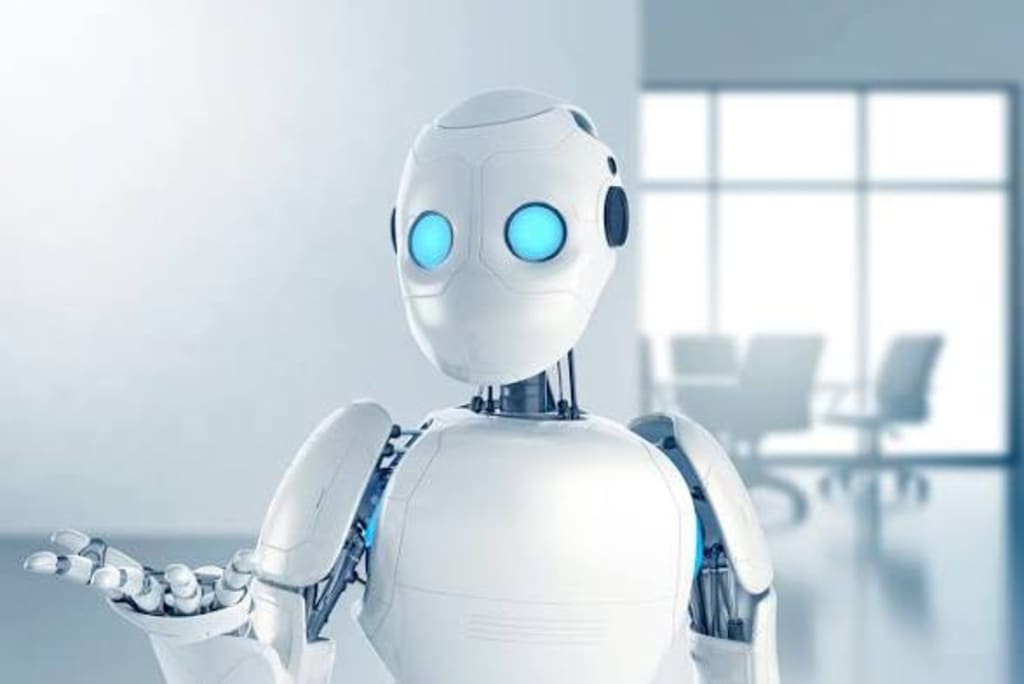
For decades, humanoid robots existed mainly in science-fiction movies. They were imagined as intelligent machines capable of walking like humans, understanding instructions and performing almost any task.
That vision is now becoming increasingly realistic.
Companies and research institutions around the world are developing robots with human-like bodies, advanced sensors and artificial intelligence systems designed to understand their surroundings and perform physical tasks. In 2026, the industry has moved beyond simple demonstrations toward pilot projects, industrial testing and serious investment.
A recent industry study identified roughly 284 humanoid robot models in development in 2026, compared with around 140 in 2025, illustrating how quickly the sector is expanding.
But an important question remains: Are humanoid robots actually ready to become part of everyday life?
Why Do Robots Need a Human Shape?
At first glance, building a machine with two legs, two arms and a human-like body may seem unnecessary.
Factories already use robotic arms. Warehouses use autonomous mobile robots. Machines can perform highly specialized tasks faster and more consistently than people.
So why build a humanoid?
The main argument is flexibility.
Human environments were designed for human bodies. Doors, stairs, shelves, tools, vehicles and workstations are generally built around human proportions.
A humanoid robot could potentially enter these existing environments without requiring businesses to redesign everything.
That could make humanoids particularly useful for tasks involving multiple types of movement.
Factories Are Becoming the First Major Testing Ground
Manufacturing is currently one of the most promising areas for humanoid robots.
Companies are experimenting with robots performing repetitive tasks such as moving materials, handling components and assisting workers.
The appeal is particularly strong for jobs that are physically demanding, repetitive or difficult to staff.
However, manufacturers are not simply looking for robots that look impressive. They need machines that are safe, reliable, economical and capable of working consistently for long periods.
That is why independent testing is becoming increasingly important.
In May 2026, Germany's Fraunhofer Institute for Manufacturing Engineering and Automation announced a benchmark for evaluating humanoid robots on practical criteria including energy efficiency, cleanroom compatibility, data security and operational suitability.
This represents a shift from asking, "Can the robot perform this trick?" to asking, "Can this robot reliably perform useful work?"
China Is Emerging as a Major Player
China has become one of the most important markets in the humanoid robotics race.
Chinese companies are developing large numbers of robot platforms, while government support and private investment are accelerating commercial development.
One notable example is Unitree Robotics.
The company became widely known for its robotic dogs before expanding into humanoid machines. In August 2026, Unitree moved toward becoming China's first publicly listed humanoid-robot manufacturer, with its Shanghai IPO attracting enormous investor interest. Reuters reported that the company generated 1.7 billion yuan in revenue in 2025 and that more than 40% of its sales came from overseas markets.
The development shows that humanoid robotics is no longer just a laboratory experiment. Investors increasingly see physical AI and robotics as a potentially major technology industry.
Artificial Intelligence Is the Missing Piece
The hardware is only half of the story.
A humanoid robot needs to understand what is happening around it.
Imagine asking a robot to clean a room. It needs to recognize objects, understand instructions, identify obstacles, decide how to pick things up and determine where each object belongs.
Traditional robots are generally programmed for specific tasks.
AI-powered humanoids aim to be much more flexible.
Instead of programming every movement individually, developers increasingly want robots to learn from demonstrations, simulations and large amounts of physical-world data.
This combination of robotics and AI is sometimes described as embodied AI or physical AI.
The idea is simple: intelligence is not useful only inside a computer. It can also be connected to a machine that can see, move and manipulate the physical world.
The Biggest Challenge Is Reliability
A robot performing a task once during a demonstration is impressive.
A robot performing that task thousands of times without damaging equipment, dropping objects or injuring someone is much harder.
Real environments are unpredictable.
Floors become wet. Objects move. Lighting changes. People walk unexpectedly into a robot's path. Components wear out.
Humans handle these situations almost instinctively.
Robots still struggle with many of them.
Researchers continue to identify major challenges involving perception, manipulation, mobility, autonomy, data and safe interaction with people.
This is one reason widespread household humanoid robots may take longer than some optimistic predictions suggest.
Safety Is a Major Concern
A humanoid robot that weighs dozens of kilograms and moves using powerful motors must be extremely safe around humans.
Industrial robotic systems already operate under detailed safety requirements. Humanoids create additional complications because walking itself requires active control.
Recent research has highlighted a particularly difficult problem: if power is suddenly removed from a balancing humanoid robot, it may fall rather than simply stop in place. Researchers describe this as a major challenge for functional safety certification.
Before humanoids become common in homes, hospitals or crowded public spaces, manufacturers will need robust systems for detecting people, preventing collisions and safely responding to failures.
Will Humanoid Robots Take People's Jobs?
This is perhaps the question most people care about.
The answer is likely to be complicated.
Humanoid robots could replace certain repetitive physical tasks, particularly in manufacturing, logistics and warehousing.
But they could also create new jobs involving robot maintenance, programming, supervision, safety testing, data collection and system integration.
History shows that automation often changes jobs rather than simply eliminating entire professions.
The bigger question may therefore be which tasks humans continue performing and which tasks machines gradually take over.
What About Robots in Our Homes?
A household robot that cooks dinner, cleans the house, carries groceries and helps elderly people remains one of the industry's biggest ambitions.
Technically, however, the home is a much more difficult environment than a factory.
Factories are structured and predictable.
Homes are messy.
Every house has different furniture, objects, stairs, pets, children and layouts. A robot must cope with thousands of unpredictable situations.
For that reason, industrial environments are likely to remain the primary testing ground before truly general-purpose household robots become common.
The Race Is Just Beginning
The humanoid robotics industry is expanding rapidly, but it is still young.
Companies are competing to improve batteries, motors, hands, sensors, artificial intelligence, manufacturing costs and reliability.
Some systems may eventually become extremely capable.
Others may disappear because they prove too expensive or technically difficult to operate.
The market could also discover that not every job requires a humanoid robot. In many situations, a specialized robotic arm or wheeled machine may remain cheaper and more efficient.
The winning technology will therefore not necessarily be the robot that looks most human.
It will probably be the one that solves real problems at a competitive cost.
Conclusion
Humanoid robots are no longer purely science fiction.
In 2026, the technology is entering a new phase, with manufacturers, researchers and investors increasingly focused on real-world applications. The rapid expansion of robot models and growing industrial testing demonstrate how quickly the field is developing.
But there is still a substantial distance between an impressive demonstration and a dependable robot that can work safely every day.
The next decade will determine whether humanoid robots become a normal part of factories and eventually homes—or whether more specialized machines prove to be the better solution.
One thing is already clear: the age of physical AI has begun, and humanoid robots could become one of its most important technologies.
About the Creator
Enjoyed the story? Support the Creator.
Subscribe for free to receive all their stories in your feed.
Comments
There are no comments for this story
Be the first to respond and start the conversation.